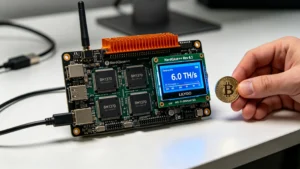

For cryptocurrency miners seeking opportunities beyond the highly competitive Bitcoin network, manufacturers like IceRiver and BitAxe Miners offer specialized ASIC miners for promising altcoins. IceRiver primarily produces high-efficiency miners for Kaspa (KAS) using the kHeavyHash algorithm, while BitAxe focuses on miners for Ethereum Classic (ETC) on the Etchash algorithm. This guide explores these powerful alternatives, helping you understand their technology, profitability potential, and how to choose the right hardware to diversify your mining portfolio.
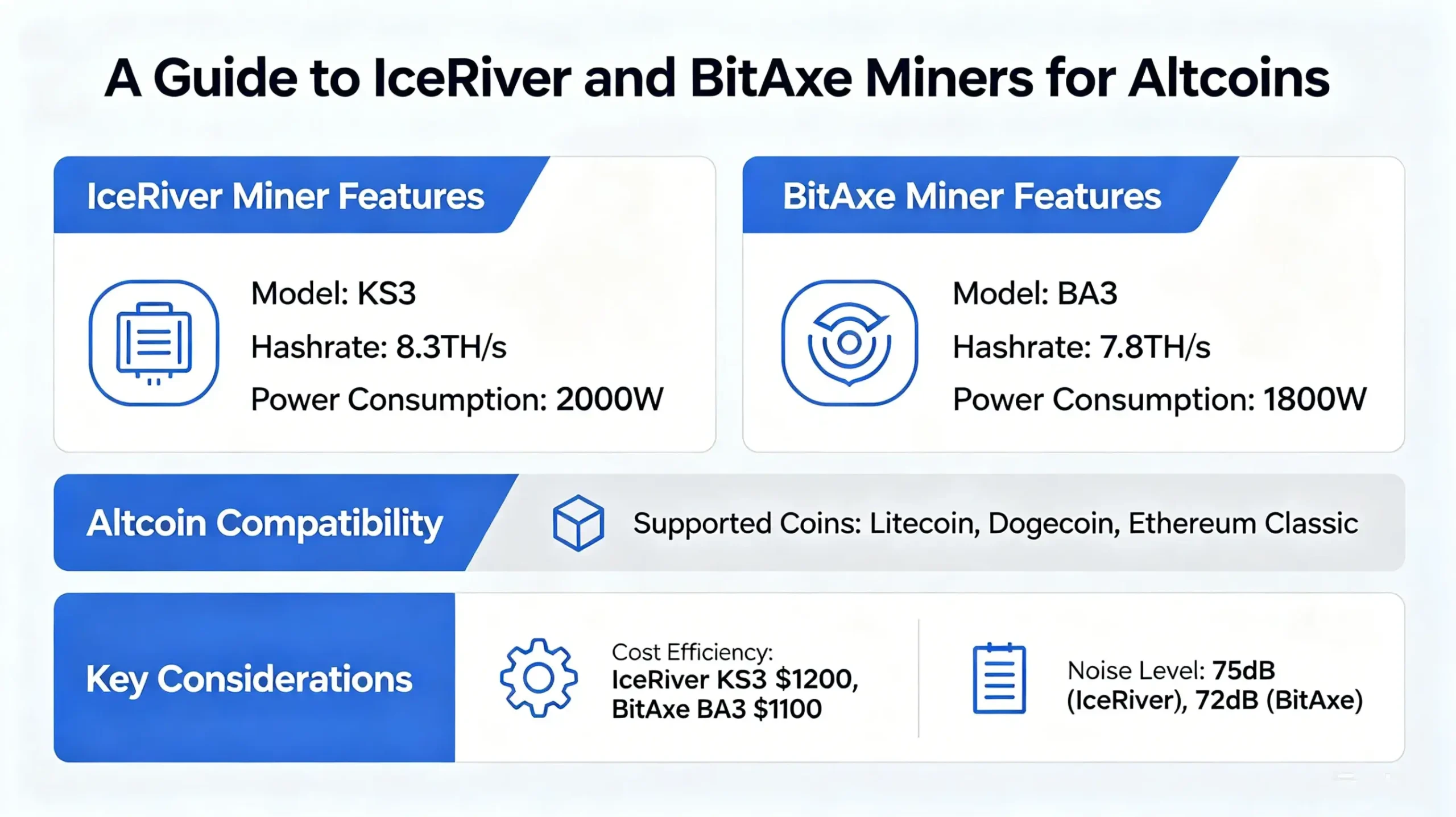
Table of Contents
- Why Look Beyond Bitcoin Mining? The Rise of Altcoin ASICs
- Introducing IceRiver: The KASPA Mining Powerhouse
- Exploring BitAxe: Dominating the Etchash Niche
- How to Choose the Right Altcoin Miner for You?
- Setting Up Your IceRiver or BitAxe Miner: A Quick Start Guide
- The Future of Altcoin ASIC Mining
- Conclusion: Diversifying Your Mining Portfolio with Cleverobot
Why Look Beyond Bitcoin Mining? The Rise of Altcoin ASICs
For years, Bitcoin has been the undisputed king of cryptocurrency mining. However, the landscape is maturing. The ever-increasing network difficulty and the immense capital required for competitive Bitcoin ASICs (Application-Specific Integrated Circuits) have created a high barrier to entry. This has pushed savvy miners to ask, “What are the profitable alternatives to Bitcoin mining?” The answer lies in altcoins.
Altcoin mining presents a strategic opportunity for diversification. By focusing on different cryptocurrencies, miners can mitigate risks associated with a single network and tap into potentially higher profitability cycles of emerging projects. This shift has fueled the rise of specialized ASIC manufacturers who, instead of competing in the crowded SHA-256 (Bitcoin) arena, design hyper-efficient machines for specific altcoin algorithms. Companies like IceRiver and BitAxe have emerged as leaders in this space, offering hardware that provides a significant competitive edge on their respective networks.
Introducing IceRiver: The KASPA Mining Powerhouse
IceRiver has rapidly become synonymous with Kaspa (KAS) mining. This manufacturer focuses exclusively on producing the most powerful and efficient ASICs for the kHeavyHash algorithm, the hashing algorithm used by the Kaspa network. Kaspa itself is a proof-of-work cryptocurrency known for its unique BlockDAG (Block Directed Acyclic Graph) structure, which allows for parallel blocks and near-instantaneous transaction confirmations. This technological innovation has generated significant interest, and IceRiver has provided the tools for miners to capitalize on it.
A Breakdown of the IceRiver KS Series
IceRiver offers a range of miners tailored to different scales of operation, from home hobbyists to industrial-sized mining farms. The primary difference between models lies in their hashrate (the speed at which they can perform calculations) and their power consumption. Higher hashrates mean more potential earnings, but also higher electricity costs and upfront investment. Understanding these specifications is crucial for calculating potential ROI.
| Model | Hashrate | Power Consumption | Efficiency (J/GH) | Ideal User |
|---|---|---|---|---|
| IceRiver KS0 Pro | 200 GH/s | 100W | 0.5 | Hobbyist / Beginner |
| IceRiver KS1 | 1 TH/s | 600W | 0.6 | Serious Home Miner |
| IceRiver KS3M | 6 TH/s | 3400W | 0.57 | Pro / Small Farm |
| IceRiver KS5 Pro | 15 TH/s | 3400W | 0.23 | Industrial Operation |
Pros and Cons of Mining with IceRiver
Investing in an IceRiver miner is, in essence, an investment in the future of the Kaspa network. This presents a unique set of advantages and disadvantages.
- Pros:
- Unmatched Efficiency: IceRiver miners offer the best performance-per-watt for the kHeavyHash algorithm, maximizing potential profits.
- Market Leadership: As the dominant force in KAS mining, they set the standard for hardware, ensuring robust community and pool support.
- Scalability: With models ranging from the low-power KS0 Pro to the industrial KS5 Pro, there is an entry point for every budget and ambition.
- Cons:
- Single-Coin Focus: These miners are hard-wired for kHeavyHash. If Kaspa’s value or network viability falters, the hardware has no alternative coin to mine.
- Market Volatility: The profitability of these machines is directly tied to the price of KAS, which can be highly volatile like any altcoin.
Exploring BitAxe: Dominating the Etchash Niche
While IceRiver cornered the Kaspa market, BitAxe has carved out a powerful niche for itself by developing highly efficient ASICs for the Etchash algorithm. This algorithm is most famously used by Ethereum Classic (ETC), a well-established cryptocurrency that emerged from the original Ethereum blockchain. By focusing on Etchash, BitAxe provides a dedicated tool for mining one of the most prominent and resilient proof-of-work smart contract platforms available today.
Spotlight on the BitAxe BM Series
BitAxe’s product line, like IceRiver’s, is designed to deliver top-tier performance on a single algorithm. Their BM series miners are engineered to solve Etchash blocks with exceptional speed and power efficiency. For miners who believe in the long-term value of the Ethereum Classic ecosystem, BitAxe offers the most competitive hardware on the market. Their latest models are a testament to their dedication to optimizing hashrate while keeping operational costs in check.
The Case For and Against BitAxe Miners
Why should a miner choose a BitAxe miner for Ethereum Classic? The decision hinges on one’s perspective of the ETC network and the broader crypto market.
- Pros:
- Optimized for a Major Coin: Ethereum Classic is not a fleeting trend; it’s a top-30 cryptocurrency with a long history and a dedicated community. This provides a degree of stability not always found in newer altcoin projects.
- High Performance: BitAxe miners are designed to outperform GPU rigs and other less-specialized hardware on the Etchash algorithm, giving their owners a distinct advantage.
- Clear Focus: By specializing in Etchash, BitAxe ensures their machines are perfectly tuned for the task, maximizing hashrate and efficiency.
- Cons:
- Algorithm Limitation: Similar to IceRiver, BitAxe machines are locked to the Etchash algorithm. Their utility is entirely dependent on the profitability of mining ETC or other smaller Etchash coins.
- Established Competition: While ETC is stable, its mining scene is more established, meaning miners compete within a well-developed network.
How to Choose the Right Altcoin Miner for You?
Selecting the right ASIC miner, whether from IceRiver, BitAxe, or another brand, is a critical business decision. It’s more than just picking the model with the highest hashrate. A thoughtful approach requires balancing several factors to align the investment with your specific circumstances and goals. Rushing this decision can lead to an unprofitable venture, so careful consideration is paramount.
Key Factors to Consider Before Buying
- Profitability Calculation: This is the most crucial step. You must account for the miner’s hashrate, its power consumption (in Watts), your local electricity cost (in $/kWh), the current price of the target coin (KAS or ETC), and the network’s mining difficulty. Online mining profitability calculators can help you estimate potential daily earnings.
- Upfront Investment vs. ROI: Determine your budget. A more expensive, powerful miner like an IceRiver KS5 Pro will generate more revenue, but it also carries a higher initial cost and a longer break-even period (Return on Investment). A smaller unit like a KS0 Pro is less risky but offers modest returns.
- Algorithm & Coin Viability: You are investing in an ecosystem. Do you believe in the long-term vision and technology of Kaspa? Or does the established history of Ethereum Classic give you more confidence? Research the project behind the coin before committing to the hardware.
- Your Mining Setup: Don’t overlook logistics. High-performance ASICs generate significant heat and noise. Do you have a well-ventilated space (like a garage or dedicated room) that can handle the thermal output? Can your electrical circuits support the continuous power draw? The 3400W consumption of a KS3M, for example, requires a dedicated 220V-240V circuit.
Setting Up Your IceRiver or BitAxe Miners: A Quick Start Guide
Getting your new ASIC miner up and running is a straightforward process. While specific dashboards may vary slightly, the core steps are universal for most modern miners.
- Physical Connection: Place the miner in a cool, well-ventilated area. Connect the required power supply unit (PSU) cables and plug an Ethernet cable from the miner directly into your router or network switch.
- Power On & Find IP Address: Turn the miner on. You will need to find its IP address on your local network. You can do this by logging into your router’s admin panel and looking at the list of connected devices, or by using a dedicated IP scanning tool.
- Access Web Interface: Open a web browser on a computer connected to the same network and type the miner’s IP address into the address bar. This will bring up the miner’s configuration dashboard.
- Configure Mining Pool: Navigate to the “Miner Configuration” or “Settings” section. Here, you will need to enter the details of your chosen mining pool. This typically includes the pool’s stratum URL, your wallet address (where your earnings will be sent), and a worker name. Save and apply the settings, and the miner will begin hashing within minutes.
The Future of Altcoin ASIC Mining
The success of algorithm-specific manufacturers like IceRiver and BitAxe signals a significant trend in the proof-of-work sector. As the crypto space diversifies, we can expect to see more companies developing ASICs for other promising altcoins and their unique algorithms. This creates a vibrant, competitive hardware market that offers miners more choices than ever before. However, this specialization also carries inherent risk. The fate of these machines is inextricably linked to the success of their target cryptocurrencies. For miners, this underscores the importance of due diligence and strategic portfolio diversification. Staying informed about new projects and hardware developments is key to navigating this exciting and fast-evolving landscape.
Conclusion: Diversifying Your Mining Portfolio with Cleverobot
Moving beyond Bitcoin is no longer a niche strategy; it’s a prudent move for miners seeking new avenues for profitability and growth. IceRiver and BitAxe represent the pinnacle of specialized hardware, offering unparalleled efficiency for mining Kaspa and Ethereum Classic, respectively. By understanding the technology, evaluating the risks, and carefully calculating the potential returns, you can make an informed decision and successfully expand your mining operations.
Whether you’re a home hobbyist looking to start with an IceRiver KS0 Pro or a professional operation scaling up with the latest high-hashrate models, having the right hardware is the first step. At Cleverobot, we provide access to the industry’s leading mining equipment and the expertise to help you succeed. Explore our curated selection of IceRiver miners and BitAxe models to begin your journey into the profitable world of altcoin mining today.
Anchor Text Suggestions:
- “our curated selection of IceRiver miners” -> links to the IceRiver category page.
- “latest BitAxe models” -> links to the BitAxe category page.
- “contact our mining experts” -> links to the contact/support page.
- “ASIC miners” -> links to a general ASIC miner category page.