
Why Everyone Is Talking About Sui in 2026?
The cryptocurrency landscape in 2026 has moved beyond simple speculation toward functional, high-performance infrastructure. At the heart of this shift is Sui (SUI), a Layer-1 blockchain that has redefined how digital assets are stored, processed, and scaled.
If you are asking “What is Sui coin?” you are likely looking for a platform that solves the blockchain “trilemma” of security, scalability, and decentralization without the high costs of legacy networks. Developed by Mysten Labs—founded by former leads of Meta’s Diem project—Sui has emerged as a dominant force in the smart contract space.
Sui is no longer just a “promising project”; it is a fully mature ecosystem. As of early 2026, the network has seen growing DeFi activity, partnerships with gaming platforms, and an expanding developer ecosystem. With the integration of the Mysticeti V2 protocol, Sui has achieved near-instant finality and theoretical speeds of over 250,000 TPS, making it ideal for global payments and high-fidelity gaming.
This comprehensive guide will answer everything you need to know about SUI coin: what it is, how it works, how to buy it, and how high it could go.

What Is Sui Coin? Understanding the Basics
What is Sui coin? Sui is a decentralized, proof-of-stake (PoS) blockchain designed for low-latency, high-throughput applications. It is a Layer-1 blockchain—meaning it is a base-level network, like Ethereum or Solana, rather than something built on top of another chain.
What Makes Sui coin Different?
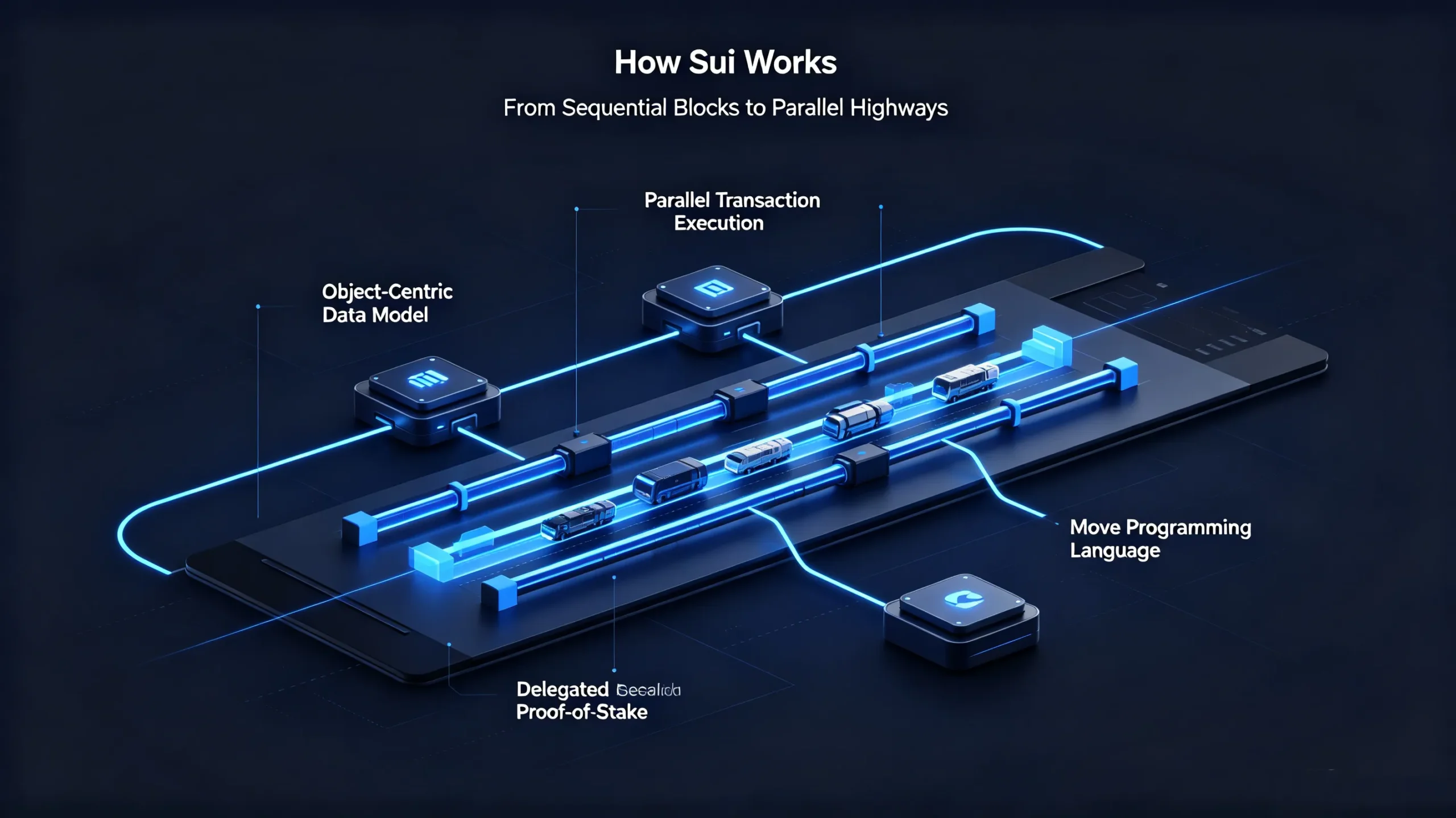
Unlike Ethereum or Bitcoin, which use an account-based model, Sui utilizes an object-centric data model. In the Sui ecosystem, everything—from a stablecoin to an NFT—is an “object”. This allows the network to process transactions in parallel. While traditional blockchains process transactions one by one (like a single-lane road), Sui acts like a multi-lane highway, allowing unrelated transactions to be verified simultaneously.
For traders and users, this technical edge translates into near-instant finality and gas fees that remain stable even during high network congestion.
Key Characteristics
Sui is a next-generation Layer-1 blockchain designed for scalability, performance, and consumer-facing Web3 applications. Its key characteristics include:
-
Object-based architecture for efficient data management
-
Parallel transaction execution for high throughput
-
Low latency for near-instant finality
-
Delegated Proof-of-Stake (PoS) consensus mechanism
The Sui network is optimized for instant finality, parallel transaction execution, and scalability, making it a top choice for DeFi, NFTs, and play-to-earn gaming applications.
The Origins: Mysten Labs and the Meta Connection
Sui was launched in May 2023 by Mysten Labs, a team largely composed of former Meta engineers who had previously worked on Diem, Meta’s abandoned cryptocurrency project.
The Team Behind Sui coin
The Mysten Labs team consists of some of the most respected names in blockchain engineering:
-
Evan Cheng — Co-founder and CEO, former Meta engineer
-
Adeniyi Abiodun — Co-founder and Chief Product Officer, former Meta executive who led blockchain and cryptocurrency R&D initiatives
-
Sam Blackshear — Co-founder and CTO, creator of the Move programming language
-
George Danezis — Co-founder and Chief Scientist
-
Kostas Chalkias — Cryptography lead
Mysten Labs was founded in 2021 and has raised significant venture capital, including a $36 million Series A in 2021 and a $300 million Series B in 2022. The company is a core-infrastructure company that builds and governs the Sui blockchain.
The Diem Connection
The Sui team’s experience at Meta’s Diem project (formerly known as Libra) gave them unique insights into building scalable, secure blockchain infrastructure. The Move programming language, which is central to Sui’s architecture, was originally developed for the Diem blockchain. This institutional pedigree has given Sui a level of credibility that many other Layer-1 projects lack.
How Sui coin Works: The Technology Behind the Token?
Sui’s technical architecture is what sets it apart from other blockchains. Understanding these innovations is key to understanding Sui’s value proposition.
The Object-Centric Data Model
On Sui, objects are the basic unit of data storage. Developers define, create, and manage these programmable objects that represent user-level assets. An object has distinct attributes, including ownership, whose values can be updated based on the governing logic of the smart contract that created it.
This object-centric approach enables several key advantages:
-
Parallel processing: Independent objects can be processed simultaneously
-
Efficient asset management: Each asset is tracked individually
-
Reduced computational overhead: Only relevant objects are processed for each transaction
Parallel Transaction Execution
Unlike Ethereum, which processes transactions sequentially, Sui executes many transactions in parallel, improving speed and efficiency. This means that complex transactions affecting different blockchain objects can be confirmed simultaneously, dramatically increasing the throughput of the network.
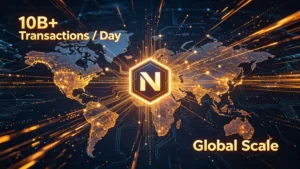
Sui boasts a theoretical maximum of 297,000 transactions per second, compared to Solana’s theoretical maximum of 65,000. Its parallel execution engine allows it to handle this enormous throughput while maintaining low latency.
The Move Programming Language
Sui uses Move, a smart contract language designed for safety and efficiency. Unlike traditional smart contract languages like Solidity, Move is built with security in mind, minimizing common vulnerabilities such as reentrancy attacks and ensuring better resource management.
Move was originally developed for the Libra/Diem project and was built specifically for safe asset management. Key advantages include:
-
Security: It prevents common bugs like “re-entrancy attacks” that have plagued older smart contract languages
-
Efficiency: Sui Move allows developers to define “programmable transaction blocks,” enabling multiple actions (like swapping, staking, and sending) to happen in a single execution
-
Modularity: Move’s object-based model enhances transaction processing by structuring data as independent objects rather than account-based records
In 2026, Sui’s ability to handle complex DeFi operations and high-fidelity gaming assets has made it a favorite for institutional developers.
Consensus Mechanism
Sui uses a delegated Proof-of-Stake (DPoS) system where SUI token holders delegate stake to a fixed set of validators. This consensus mechanism secures the network while enabling the high throughput that Sui is known for.
How High Can Sui coin Go? Price Predictions for 2026 and Beyond
Price predictions are inherently speculative, but analyzing what analysts are saying can help you make an informed decision.
2026 Price Predictions
Analysts broadly expect SUI to trade within a range of $1.50 to $3.00 in 2026, depending on broader market conditions and network adoption.
If Sui continues to secure partnerships in the gaming and NFT sectors, demand for the token could push prices toward the upper end of this range. A bearish macro environment or regulatory crackdowns could suppress prices below $1.00.
Other analysts suggest SUI could trade within a range of $2.50 to $5.00, depending on market conditions and continued ecosystem growth. Some models place the end-2026 price between $1.20 and $1.50, depending on broader market cycles.
2027-2028 Predictions
Looking toward 2027 and 2028, Sui’s price trajectory will largely depend on its ability to capture market share from established Layer-1s like Ethereum and Solana.
If the network achieves meaningful total value locked (TVL) growth and real-world application adoption, price targets in the $3.50 to $6.00 range are plausible. The Sui Community has shared longer-term charts pointing to a 2027 target zone between $7.50 and $8.50.
More ambitious projections for 2028 suggest prices could range between $10.47 and $12.10.
2029-2030 Predictions
By the end of the decade, Sui’s price could range from $5.00 to $12.00 in a bullish scenario where it becomes a top-10 blockchain by market cap. A more conservative estimate, assuming steady but unspectacular growth, places SUI between $2.00 and $4.00.
Optimistic scenarios envision SUI reaching $15 to $25 if mass adoption of blockchain technology accelerates and Sui becomes a top-five Layer-1 by market cap.
What Drives SUI’s Price?
Several key factors influence SUI’s long-term value:
-
Network effects: More developers and users increase the utility of SUI as a gas token and store of value
-
Institutional adoption: Partnerships with traditional finance or enterprise clients could drive sustained demand
-
Regulatory clarity: Clearer crypto regulations in major economies could reduce risk premiums
-
Token supply schedule: The rate of token unlocks and staking rewards will affect inflation and price dynamics
-
TVL growth: Sui’s DeFi TVL crossed $1 billion in July 2026
How to Buy SUI Coin: A Step-by-Step Guide?
Buying SUI is straightforward. Here is a comprehensive guide to purchasing SUI in 2026.
Step 1: Choose a Cryptocurrency Exchange
SUI is supported by numerous centralized and decentralized exchanges. Major exchanges that list SUI include:
-
OKX
-
Coinbase
-
Bitget
-
KuCoin
-
Binance
Step 2: Create an Account
Sign up for an account on your chosen exchange. You will need to provide your email address and create a strong password.
Step 3: Complete Identity Verification (KYC)
Most exchanges require identity verification before you can deposit funds and start trading. This typically involves providing identification documents.
Step 4: Fund Your Account
Add funds using your preferred method:
-
Bank transfer: Lower fees but takes 1-3 business days to process
-
Credit or debit card: Faster but may have higher fees
-
Crypto swap: Best for experienced crypto users
-
Apple Pay or other digital wallets
Step 5: Buy SUI
Navigate to the trading page, search for SUI, and choose your order type:
-
Market order: Buy instantly at the current market price
-
Limit order: Set your own price and wait for it to be filled
Enter the amount you want to purchase, review the fees, and confirm your transaction.
Step 6: Store Your SUI
Your purchased SUI will appear in your exchange wallet. For long-term storage, consider transferring to a private wallet (see Section 8).
Alternative Ways to Acquire SUI
You may also obtain SUI without direct purchase:
-
Airdrops: Some projects reward eligible users with SUI
-
Learn-and-Earn programs: OKX and other platforms may grant small amounts for completing verified lessons
-
Staking rewards: Earn SUI by staking with validators
-
Liquidity provision: Earn fees by providing liquidity to pools
The Sui coin Token: Utility, Tokenomics, and Supply
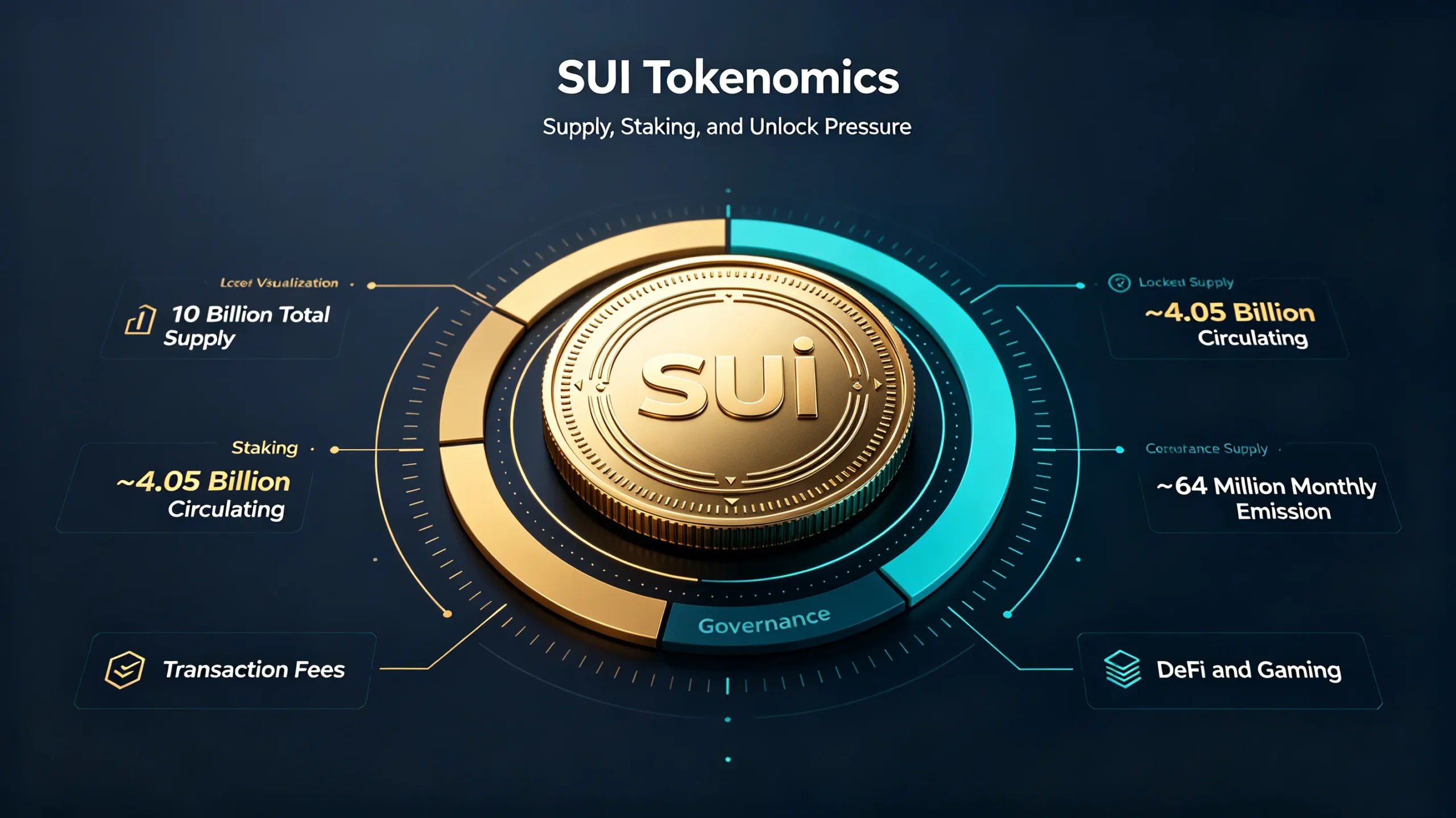
SUI is the native token of the Sui protocol. It serves multiple functions within the ecosystem.
Token Utility
The SUI token is used for:
-
Transaction fees: Paying for network services
-
Staking: Securing the network through delegated Proof-of-Stake
-
Governance: Empowering holders to participate in network decisions
-
DeFi and gaming applications: Supporting applications built on the Sui ecosystem
Key Tokenomics
| Attribute | Details |
|---|---|
| Token | SUI |
| Blockchain | Sui (Layer-1) |
| Launch Date | May 2023 (mainnet) |
| Total Supply | 10 billion SUI |
| Circulating Supply | ~4.05 billion SUI (as of July 2026) |
| All-Time High | $5.35 (January 6, 2025) |
| All-Time Low | $0.3643 (October 19, 2023) |
Token Unlocks
One of the most important factors affecting SUI’s price is its token unlock schedule. Monthly token unlocks introduce new supply into the market, creating potential selling pressure.
In July 2026, approximately 33 million SUI entered the market through community allocations and contributor wallets—around $18.8 million at the prevailing price. Late 2026 emissions trend near 64 million SUI per month, roughly 1 to 1.7 percent of circulating supply.
The token’s price is likely to be influenced by the overall crypto market cycle, with potential upside if Bitcoin and major altcoins rally.
Where to Store Your Sui coin: Wallets and Security?
Once you have purchased SUI, you need a secure place to store it.
Exchange Wallets
The easiest option is to leave your SUI on the exchange where you bought it. However, this carries risks—if the exchange is hacked or experiences technical issues, you could lose access to your funds.
Private Wallets
For better security, transfer your SUI to a private wallet:
Software Wallets (Hot Wallets) :
-
Connected to the internet
-
Convenient for frequent trading
-
Examples: Sui Wallet, MetaMask (with Sui network added), OKX Wallet
Hardware Wallets (Cold Wallets) :
-
Offline storage
-
Highest level of security
-
Examples: Ledger, Trezor (with Sui support)
Security Best Practices
-
Never share your passwords, codes, or recovery phrases
-
Double-check addresses and amounts before sending—blockchain transfers are often irreversible
-
Keep records of trades and transfers for personal accounting
-
Be aware that crypto activity may have tax implications
Staking Sui coin: Earning Passive Income
Staking SUI is a practical way to earn rewards if you understand how APY, APR, product terms, and risk factors work.
Staking Rewards
SUI staking yields vary depending on the platform and validator:
-
Exchange staking: Up to 6.5% APY through some exchange products
-
Validator staking: Approximately 7% nominal APR in early 2026
-
Spot ETFs: Some SUI ETFs embed staking rewards into NAV
With 65–75% of circulating SUI supply staked, real rewards sit slightly below zero when adjusted for token inflation, which is a common pattern in high-participation PoS networks.
How to Stake Sui coin?
-
Choose a validator: Research validators and their commission rates
-
Delegate your SUI: Stake your tokens to the chosen validator
-
Earn rewards: Receive staking rewards periodically
Risks of Staking
-
Validator commissions: High commissions can reduce your returns
-
Lock-up periods: Some staking products require lock-ups tied to 24-hour epochs
-
Slashing: Validators can be penalized for misbehavior, potentially affecting your staked tokens
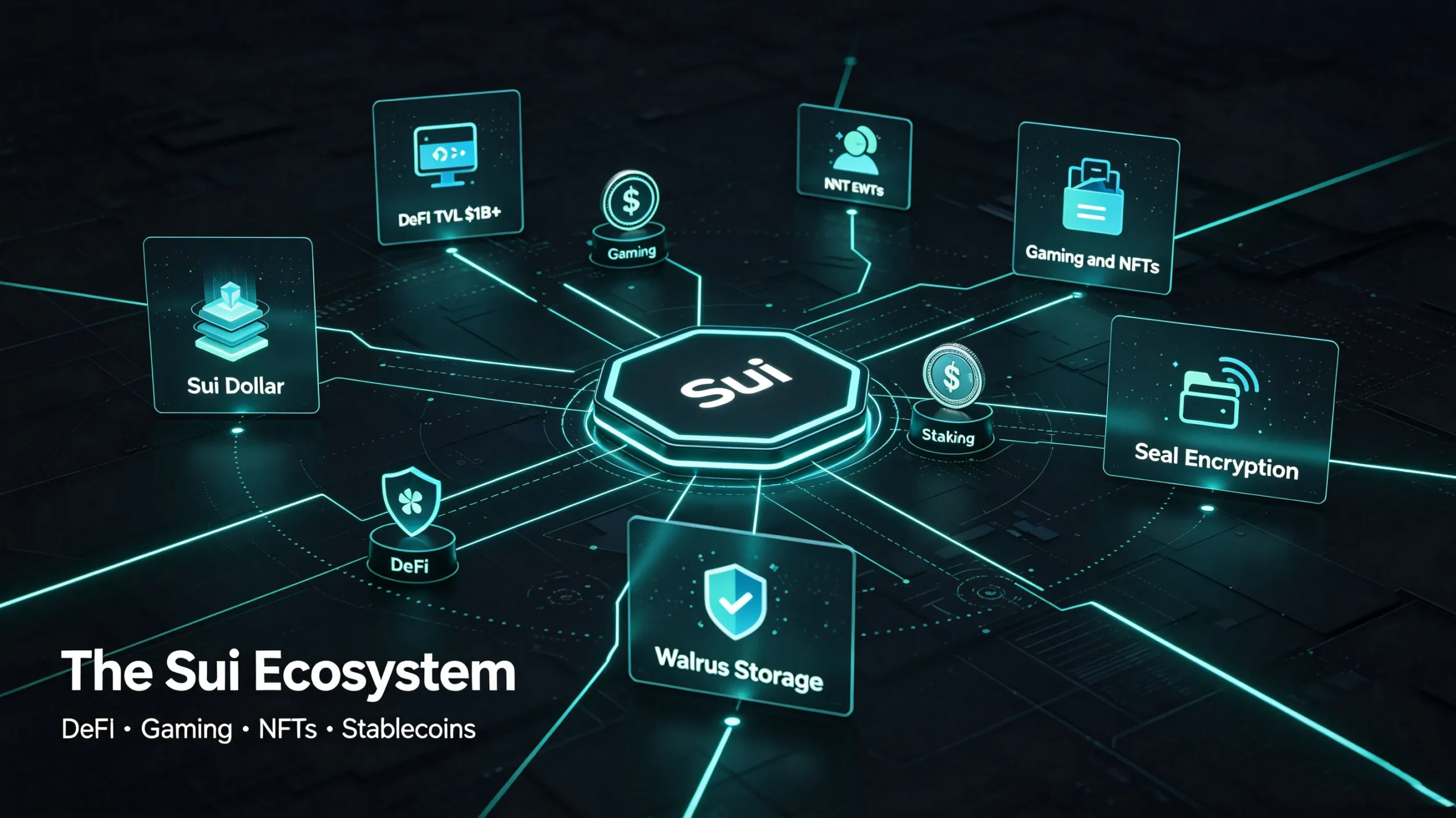
The Sui coin Ecosystem: Apps, Games, and DeFi
Sui’s ecosystem has grown significantly since its launch. As of 2026, it is a mature ecosystem with diverse applications.
DeFi on Sui coin
Sui’s DeFi ecosystem has shown impressive growth. The network’s DeFi TVL crossed $1 billion in July 2026. Lending and native DeFi protocols are driving capital onto the chain.
However, TVL has been volatile. It fell from recent highs of more than $2.6 billion in October 2025 to approximately $440 million in July 2026. Stablecoin supply on Sui collapsed 70% from $1.6 billion to $492 million.
Stablecoins on Sui
Sui has launched several stablecoin initiatives:
-
Sui Dollar (USDsui): The Sui blockchain launched its native stablecoin with a structure designed to return yield from backing assets to the ecosystem
-
Gasless stablecoin transfers: Sui announced the launch of gasless stablecoin transfers, enabling users to send supported stablecoins peer-to-peer without paying gas fees
Gaming and NFTs
Sui’s high throughput and low latency make it ideal for gaming applications. The network has secured partnerships with gaming platforms and continues to attract developers building high-fidelity games and NFT projects.
The Sui coin Stack
Sui’s foundational infrastructure includes a modular framework of storage, compute, and data services:
-
Sui coin: Execution layer for high-throughput smart contracts
-
Walrus: Decentralized, verifiable data storage
-
Walrus Sites: Decentralized frontends
-
Seal: Programmable encryption and access control
-
Nautilus: Confidential off-chain compute
-
Zero Knowledge Login + Passkeys: Privacy-preserving authentication
-
SuiNS: Human-readable naming
Recent Developments: What’s New in 2026
2026 has been a pivotal year for Sui, with several major developments.
Gasless Stablecoin Transfers (July 2026)
Sui announced the launch of gasless stablecoin transfers at the protocol level, eliminating transaction fees typically associated with crypto transfers. This feature addresses a common frustration among crypto users by making stablecoin transactions more cost-effective and accessible.
However, this launch came amid declining on-chain activity. Stablecoin supply on Sui collapsed 70% from $1.6 billion to $492 million. June app fees dropped to $1.4 million, the lowest since July 2024, down 53% from the previous month.
Sui Dollar Launch (July 2026)
The Sui blockchain launched its native stablecoin, the Sui Dollar (USDsui), with a structure designed to return yield from backing assets to the ecosystem.
Confidential Transfers (June 2026)
Sui Network opened its confidential transfers feature to public testing on Devnet, introducing a mechanism for private transactions. The 2026 roadmap includes protocol-level private transactions by default, providing institutions with compliant confidentiality.
Spot Sui coin ETFs
Bitwise filed for a spot Sui ETF, signaling institutional interest. Canary Capital and Grayscale launched the first spot SUI ETFs on U.S. exchanges, embedding staking rewards into NAV.
Network Upgrade (July 2026)
Mysten Labs released Sui mainnet-v1.74.1 on July 1, 2026, introducing zero-gas transaction simulation for gasless-tier-eligible flows and stability improvements.
Six-Hour Outage (January 2026)
Sui demonstrated resilience after facing a significant six-hour outage in January 2026, with core developers restoring operations. However, the root cause was not fully disclosed, raising some transparency concerns.
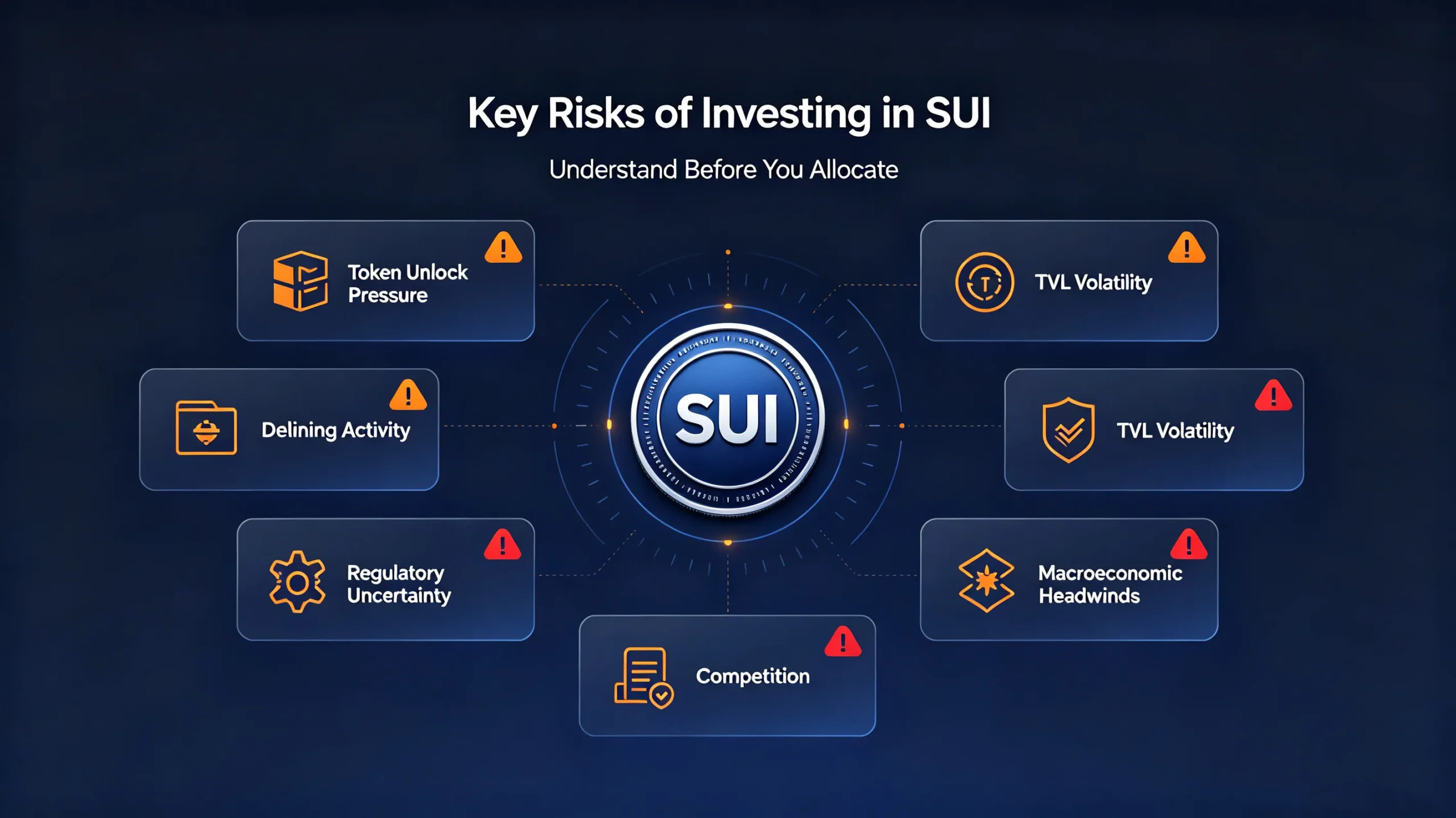
Key Risks of Investing in Sui coin
Before investing in SUI, it is essential to understand the significant risks involved.
1. Token Unlock Pressure
Monthly token unlocks introduce new supply into the market. Late 2026 emissions trend near 64 million SUI per month. This regular injection of new supply can create selling pressure.
2. Declining On-Chain Activity
Stablecoin supply on Sui collapsed 70% from $1.6 billion to $492 million. DEX trading volume in June totaled $2.2 billion, down 92% from the October all-time high. This decline in activity raises questions about network adoption.
3. TVL Volatility
Sui’s TVL fell from recent highs of more than $2.6 billion in October 2025 to approximately $440 million in July 2026. While it crossed $1 billion again in July, the volatility suggests ongoing challenges.
4. Regulatory Uncertainty
Like all cryptocurrencies, SUI faces regulatory uncertainty. Clearer crypto regulations in major economies could reduce risk premiums, but adverse regulatory actions could suppress prices.
5. Competition
Sui faces intense competition from established Layer-1s like Ethereum and Solana. If competing blockchains introduce superior technology or capture more market share, SUI could struggle to maintain value.
6. Macroeconomic Headwinds
Analysts currently expect the Federal Reserve to raise interest rates in September 2026, as inflation continues to exceed the central bank’s 2% target. Geopolitical tensions and tariff disputes have prompted investors to pull out of the riskiest areas of crypto.
7. Technical Risks
Any catastrophic security breach or loss of developer interest could invalidate price forecasts. While Sui’s Move language offers security advantages, no system is immune to vulnerabilities.
Sui vs. Solana: The Layer-1 Battle
The battle between Sui and Solana is one of the most compelling narratives in the Layer-1 space in 2026. Both represent the pinnacle of 2026 blockchain engineering.
Speed and Throughput
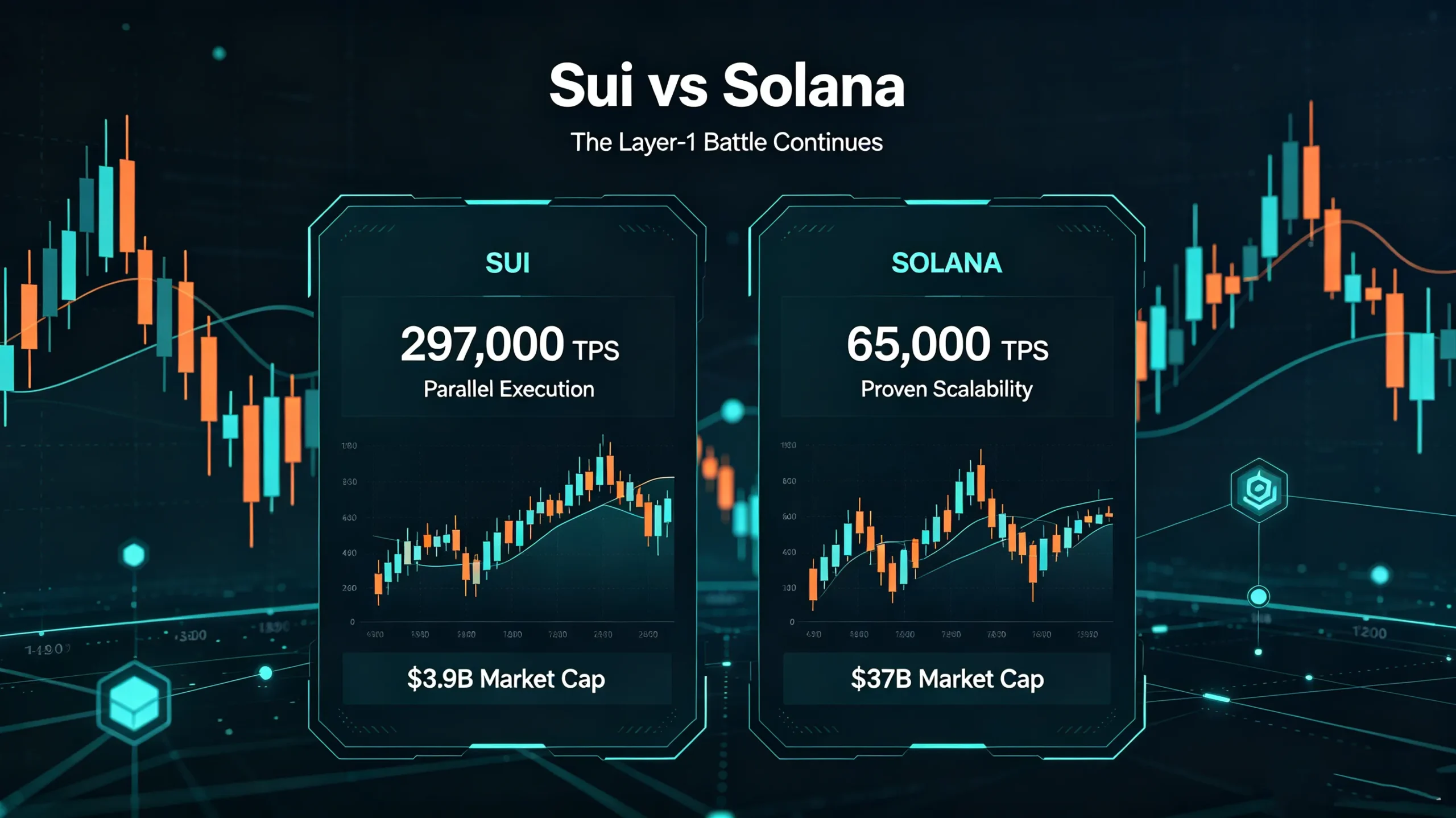
Sui boasts a theoretical maximum of 297,000 transactions per second, compared to Solana’s theoretical maximum of 65,000. Sui’s parallel execution engine allows it to handle this enormous throughput.
Market Position
As of July 2026, Solana has a significantly larger market capitalization and higher trading volume compared to Sui. SOL’s market cap is roughly $37 billion compared to SUI’s approximately $3.9 billion.
Different Strengths
According to one analysis: “Sui is the engine for the next generation of consumer internet, while Aptos is the backbone for the new financial system”.
The SOL vs SUI debate is intensifying as two very different Layer-1 blockchains compete for dominance in 2026. Solana brings institutional strength, deep liquidity, and proven scalability, while Sui offers faster developer growth and higher risk-reward potential.
Frequently Asked Questions
What is Sui coin?
Sui (SUI) is the native token of the Sui blockchain, a next-generation Layer-1 network designed for high throughput, low latency, and scalability. It is used for transaction fees, staking, governance, and ecosystem applications.
Who created Sui coin?
Sui was developed by Mysten Labs, a company founded by former Meta engineers who previously worked on the Diem blockchain and Move programming language.
How does Sui coin work?
Sui uses an object-centric data model and parallel transaction execution to achieve high throughput. It runs on the Move programming language and uses a delegated Proof-of-Stake consensus mechanism.
How can I buy SUI coin?
You can buy SUI on major exchanges like OKX, Coinbase, Bitget, KuCoin, and Binance. Create an account, complete identity verification, fund your account, and purchase SUI.
How high can SUI go?
Analysts expect SUI to trade between $1.50 and $3.00 in 2026. Long-term projections range from $5.00 to $12.00 by 2030 in a bullish scenario. Some optimistic forecasts suggest $15 to $25 if Sui achieves mass adoption.
Is SUI a good investment?
SUI offers compelling technology and a strong team, but it faces significant risks including token unlocks, declining on-chain activity, and intense competition. As with all crypto investments, only invest what you can afford to lose.
What is the current SUI price?
As of July 2026, SUI is trading around $0.72–$0.85. The price has declined approximately 46% year-to-date.
Can I stake SUI?
Yes. SUI staking yields approximately 7% nominal APR through validators, with some exchange products offering up to 6.5%.
What is Sui’s total supply?
SUI has a total supply of 10 billion tokens, with approximately 4.05 billion in circulation as of July 2026.
What exchanges list SUI?
SUI is listed on OKX, Coinbase, Bitget, KuCoin, Gate.io, Binance, and many other exchanges.
Final Verdict: The Bottom Line on Sui coin
Sui coin represents one of the most technologically ambitious Layer-1 blockchain projects in the cryptocurrency space. Its object-centric architecture, parallel transaction execution, and Move programming language offer genuine innovations that address the scalability and security challenges faced by earlier blockchains.
The Bull Case
-
World-class team: Former Meta engineers with Diem experience
-
Superior technology: 297,000 TPS theoretical maximum
-
Growing ecosystem: $1 billion+ TVL
-
Institutional interest: Spot ETFs and major VC backing
-
Active development: Regular network upgrades and new features
The Bear Case
-
Token unlock pressure: 64 million SUI monthly emissions
-
Declining activity: Stablecoin supply down 70%
-
TVL volatility: From $2.6B to $440M and back
-
Intense competition: Ethereum and Solana are formidable rivals
-
Macroeconomic headwinds: Rising interest rates and geopolitical tensions
The Verdict
Sui coin is not a get-rich-quick scheme. It is a serious blockchain project with real technology, a strong team, and genuine potential. However, like all cryptocurrency investments, it carries significant risk. The token’s price will remain tied to broader crypto market cycles.
For investors considering Sui coin, the most prudent approach is:
-
Do your own research — Understand the technology, tokenomics, and risks
-
Dollar-cost average — Rather than timing the market
-
Only invest what you can afford to lose — Crypto is volatile
-
Monitor token unlocks — Be aware of upcoming supply events
-
Watch ecosystem metrics — TVL, daily active addresses, and developer activity
Sui’s journey is far from over. Whether it becomes a top-tier Layer-1 or fades into obscurity will depend on its ability to attract users, developers, and capital in an increasingly competitive landscape. For now, it remains one of the most interesting projects to watch in the crypto space—but one that demands caution and careful consideration from any investor.