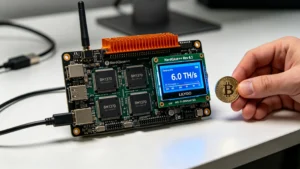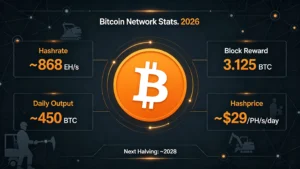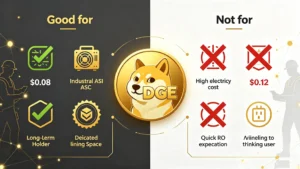
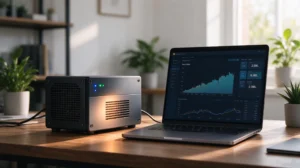
The best quiet and efficient home mining rig for 2026 is projected to be a sub-65dB, high-efficiency ASIC miner utilizing next-generation 3nm chip technology and integrated liquid cooling. These future rigs will prioritize a high hashrate-to-watt ratio over raw power, allowing home miners to operate profitably and discreetly within residential environments. For those seeking versatility, GPU-based rigs featuring cards with advanced power management and custom cooling solutions will remain a strong, quiet alternative for mining a variety of altcoins.
As the cryptocurrency landscape matures, the wild west days of loud, power-hungry mining rigs in residential basements are drawing to a close. By 2026, the home mining scene will be defined by two critical factors: silence and efficiency. Increasing energy costs, environmental concerns, and the simple desire to live without the constant drone of high-speed fans are pushing manufacturers and miners toward smarter, quieter technology. This guide will navigate the projected trends and technologies, helping you identify the best home mining rigs for 2026 that won’t drive up your electricity bill or drive you out of the room.
At Cleverobot.com, we specialize in understanding the trajectory of technology. This article leverages our expertise to provide a forward-looking analysis for aspiring and veteran home miners, ensuring you’re prepared for the future of decentralized network validation.
Table of Contents
- Why Will Silence and Efficiency Define Home Mining in 2026?
- What Key Technologies Will Shape 2026 Mining Rigs?
- The Best Quiet & Efficient Home Mining Rigs (Projected for 2026)
- Beyond the Hardware: How to Achieve a Silent & Efficient Setup
- Frequently Asked Questions about Home Mining in 2026
- Is Home Mining in 2026 a Quietly Profitable Venture?
Why Will Silence and Efficiency Define Home Mining in 2026?
The evolution of home mining isn’t just about chasing higher hashrates; it’s about sustainability and integration into daily life. Several key factors are driving the push towards quieter and more energy-efficient hardware. Understanding these trends is crucial for making a smart investment for 2026.
Firstly, rising global energy prices are making efficiency a primary component of profitability. A miner’s success is no longer just about the value of the coin it mines, but about how much energy it consumes to do so. Rigs with a superior joules-per-terahash (J/TH) rating will deliver a far better return on investment (ROI). Secondly, the increasing density of urban living means noise is a significant concern. A standard air-cooled ASIC miner can produce 70-85 decibels of noise, comparable to a vacuum cleaner or leaf blower—unacceptable for apartments or shared living spaces. Manufacturers are recognizing this market need for “residential-grade” hardware. Finally, a growing environmental consciousness, both from regulators and within the crypto community itself, is championing less power-intensive consensus mechanisms and hardware.
What Key Technologies Will Shape 2026 Mining Rigs?
Innovation in semiconductor technology and cooling systems will be the bedrock of next-generation mining rigs. Expect to see these advancements become standard by 2026.
Next-Generation Semiconductor Chips (3nm and Beyond)
The heart of every mining rig is its processing chip. The industry is rapidly moving from 7nm and 5nm process nodes to even smaller, more efficient 3nm chips. A smaller process node allows for more transistors to be packed into the same space, leading to two key benefits:
- Increased Hashrate: More processing power in the same physical footprint.
- Drastically Improved Power Efficiency: The primary advantage. These chips require less voltage to operate, directly translating to a lower J/TH ratio and less heat output. Less heat means fans don’t have to work as hard, resulting in quieter operation.
Integrated Liquid Cooling (ILC)
While aftermarket liquid cooling has been popular among enthusiasts, we project that manufacturers will begin offering integrated liquid cooling systems as a premium or even standard feature on high-end home miners. Unlike roaring air-cooling fans, liquid cooling uses a pump and radiator to dissipate heat quietly and more effectively. This allows the rig to maintain peak performance without generating disruptive noise levels, making it a perfect solution for home environments.
Advanced Power Management and Firmware
Future mining rigs will offer more granular control through sophisticated firmware. Expect to see built-in “efficiency modes” or “quiet modes” that automatically underclock and undervolt the hardware to a user-defined power or noise target. This software-level control will empower home miners to easily balance profitability with household comfort, a feature largely absent in today’s more industrial-focused hardware.
The Best Quiet & Efficient Home Mining Rigs (Projected for 2026)
While specific models for 2026 have yet to be announced, we can project the top categories of miners based on current technological trajectories. When shopping, you’ll be looking for these types of machines.
Category 1: The Ultimate Apartment Miner (Sub-55dB ASICs)
This category is designed for miners who prioritize stealth and silence above all else. These rigs will not be the most powerful on the market, but their exceptional quietness will make them ideal for running in a living room or office without being a nuisance.
What to look for:
- Noise Level: Under 55 dB, comparable to a modern refrigerator.
- Cooling: Likely to feature oversized, slow-spinning fans or a compact, integrated liquid cooling system.
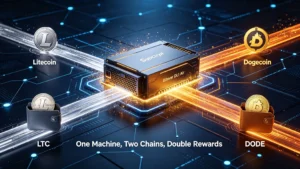
- Algorithm Focus: Optimized for less energy-intensive algorithms like Kadena (KDA) or Scrypt (LTC & DOGE), rather than the highly competitive SHA-256 (BTC).
- Form Factor: A sleek, compact design that resembles a PC tower or a network-attached storage (NAS) device rather than an industrial machine.
Category 2: The Power-Efficient Workhorse (High-Efficiency ASICs)
For miners with a dedicated space like a garage or basement where moderate noise is acceptable, the focus shifts to maximum efficiency. These rigs will lead the market in hashrate-per-watt, ensuring the highest possible profitability for the electricity consumed.
What to look for:
- Efficiency Rating: The key metric will be a J/TH rating below 20. The lower, the better.
- Semiconductor Tech: Built on the latest 3nm or even smaller process nodes.
- Cooling: Advanced air cooling with variable-speed fans or an optional liquid cooling upgrade kit.
- Profitability: While still producing noticeable noise (likely in the 60-70 dB range), their unparalleled efficiency will make them the most profitable SHA-256 (Bitcoin) miners for home users with low-cost electricity.
Category 3: The Versatile GPU Contender (Next-Gen GPUs)
GPU mining will continue to be a viable and highly flexible option for home miners. By 2026, GPUs from NVIDIA, AMD, and Intel will offer significant gains in both performance and efficiency, especially when properly tuned. Their key advantage is the ability to switch between different coins and algorithms, adapting to market changes.
What to look for:
- Memory Bandwidth: High-speed GDDR7 (or newer) memory will be crucial for memory-hard algorithms.
- Power Management: Look for cards with excellent undervolting capabilities to slash power consumption and heat output.
- Cooling Solutions: Custom, triple-fan or AIO liquid-cooled models will provide the quietest operation. Building a rig with these cards in an open-air frame allows for superior heat dissipation at lower fan speeds.
- Flexibility: The perfect choice for hobbyists who want to mine various altcoins, contribute to decentralized computing projects (AI, rendering), and even game on the side.
| Category | Primary Goal | Est. Noise Level | Key Technology | Best For |
|---|---|---|---|---|
| Ultimate Apartment Miner | Stealth & Silence | < 55 dB | Integrated Liquid Cooling | Shared living spaces, offices |
| Power-Efficient Workhorse | Profitability (ROI) | 60 – 70 dB | 3nm ASIC Chips | Garages, basements, dedicated rooms |
| Versatile GPU Contender | Flexibility & Adaptability | < 60 dB (customizable) | Advanced Undervolting | Hobbyists, gamers, altcoin miners |
Beyond the Hardware: How to Achieve a Silent & Efficient Setup
Buying the right rig is only half the battle. Creating the perfect home mining environment involves a holistic approach to cooling and optimization.
Liquid and Immersion Cooling
For those willing to go the extra mile, immersion cooling represents the endgame for silent operation. This involves submerging the entire mining rig in a non-conductive dielectric fluid. The fluid absorbs heat directly from the components, which is then circulated through a radiator to be dissipated. The result is a nearly silent machine, as all fans are removed. While this was once an industrial-only solution, more compact and affordable home immersion kits are expected to be widely available by 2026.
Software and Firmware Optimization
Don’t underestimate the power of software. Custom firmware for ASICs (like Braiins OS+) and fine-tuning tools for GPUs (like MSI Afterburner) allow you to dial in the perfect balance of performance and power. By undervolting your hardware, you can significantly reduce power consumption and heat output with only a minimal impact on hashrate, dramatically improving overall efficiency.
Acoustic Treatment and Enclosures
If you opt for a more powerful air-cooled rig, you can still mitigate its noise. Building or buying an acoustic enclosure (a soundproof box) lined with mass-loaded vinyl or acoustic foam can cut noise levels by 10-20 dB or more. It’s critical to ensure the enclosure has properly designed intake and exhaust ducts to maintain adequate airflow and prevent overheating.
Frequently Asked Questions about Home Mining in 2026
Q: Will home mining still be profitable in 2026?
A: Yes, but profitability will be almost entirely dependent on efficiency. With increasing network difficulty for major coins like Bitcoin, only miners with low electricity costs and highly efficient hardware (low J/TH) will see significant returns. The key will be to choose the right hardware and optimize its power consumption.
Q: Which cryptocurrency will be the best to mine from home?
A: This is difficult to predict. While Bitcoin (SHA-256) will likely remain the most secure and valuable, its mining difficulty may favor industrial operations. Home miners might find more success with altcoins on algorithms like Scrypt (Litecoin), KHeavyHash (Kaspa), or various GPU-mineable coins where the network hashrate is less saturated.
Q: How much technical skill is needed to run a home miner in 2026?
A: We expect the user experience to become much more streamlined. With “plug-and-play” liquid-cooled ASICs and intuitive software, setting up a rig will be easier than ever. However, a basic understanding of networking, electricity safety, and cryptocurrency wallets will still be essential for success.
Is Home Mining in 2026 a Quietly Profitable Venture?
The future of home crypto mining is bright, but it’s also quiet and efficient. The trend is moving decisively away from brute force and towards intelligent, optimized performance. By 2026, the best home mining rigs will seamlessly integrate into our living spaces, generating passive income without the disruptive noise and exorbitant energy bills of the past. Whether you choose a specialized, whisper-quiet ASIC or a versatile, fine-tuned GPU rig, your success will be measured not just in terahashes, but in watts and decibels. By focusing on these core principles of silence and efficiency, you can position yourself for a profitable and peaceful home mining journey in the years to come.