What is Cryptocurrency Mining? The Complete Guide for ASIC Miners in 2026
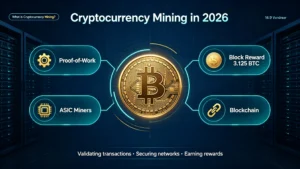
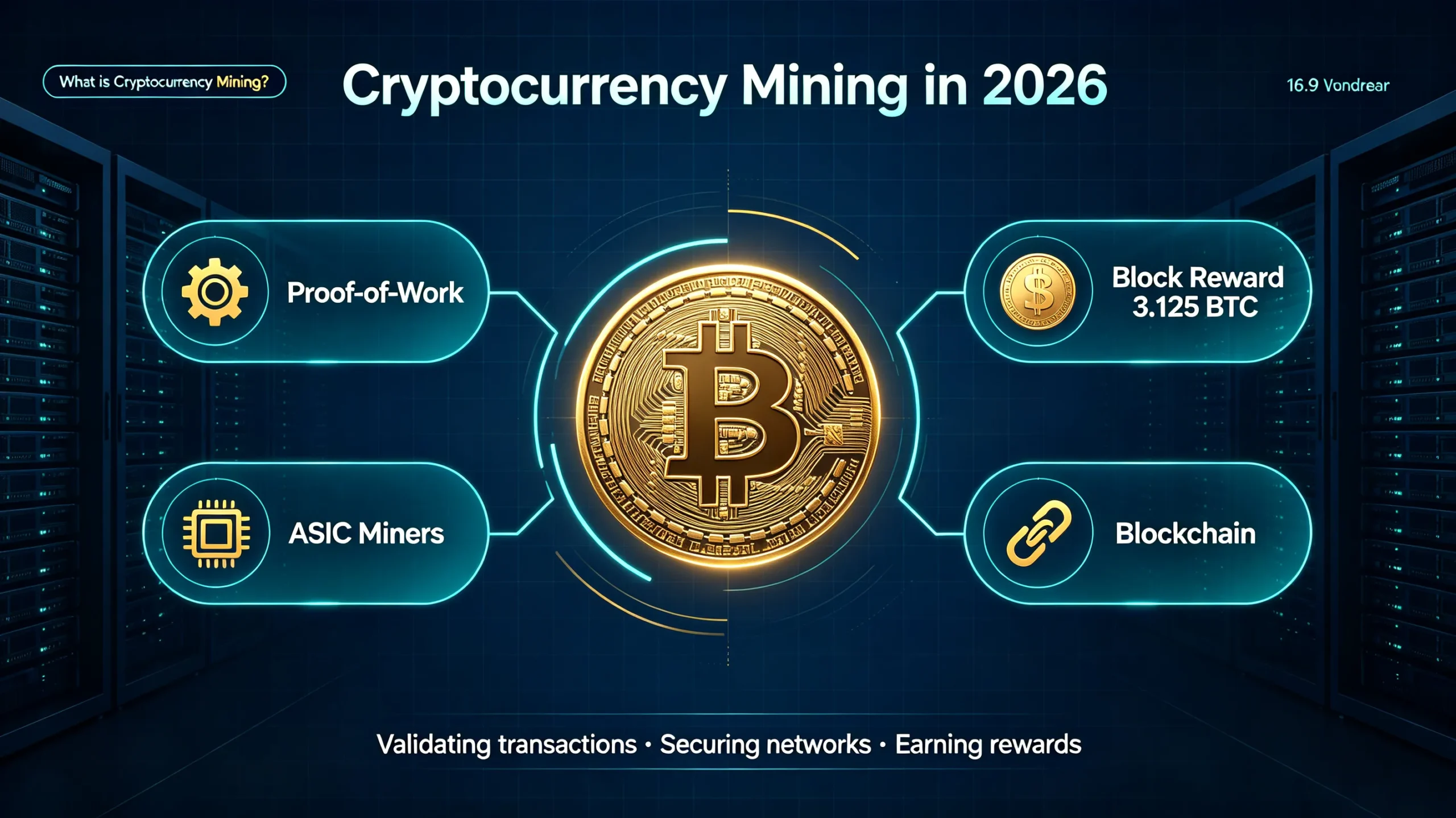
Cryptocurrency mining is the process of validating transactions and securing a blockchain network by solving complex mathematical problems using specialized computing hardware. Miners compete to find the correct solution, and the first to succeed earns the right to add a new block of transactions to the blockchain and receives a block reward in cryptocurrency. In 2026, this process is dominated by Application-Specific Integrated Circuit (ASIC) miners—machines built specifically for mining—and remains viable primarily for those who can access efficient hardware and low-cost electricity.
This guide explains how cryptocurrency mining works, what equipment you need, whether it remains profitable in 2026, and how to start your own mining operation.
How Does Cryptocurrency Mining Work?
At its core, cryptocurrency mining serves two essential functions: validating transactions and issuing new coins into circulation.
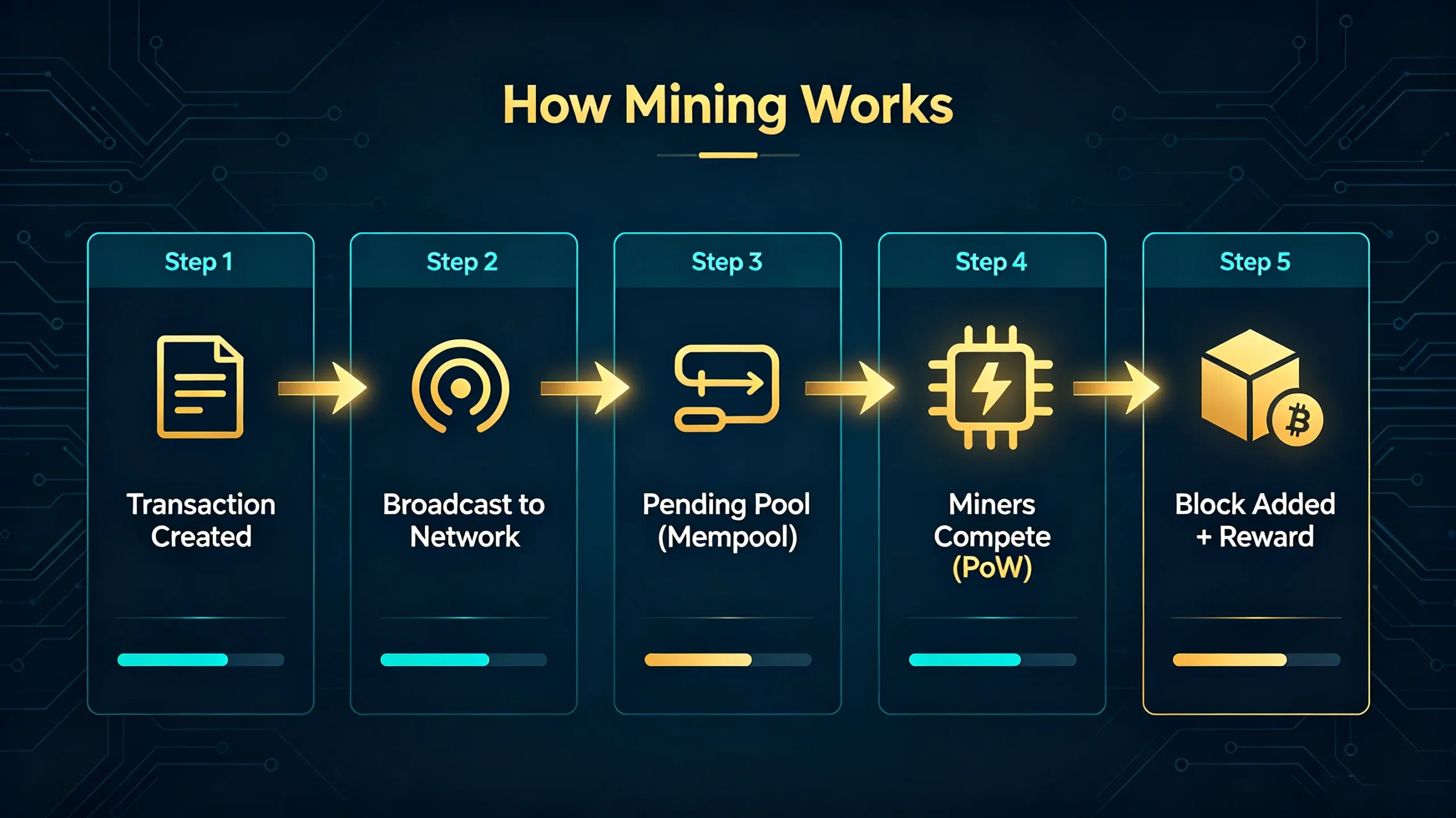
When someone sends cryptocurrency, the transaction is broadcast to the network and grouped with other pending transactions into a candidate block. Miners compete to solve a cryptographic puzzle—known as Proof-of-Work—using their computing power. The first miner to solve the puzzle broadcasts the solution to the network. Other nodes verify the solution, and if correct, the block is added to the blockchain. The winning miner receives the block reward plus any transaction fees paid by users.
What Is Proof-of-Work (PoW)?
Proof-of-Work is the consensus mechanism that secures Bitcoin and many other cryptocurrencies. It requires miners to expend computational energy to find a hash value below a target set by the network. This process is deliberately difficult—it requires massive trial and error—but the result is easy for other nodes to verify.
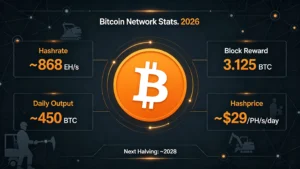
The network automatically adjusts the difficulty of this puzzle every 2,016 blocks (roughly every two weeks) to ensure that blocks are found approximately every 10 minutes, regardless of how much total computing power (hashrate) is on the network. As of mid-2026, the Bitcoin network hashrate fluctuates around 860–1,030 exahashes per second (EH/s), with difficulty adjustments occurring frequently in response to miner economics.
Proof-of-Stake (PoS) — A Brief Comparison
Proof-of-Stake is an alternative consensus mechanism that does not involve mining. Instead of competing with computing power, validators are chosen to create new blocks based on the number of coins they hold and are willing to “stake” as collateral. PoS consumes significantly less energy than PoW but requires a different set of economic incentives. While PoS has gained adoption (Ethereum switched to PoS in 2022), PoW remains the dominant mechanism for Bitcoin and many other major cryptocurrencies, and ASIC mining continues to be the primary way to participate.
What Equipment Do You Need for Cryptocurrency Mining?
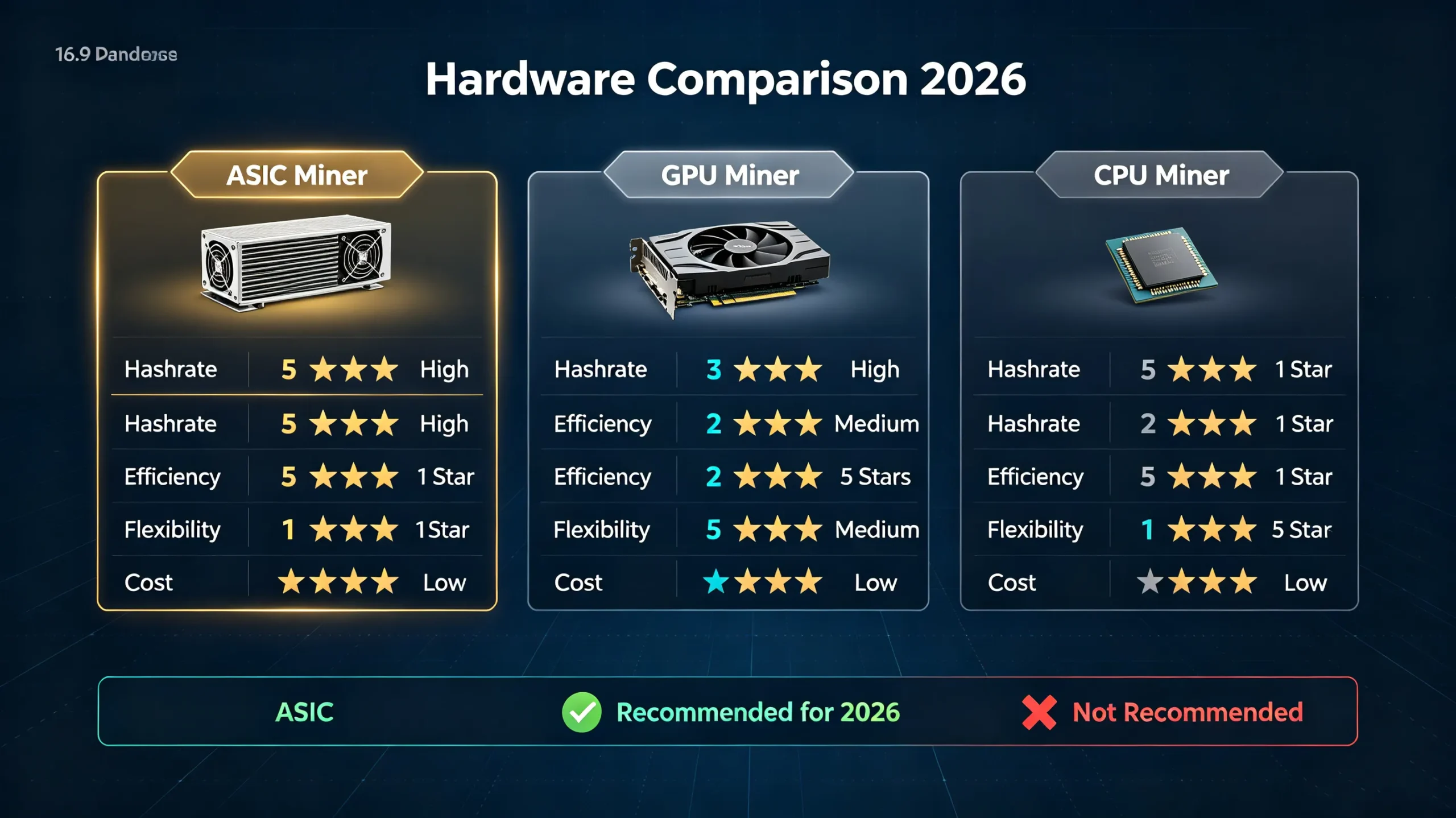
The equipment you need depends entirely on which cryptocurrency you intend to mine. In 2026, three main categories of hardware exist:
ASIC Miners
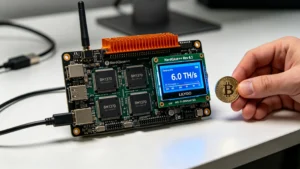
ASIC (Application-Specific Integrated Circuit) miners are purpose-built machines designed to mine a specific algorithm. They offer the highest hashrate and best energy efficiency of any mining hardware and are the only profitable option for mining Bitcoin and other major PoW cryptocurrencies in 2026.
Popular ASIC miners available through Xonmining include:
-
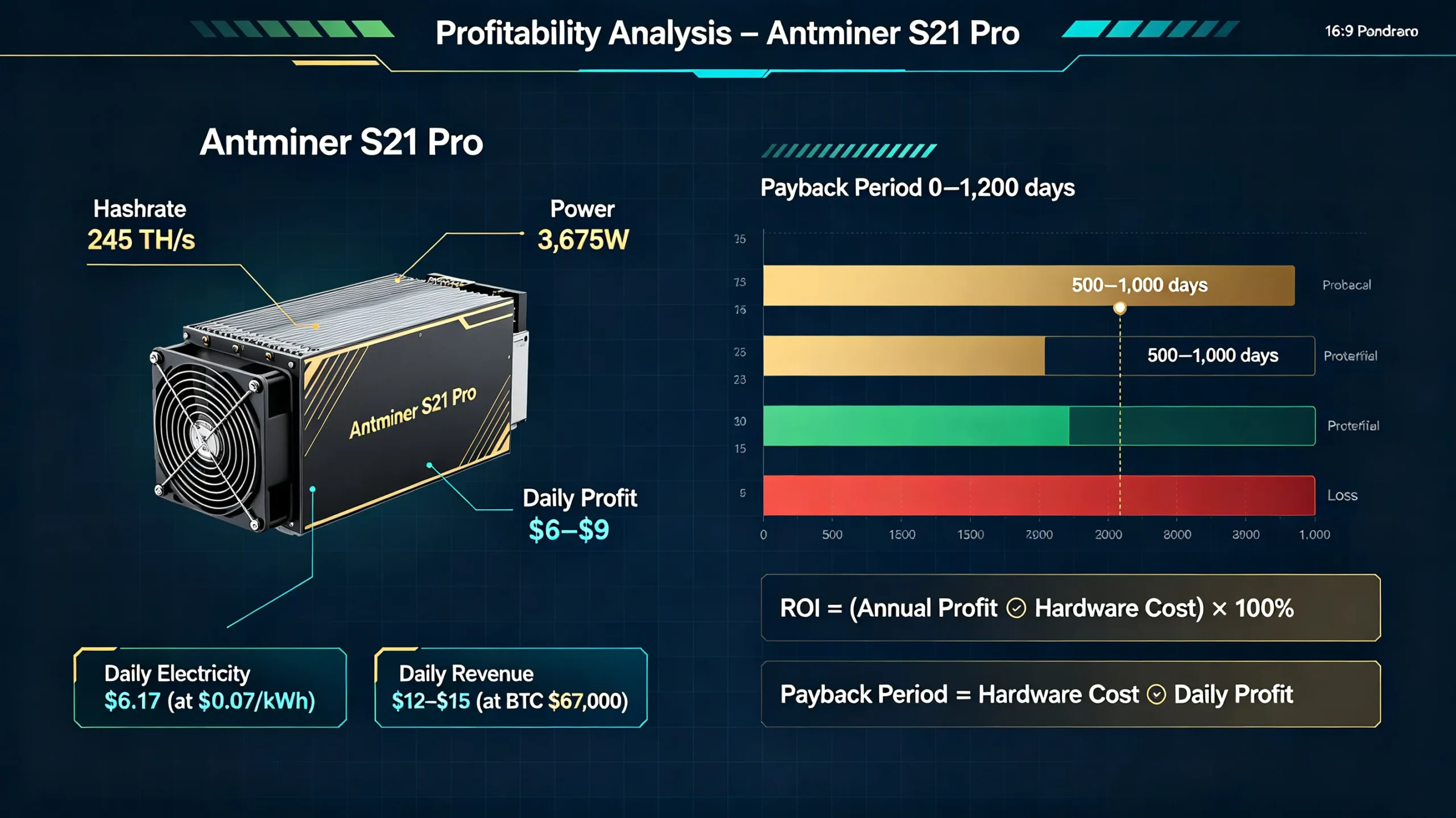
Bitmain Antminer S21 Pro (245TH/s) — A SHA-256 miner for Bitcoin, with 245 TH/s hashrate and 3,675W power consumption
-
Antminer L11 series — Scrypt miners for Litecoin and Dogecoin
-
Antminer X9 — RandomX miner for Monero
ASIC miners are expensive (typically $1,500–$9,000 depending on the model), generate significant noise (around 75 dB), and require adequate cooling and power infrastructure.
GPU Miners
Graphics Processing Units (GPUs) were once popular for mining Ethereum and other altcoins. However, following Ethereum’s transition to PoS and the rise of ASIC dominance, GPU mining is largely unprofitable in 2026 for most cryptocurrencies. Some smaller coins can still be mined with GPUs, but returns are generally low compared to the hardware investment.
CPU Miners
Central Processing Unit (CPU) mining is essentially obsolete for profit-seeking miners. The computational power of a CPU is dwarfed by GPUs and ASICs, making CPU mining uneconomical for virtually all major cryptocurrencies in 2026.
Electricity and Power Supply
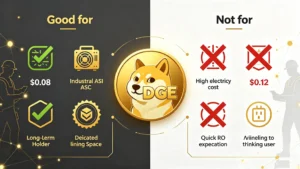
Electricity is the single largest ongoing cost in mining. To be profitable in 2026, miners typically need electricity below **$0.08 per kWh**. Professional mining operations often target rates below $0.05/kWh. The Antminer S21 Pro, for example, draws 3,675W—meaning it consumes approximately 88 kWh per day. At $0.07/kWh, daily electricity costs would be around $6.16.
Cooling Requirements
ASIC miners generate substantial heat. Effective cooling is essential to maintain performance and extend equipment life. Options include:
-
Air cooling — Standard fans; sufficient for small-scale operations in cool environments
-
Liquid cooling — More efficient for high-density setups
-
Immersion cooling — The most advanced method; submerging miners in dielectric fluid for maximum heat dissipation and overclocking potential
Comparison: ASIC vs GPU vs CPU Mining
| Feature | ASIC Miner | GPU Miner | CPU Miner |
|---|---|---|---|
| Hashrate | Extremely high | Moderate | Very low |
| Energy Efficiency | Best | Moderate | Poor |
| Supported Coins | Specific algorithm (e.g., SHA-256, Scrypt) | Multiple (e.g., ETH Classic, Ravencoin) | Very few (e.g., Monero) |
| Initial Cost | High ($1,500–$9,000+) | Moderate ($500–$2,000) | Low |
| Noise Level | High (75 dB) | Moderate | Low |
| Maintenance | Moderate | Moderate | Low |
| 2026 Viability | ⭐⭐⭐⭐⭐ Highly recommended | ⭐⭐ Not recommended | ⭐ Not recommended |
What Are the Different Types of Mining Methods?
Miners can participate in the network in several ways. The choice depends on your budget, technical expertise, and risk tolerance.
Solo Mining
Solo mining means running your hardware independently, attempting to find blocks on your own. If you succeed, you keep the entire block reward. However, with the Bitcoin network hashrate exceeding 860 EH/s, the probability of a single ASIC miner finding a block is extremely low. Solo mining is essentially gambling—you might go months or years without a reward, then receive a full 3.125 BTC payout.
Pool Mining
Mining pools combine the hashrate of many miners. When the pool finds a block, the reward is distributed among participants based on their contributed hashrate. This provides steady, predictable income and is the recommended approach for most miners in 2026. Most pools charge fees between 1–3% of earnings.
Cloud Mining
Cloud mining involves renting hashrate from a provider who owns and operates the hardware. While convenient, this method carries significant risks, including scams, opaque operations, and contracts that may not be profitable. Exercise extreme caution and research providers thoroughly before committing funds.
Is Cryptocurrency Mining Still Profitable in 2026?
The short answer is: it depends. Profitability in 2026 is determined by a complex interplay of factors:
-
Hardware efficiency — Measured in J/TH (joules per terahash). Machines below 17 J/TH are competitive in 2026; anything above 25 J/TH is largely obsolete for profit-seeking miners
-
Electricity cost — The single most important variable
-
Cryptocurrency price — Particularly Bitcoin’s price
-
Network difficulty — Adjusts based on total hashrate
-
Block reward — Currently 3.125 BTC per block following the April 2024 halving
-
Hardware purchase cost — Capital expenditure that must be recovered
How to Calculate Mining ROI
Return on Investment (ROI) is the percentage return you earn relative to your initial investment. Here’s a simplified framework:
Step 1: Calculate daily revenue
Daily Revenue = (Your Hashrate ÷ Network Hashrate) × (Block Reward + Fees) × Number of Blocks Per Day × Coin Price
Step 2: Calculate daily costs
Daily Cost = Power Consumption (kW) × 24 hours × Electricity Rate ($/kWh)
Step 3: Calculate daily profit
Daily Profit = Daily Revenue − Daily Cost
Step 4: Calculate ROI and payback period
Payback Period (days) = Hardware Cost ÷ Daily Profit
ROI (%) = (Annual Profit ÷ Hardware Cost) × 100
Example — Antminer S21 Pro (245TH/s):
| Parameter | Value |
|---|---|
| Hashrate | 245 TH/s |
| Power Consumption | 3.675 kW |
| Electricity Rate | $0.07/kWh |
| Daily Electricity Cost | 3.675 × 24 × $0.07 = $6.17 |
| Approx. Daily Revenue (at BTC $67,000) | ~$12–$15 (varies with difficulty) |
| Approx. Daily Profit | ~$6–$9 |
| Hardware Cost | ~$4,500–$6,000 |
| Estimated Payback Period | 500–1,000 days |
Note: These are illustrative figures. Actual profitability varies significantly with BTC price, network difficulty, and electricity costs.
Profitability by Coin Type
Different cryptocurrencies offer different mining economics:
Bitcoin (BTC)
-
Algorithm: SHA-256
-
Block Reward: 3.125 BTC
-
Block Time: ~10 minutes
-
Best Hardware: Antminer S21 Pro, S21 XP, S23 series
Litecoin (LTC)
-
Algorithm: Scrypt
-
Block Reward: 6.25 LTC
-
Block Time: ~2.5 minutes
-
Best Hardware: Antminer L11 series
To learn about the suitable models for LTC mining, please refer to our “Top LTC Miners of 2026” special section.
Dogecoin (DOGE)
-
Algorithm: Scrypt (merge-mined with Litecoin)
-
Block Reward: 10,000 DOGE (fixed, no halving)
-
Block Time: ~1 minute
-
Best Hardware: Antminer L11 series
If you are interested in DOGE mining, you can refer to our “Top Dogecoin Miners” recommendation list.
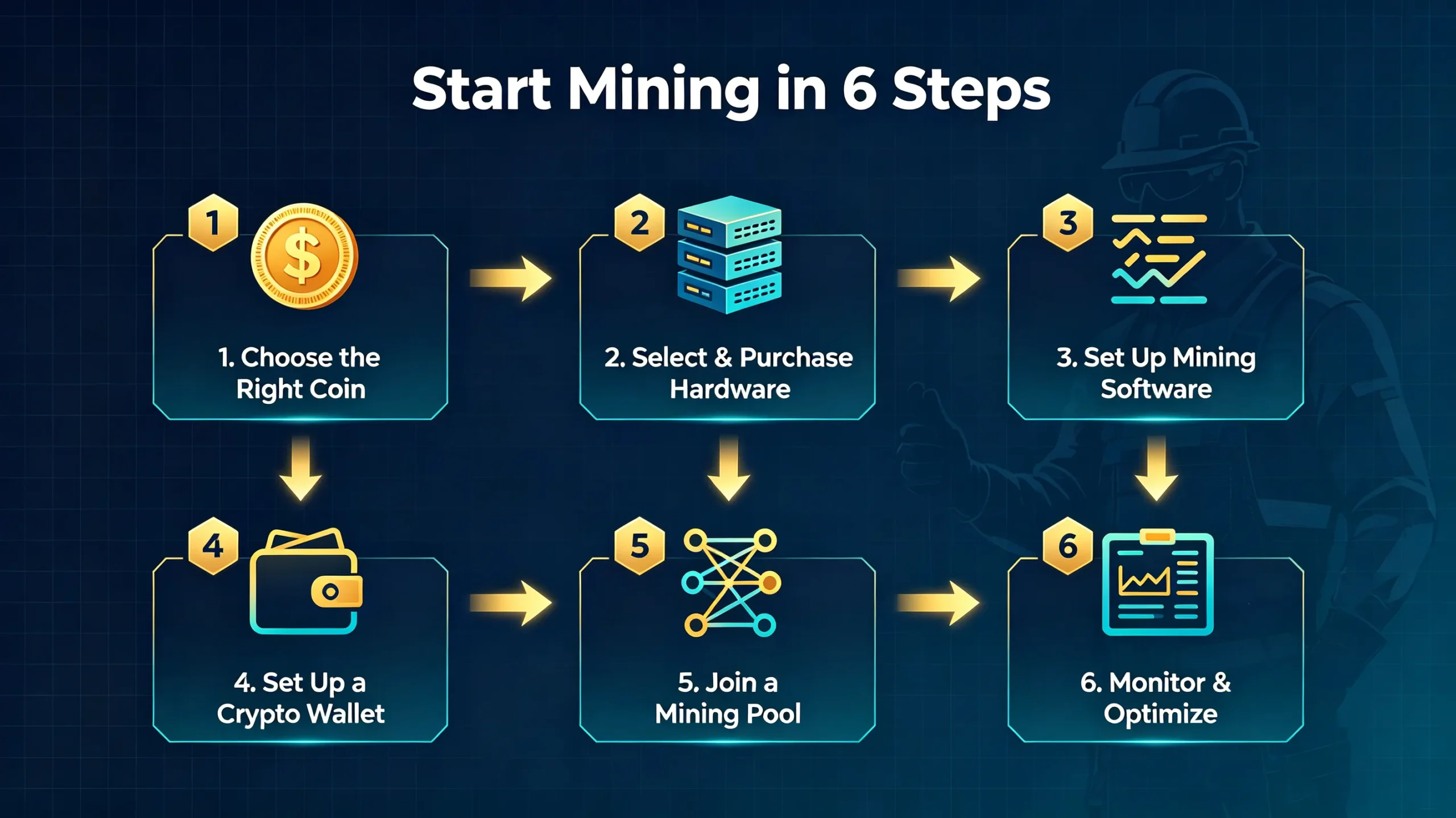
How to Start Cryptocurrency Mining: Step-by-Step Guide
Step 1: Choose the Right Coin to Mine
Your choice of coin determines your hardware requirements. For Bitcoin (SHA-256), you need a SHA-256 ASIC like the Antminer S21 Pro. For Litecoin or Dogecoin (Scrypt), you need a Scrypt ASIC like the Antminer L11 series. For Monero (RandomX), consider the Antminer X9.
Consider your electricity cost, budget, and risk tolerance when selecting a coin. Established coins like Bitcoin offer stability but higher competition; smaller coins may offer higher potential returns but greater volatility.
Step 2: Select and Purchase Mining Hardware
Once you’ve chosen a coin, select an ASIC miner that matches its algorithm. Key considerations:
-
Hashrate — Higher is better, but comes with higher cost and power draw
-
Energy efficiency — Measured in J/TH; lower is better
-
Price — Balance upfront cost against expected returns
-
Availability — High-demand models often have limited stock
-
Warranty and support — Essential for protecting your investment
Browse the Xonmining product catalog to explore available ASIC miners, including the Bitmain Antminer S21 Pro, Antminer L11 series, and Antminer X9.
Step 3: Set Up Mining Software
Mining software connects your hardware to the network and mining pool. Popular options include:
-
NiceHash — User-friendly, automatic algorithm switching
-
HiveOS — Comprehensive management platform for large operations
-
XMRig — Specialized for Monero mining
Basic setup involves:
-
Download and install the software
-
Enter your wallet address
-
Configure pool connection settings
-
Start mining
Step 4: Set Up a Crypto Wallet
You need a wallet to receive mining rewards. Options include:
-
Hot wallets — Software wallets connected to the internet (convenient but higher risk)
-
Cold wallets — Hardware wallets storing private keys offline (more secure)
Ensure you securely back up your wallet’s recovery phrase and never share your private keys.
Step 5: Join a Mining Pool
For consistent earnings, join a mining pool. Consider:
-
Pool fees — Typically 1–3%
-
Payment method — PPS (Pay Per Share), FPPS, PPLNS, etc.
-
Pool hashrate — Larger pools find more blocks but may have higher fees
-
Server location — Closer servers reduce latency and rejected shares
-
Reputation and stability — Research pool history and user reviews
Step 6: Monitor Performance and Optimize
Once operational, monitor key metrics:
-
Hashrate — Should match your hardware’s rated performance
-
Rejection rate — Should be below 1–2%
-
Temperature — Keep within manufacturer specifications
-
Power consumption — Verify against expected values
Use monitoring software like HiveOS to track performance and receive alerts. Consider fine-tuning settings such as frequency and voltage to optimize efficiency, but proceed cautiously to avoid damaging equipment.
Common Mining Issues and Troubleshooting
| Issue | Possible Cause | Solution |
|---|---|---|
| Miner won’t start | Power supply failure / voltage mismatch | Check connections; verify voltage compatibility |
| Hashrate below expected | Overheating / firmware issue | Improve cooling; update or reinstall firmware |
| Frequent reboots | Insufficient power / overheating | Upgrade power supply; enhance cooling |
| Network connection failed | Cable or RJ45 port issue | Check cable; test different port |
| Excessive noise | Fan failure or obstruction | Clean fans; replace faulty fans |
| High rejection rate | High latency to pool / incorrect settings | Choose closer pool server; verify configuration |
Risks and Challenges of Cryptocurrency Mining
Market Risk
Cryptocurrency prices are volatile. A significant price drop can turn profitable operations into losses overnight.
Regulatory Risk
Governments worldwide are developing cryptocurrency regulations. Some jurisdictions have restricted or banned mining activities. Miners should stay informed about local regulations.
Hardware Risk
ASIC miners are expensive and can fail. Without warranty coverage, repairs can be costly. Additionally, newer, more efficient hardware can quickly make older models obsolete.
Operational Risk
Electricity costs can rise, cooling systems can fail, and network difficulty can increase—all reducing profitability.
Security Risk
The mining industry attracts scammers. Avoid cloud mining schemes that promise unrealistic returns, and verify the legitimacy of any hardware supplier.
The Future of Cryptocurrency Mining
Several trends are shaping the future of mining:
Hardware Evolution — ASIC manufacturers continue to push efficiency boundaries. The next generation of miners will deliver higher hashrates at lower power consumption, improving profitability for those who can access them.
Sustainable Energy — Environmental concerns are driving miners toward renewable energy sources. Green mining operations using solar, wind, or hydro power are becoming more common and economically viable.
Institutionalization — Mining is increasingly becoming an institutional activity. Large-scale operations with access to cheap power and capital are dominating the industry, making it harder for small-scale miners to compete.
Regulatory Clarity — As governments develop clearer regulatory frameworks, mining operations gain more certainty about their legal standing, potentially attracting more investment into the sector.
Key Takeaways
-
Cryptocurrency mining validates transactions and secures blockchain networks through Proof-of-Work, with miners earning block rewards in return
-
In 2026, ASIC miners are the only profitable hardware option for major cryptocurrencies; GPU and CPU mining are largely obsolete
-
The Bitcoin block reward is currently 3.125 BTC following the April 2024 halving
-
Mining profitability depends on hardware efficiency, electricity cost, coin price, and network difficulty
-
Pool mining is recommended for consistent earnings; solo mining carries high variance
-
Calculate ROI carefully before purchasing hardware—consider payback period and ongoing costs
-
ASIC mining requires careful attention to power supply, cooling, and maintenance
Frequently Asked Questions About Cryptocurrency Mining
1. What is cryptocurrency mining in simple terms?
Cryptocurrency mining is the process of using specialized computers to solve math problems that validate transactions on a blockchain. Miners are rewarded with newly created cryptocurrency for their work.
2. How long does it take to mine 1 Bitcoin?
With the Bitcoin network hashrate exceeding 860 EH/s in 2026, a single ASIC miner would take many years to mine 1 BTC solo. In a mining pool, miners earn fractions of a Bitcoin regularly based on their contributed hashrate.
3. Is crypto mining profitable in 2026?
It can be, but depends on hardware efficiency, electricity costs (ideally below $0.08/kWh), coin prices, and network difficulty. Miners with efficient ASICs and low-cost power can still generate positive returns.
4. What is the best cryptocurrency to mine in 2026?
Bitcoin remains the most established option for SHA-256 ASIC miners. Litecoin and Dogecoin (Scrypt) are also viable with appropriate hardware. The “best” coin depends on your specific hardware, electricity cost, and risk tolerance.
5. Can I mine cryptocurrency at home?
Yes, but home mining requires adequate power circuits, cooling, and noise management. ASIC miners draw significant power (3,500W+) and generate substantial noise (75 dB).
6. How much electricity does Bitcoin mining use?
The Bitcoin network consumes substantial electricity globally. A single Antminer S21 Pro draws 3,675W—about 88 kWh per day. Network-wide consumption fluctuates with hashrate and miner economics.
7. What is the difference between ASIC and GPU mining?
ASIC miners are purpose-built for specific algorithms, offering vastly superior hashrate and efficiency but less flexibility. GPUs can mine multiple coins but are largely unprofitable in 2026 for major cryptocurrencies.
8. How do I choose a mining pool?
Consider pool fees (1–3%), payment method (PPS, FPPS, PPLNS), pool hashrate, server location, and reputation. Choose a pool with low latency from your location to minimize rejected shares.
9. What are the risks of cloud mining?
Cloud mining carries significant risks including scams, opaque operations, unfavorable contract terms, and potential non-payment. Research providers extremely thoroughly before investing.
10. Should I mine crypto or buy crypto directly?
This depends on your goals. Mining requires significant upfront investment and ongoing operational costs but can generate ongoing returns. Buying crypto directly is simpler and more liquid but offers no ongoing income stream. Many miners do both—mine to accumulate while also making direct purchases.
Conclusion
Cryptocurrency mining in 2026 remains a viable endeavor—but it is no longer a simple hobby. Success requires careful planning, the right equipment, access to affordable electricity, and ongoing operational discipline. ASIC miners like the Bitmain Antminer S21 Pro and the Antminer L11 series represent the cutting edge of mining hardware, offering the efficiency needed to compete in today’s challenging environment.
For those willing to do the research, calculate the numbers carefully, and start with a realistic scale, mining can still offer attractive returns. The key is to treat it as a business, not a gamble—and to partner with reliable suppliers who can provide quality hardware and support.
Ready to start your mining journey? Browse the Xonmining ASIC miner collection to find the right hardware for your operation, or contact our team for expert guidance on selecting the best miner for your budget and electricity costs.