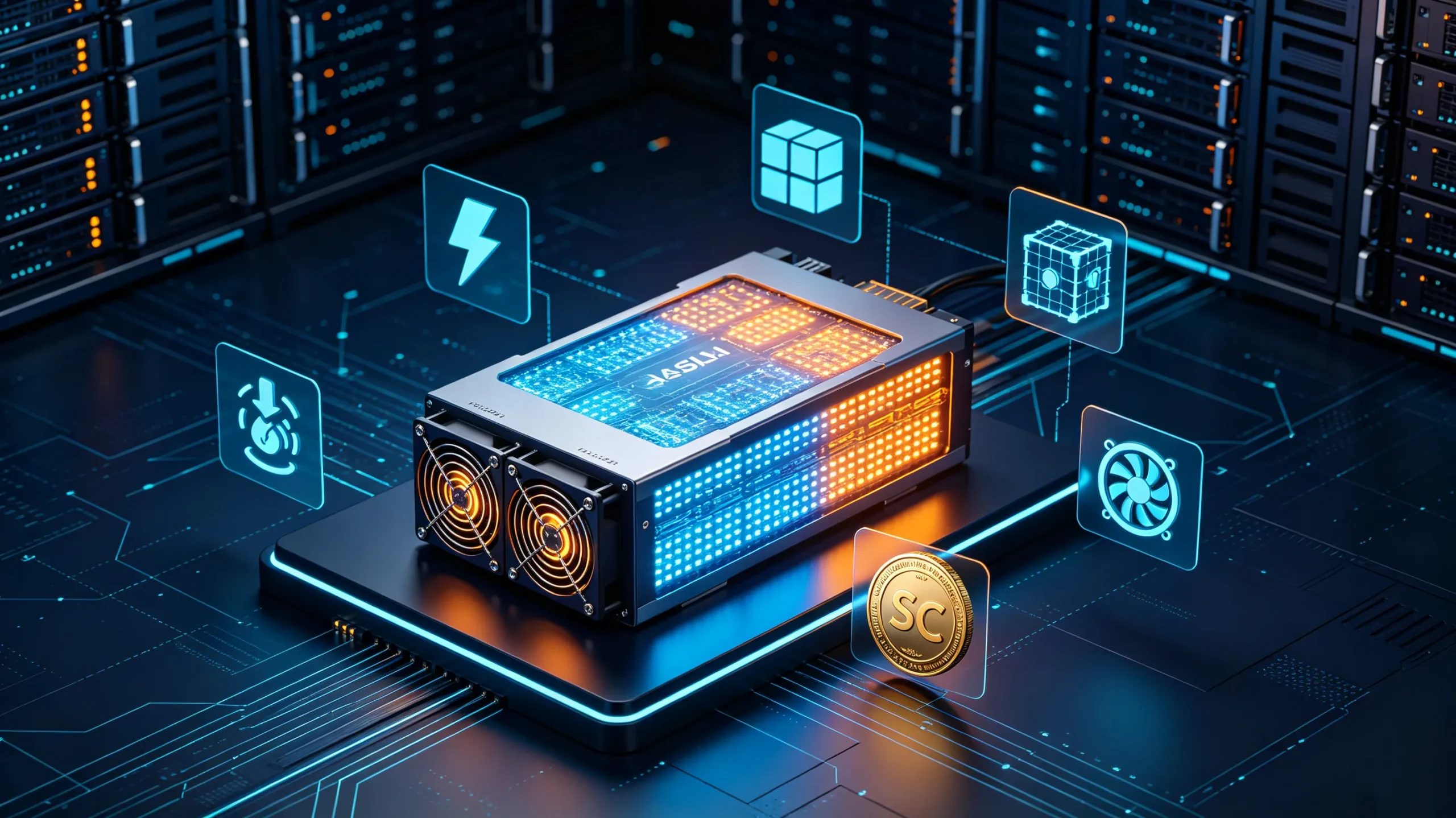
Siacoin mining in 2026 is ASIC-only. Any guide suggesting GPU or CPU mining is outdated and will waste your time.
If you are reading this, you are likely evaluating whether Siacoin mining makes sense for you and, more importantly, which hardware to choose. This article covers everything you need to know: what Siacoin is, how mining works, which ASIC miners are available in 2026, how to set them up, and whether mining is profitable under current conditions.
What you will learn from this guide:
-
Siacoin mining requires Blake2B-Sia ASIC miners — GPUs and CPUs are no longer viable
-
Hardware efficiency (J/TH) matters more than raw hashrate for long-term profitability
-
Electricity cost is the single most important factor in mining economics
-
The right miner depends on your environment (home vs. farm) and budget
-
This guide provides specific product comparisons and setup instructions — not generic advice
What Is Siacoin?
Siacoin (SC) is the native utility token of the Sia network, a decentralized cloud storage platform launched in 2015. Unlike traditional cloud providers like Amazon Web Services or Google Cloud, Sia allows users to rent unused disk space directly from other users.
Files uploaded to the Sia network are encrypted before they leave the user’s device, split into pieces, and distributed across multiple hosts. No single host can read the data it stores, and there is no central provider that controls access.
Why mining matters for Sia: Miners validate transactions, prevent double-spending, and maintain consensus across the network. Storage contracts, payments, and renewals all settle on-chain. Without miners, renters and hosts cannot reliably interact, and the storage market breaks down.
Mining is entirely separate from hosting storage. You do not earn mining rewards by renting out disk space, and you do not need to mine to host files. These are different roles within the same ecosystem.
Key distinction: Siacoin mining secures the network and processes transactions. Storage hosting earns fees from renters. They are complementary but independent activities.
How Siacoin Mining Works?
Siacoin uses a Proof of Work (PoW) consensus mechanism with the Blake2B-Sia hashing algorithm — a modified version of Blake2b specifically optimized for the Sia network.
Miners compete to solve cryptographic puzzles. The first miner or mining pool to solve a block earns the block reward.
Key network parameters:
-
Block time: Approximately 10 minutes
-
Algorithm: Blake2B-Sia (ASIC-only)
-
Total supply: No maximum cap. Block rewards decrease slowly over time and never fully disappear.
-
Network hashrate: Low-to-mid petahash range as of 2026
This design ensures miners always have an incentive to secure the network, even decades into the future. The trade-off is ongoing inflation, but at a predictable and gradually declining rate.
Siacoin Mining in 2026: The Reality
Mining Siacoin today looks very different from the early years.
GPU mining is no longer economically viable. CPU mining has been irrelevant for a long time. The network hashrate is now dominated by ASICs designed specifically for Blake2B-Sia, and difficulty levels reflect that reality.
What this means for you:
-
If you do not have a Blake2B-Sia ASIC miner, you cannot profitably mine Siacoin
-
Profit margins are tight — electricity cost is the decisive factor
-
Mining Siacoin works best for those with access to low-cost electricity and a long-term outlook
The network does not chase hype cycles. People still mining Siacoin tend to be deliberate and strategic, not casual or short-term.
Siacoin ASIC Miner Comparison — Which One Is Right for You?
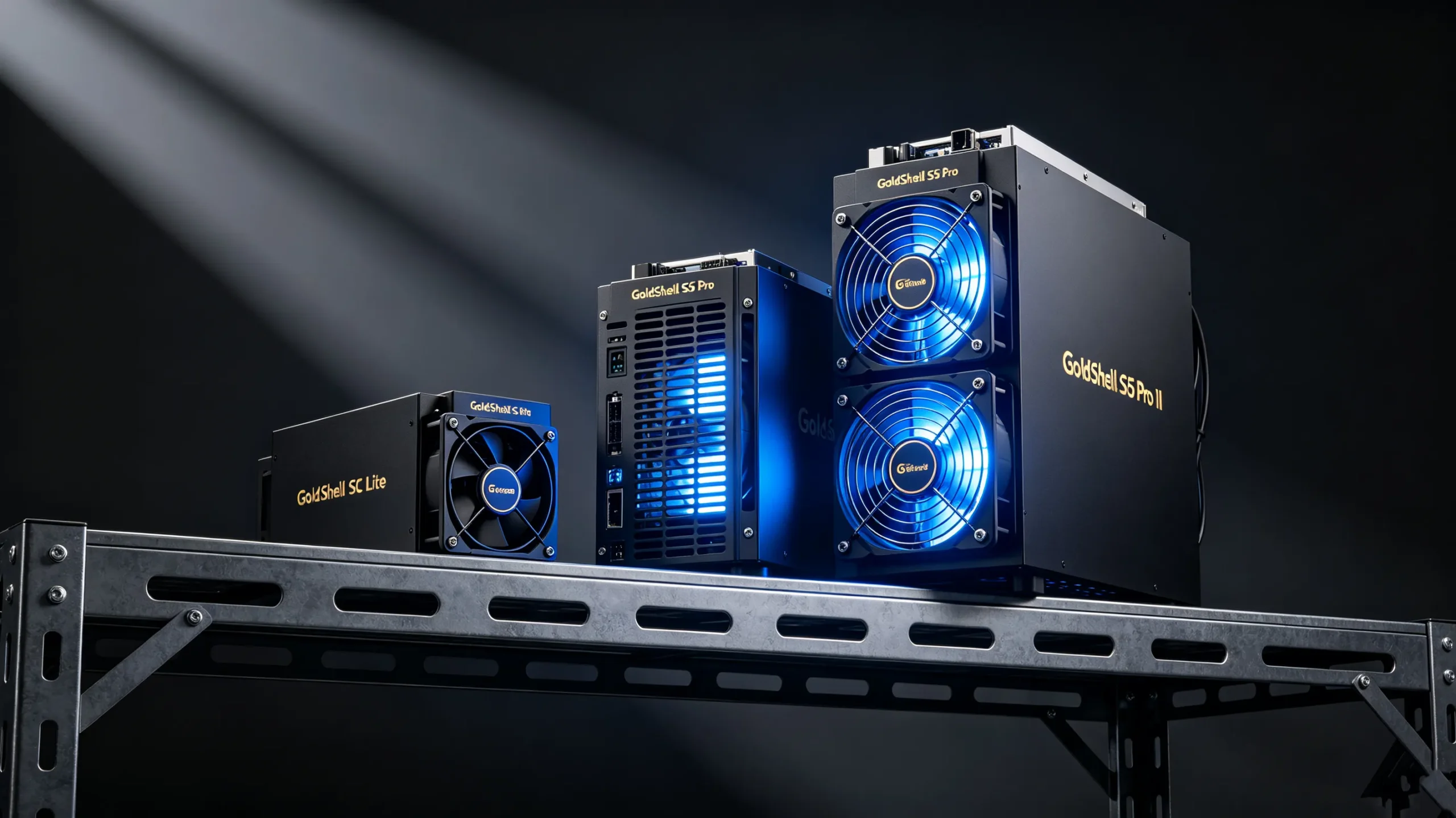
If you have decided to mine Siacoin, the most important decision is which ASIC miner to buy. Below is a comparison of the leading Blake2B-Sia miners available in 2026, all from Xonmining’s product lineup.
| Feature | Goldshell SC Lite | Goldshell SC5 Pro | Goldshell SC5 Pro II |
|---|---|---|---|
| Hashrate | 4.4 TH/s | 11 TH/s (Hashrate Mode) / 8.8 TH/s (Low-Power Mode) | 14 TH/s |
| Power Consumption | 950W | 2820W (Hashrate Mode) / 2020W (Low-Power Mode) | 3300W |
| Efficiency | 0.216 J/GH | 256 J/TH (Hashrate Mode) / 229 J/TH (Low-Power Mode) | 0.236 J/GH |
| Noise Level | 55 dB | ~55 dB | ~35 dB |
| Release Date | January 2024 | January 2024 | 2026 |
| Weight | 10.9 kg | ~13 kg | 13.1 kg |
| Dimensions | 230 x 200 x 290 mm | ~370 x 305 x 450 mm | 370 x 305 x 450 mm |
| Best For | Home mining, quiet environments, beginners | Professional farms, performance flexibility | Flagship performance, maximum hashrate |
Which Siacoin Miner Should You Choose?
Choose the Goldshell SC Lite if:
-
You are mining at home or in a residential area
-
Noise is a concern (55 dB is relatively quiet for an ASIC)
-
You have limited space
-
You want an accessible entry point into Siacoin mining
-
Your electricity cost is moderate to low
Choose the Goldshell SC5 Pro if:
-
You are operating a professional mining setup
-
You want flexibility between hashrate mode (11 TH/s) and low-power mode (8.8 TH/s)
-
You have adequate space and cooling
-
You want a balance of performance and efficiency
Choose the Goldshell SC5 Pro II if:
-
You need the highest possible hashrate (14 TH/s)
-
You are running a professional mining farm
-
You have robust power infrastructure (3300W)
-
You want the latest generation hardware with 6-month factory warranty
Power, Heat, and Operating Environment
Before purchasing any ASIC miner, you must assess your operating environment. These are not plug-and-play devices for casual users.
Power Requirements
| Miner | Input Voltage | Typical Power |
|---|---|---|
| SC Lite | Standard household | 950W |
| SC5 Pro | 220-240V recommended | 2820W / 2020W |
| SC5 Pro II | 100-240V | 3300W |
Important: The SC5 Pro and SC5 Pro II require dedicated circuits in most residential settings. A standard 15A household circuit at 120V provides only 1800W — insufficient for the SC5 Pro or SC5 Pro II. You will need 220-240V power or multiple dedicated circuits.
Electricity Cost — The Decisive Factor
Electricity expense is the largest operating cost in mining. Even a highly efficient miner will not be profitable if your electricity rate is too high.
Estimated daily electricity cost at different rates:
| Electricity Rate | SC Lite (950W) | SC5 Pro (2820W) | SC5 Pro II (3300W) |
|---|---|---|---|
| $0.05/kWh | $1.14/day | $3.38/day | $3.96/day |
| $0.08/kWh | $1.82/day | $5.41/day | $6.34/day |
| $0.10/kWh | $2.28/day | $6.77/day | $7.92/day |
| $0.13/kWh | $2.96/day | $8.80/day | $10.30/day |
Note: At $0.10/kWh, the SC5 Pro II generates an estimated daily loss of approximately -$7.92 based on current market conditions. This is why electricity cost is the single most important factor in mining profitability.
Heat and Cooling
All ASIC miners generate significant heat.
-
SC Lite: 950W of heat output — manageable in a well-ventilated room
-
SC5 Pro: 2820W of heat output — requires dedicated cooling
-
SC5 Pro II: 3300W of heat output — requires industrial-grade cooling
Operating temperature range: 0 – 35°C
Humidity: 10 – 65% (non-condensing)
Important: If you are mining at home, consider the noise (55+ dB) and heat output carefully. The SC Lite is specifically designed for home environments with its quieter operation and lower power draw.
Siacoin Mining Profitability — What Can You Actually Earn?
Profitability depends on three variables: network difficulty, SC price, and your electricity cost.
Current Market Context (August 2026)
-
SC Price: Approximately $0.00050 – $0.00088 per SC
-
Network hashrate: Low-to-mid petahash range
-
Block reward: Approximately 30,000 SC per block (decreases over time)
Estimated Daily Returns
Based on current network conditions and a electricity cost of $0.10/kWh:
| Miner | Gross Daily Revenue | Daily Electricity Cost | Net Daily Profit |
|---|---|---|---|
| SC Lite (4.4 TH/s) | ~$1.64 | $2.28 | ~-$0.64 |
| SC5 Pro (11 TH/s) | ~$3.50 | $6.77 | ~-$3.27 |
| SC5 Pro II (14 TH/s) | ~$4.50 | $7.92 | ~-$3.42 |
These are illustrative estimates only. Actual returns vary based on network difficulty, SC price, pool fees, and downtime.
The Reality Check
At current SC prices and network difficulty, Siacoin mining is not profitable for most miners at average electricity rates ($0.10–0.13/kWh).
When does mining make economic sense?
-
Electricity cost below $0.05/kWh
-
Long-term bullish view on Siacoin price
-
Already have the infrastructure (space, cooling, power)
-
Mining as a hobby or for network participation, not primary income
Strategy note: Most serious Siacoin miners accumulate SC long-term rather than treating mining as daily income. They mine at a loss today, betting that SC’s price will appreciate over time.
Choosing a Siacoin Mining Pool
Solo mining Siacoin is technically possible but not economically viable for small-scale miners. The network hashrate is too high — you could mine for years without finding a block.
Joining a mining pool combines hashrate with other miners, providing regular, predictable payouts.
Top Siacoin Mining Pools (2026)
| Pool | Market Share | Fee | Reward System | Server Locations |
|---|---|---|---|---|
| F2Pool | ~47% | 3% | PPS (Pay Per Share) | USA, Asia, EU |
| Antpool | ~8% | 0% | PPS | USA, Asia, EU |
| Luxor | ~3% | 2% | PPLNS | USA, Asia, EU |
| Nanopool | ~1% | 1% | PPLNS | USA, Asia, EU |
How to choose:
-
F2Pool and SiaMining offer the largest pools with the most consistent payouts
-
Antpool offers 0% fees — attractive if you prioritize low costs
-
Luxor and Nanopool offer lower fees with PPLNS reward systems
Pool concentration risk: A single pool controlling over 50% of network hashrate is a centralization concern. Consider distributing risk across multiple pools.
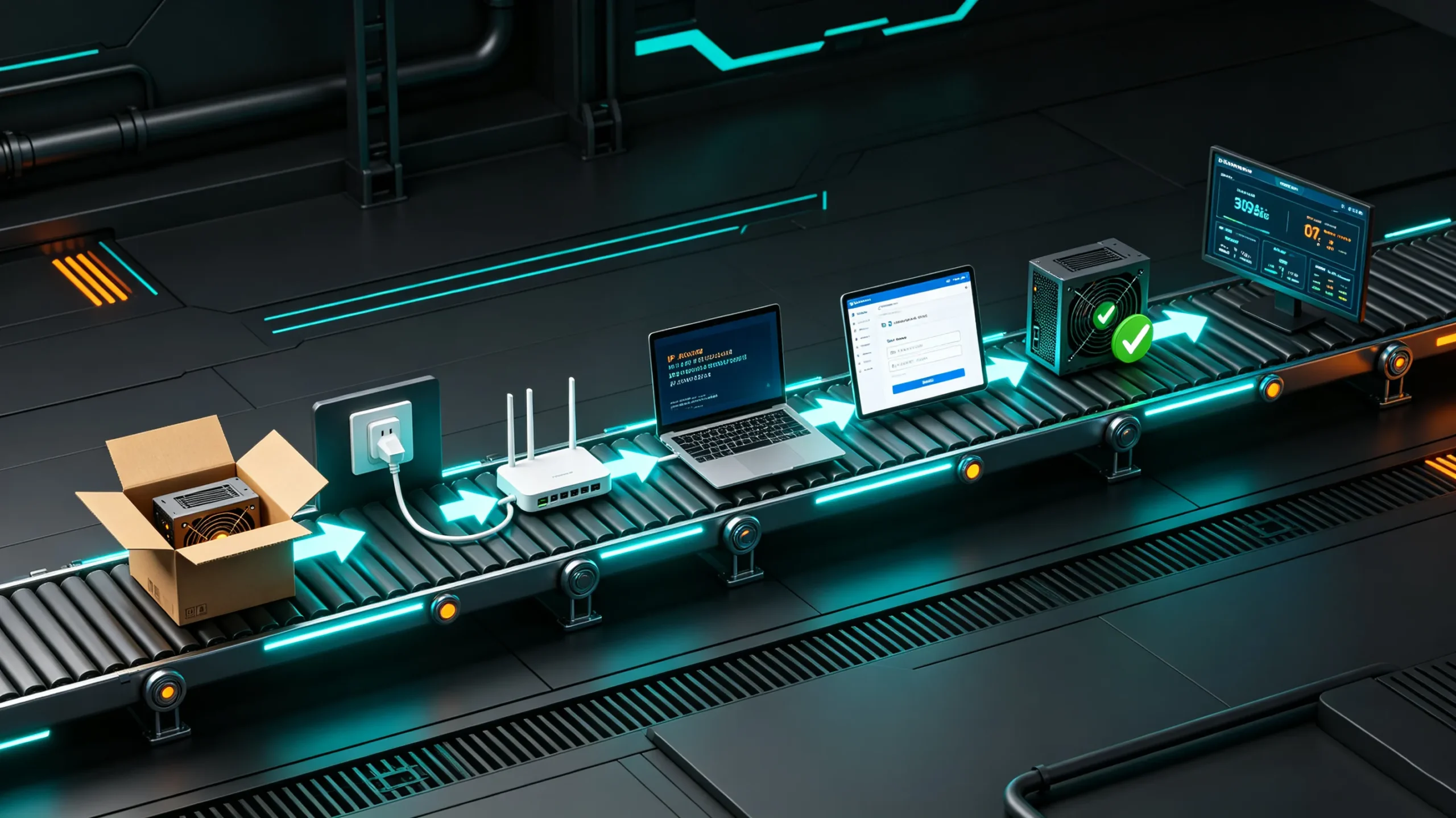
Step-by-Step Guide to Setting Up Your Siacoin Miner
Setting up an ASIC miner is straightforward once you understand the process. Here is a complete step-by-step guide.
Step 1: Unbox and Inspect
-
Carefully unbox the miner and inspect for any shipping damage
-
Verify all components are present (miner unit, power supply, cables)
-
Check that the power supply matches your local voltage requirements
Step 2: Connect Power and Network
-
Power: Connect the miner to a dedicated power outlet with the correct voltage
-
SC Lite: Standard household outlet (110-240V)
-
SC5 Pro / SC5 Pro II: Dedicated circuit, preferably 220-240V
-
-
Network: Connect an Ethernet cable from your router to the miner’s Ethernet port
Step 3: Find the Miner’s IP Address
-
Check your router’s DHCP client list for a new device
-
Alternatively, use the manufacturer’s IP scanning tool
-
The miner’s IP address is usually displayed on the miner’s LCD screen (if available)
Step 4: Log In to the Web Management Interface
-
Open a web browser and enter the miner’s IP address
-
Default credentials are typically:
-
Username:
admin -
Password:
adminor123456(check manufacturer documentation)
-
-
Change the default password immediately for security
Step 5: Configure Pool and Wallet Settings
In the miner’s web interface, navigate to the mining configuration page and enter:
| Setting | What to Enter |
|---|---|
| Pool URL | The stratum URL of your chosen mining pool |
| Worker Name | Your public Siacoin wallet address (starts with 0x...) |
| Password | Usually x or 123 (pool-dependent) |
Wallet setup: You need a Siacoin wallet address before configuring the miner. See the next section for wallet options.
Step 6: Save and Start Mining
-
Click Save or Apply in the web interface
-
The miner will restart and begin hashing
-
Monitor the miner’s status page for hashrate, temperature, and accepted shares
Step 7: Monitor Performance
-
Check the miner dashboard regularly for:
-
Hashrate: Should match the expected rate (±5%)
-
Temperature: Should stay within 0-35°C
-
Accepted shares: Should increase steadily
-
Rejected shares: Should be low (under 1-2%)
-
Siacoin Wallets — Where to Store Your SC
You need a Siacoin wallet address to receive mining payouts. Here are your options:
1. Official Sia Wallet
The official desktop wallet for the Sia network. It gives you full control over your funds and supports all network features (storage contracts, file uploads, etc.).
Pros: Full control, supports all Sia network features
Cons: Requires downloading the full blockchain (several GB), more complex setup
2. Hardware Wallets
Hardware wallets like Ledger support Siacoin storage. This is the most secure option for long-term holdings.
Pros: Highest security, offline storage
Cons: Requires purchasing a hardware device
3. Exchange Wallets
You can store SC on cryptocurrency exchanges like Binance.
Pros: Convenient, easy to trade
Cons: You do not control the private keys — increased counterparty risk
Recommendation: Use a hardware wallet or the official Sia wallet for long-term storage. Only keep minimal amounts on exchanges for trading purposes.
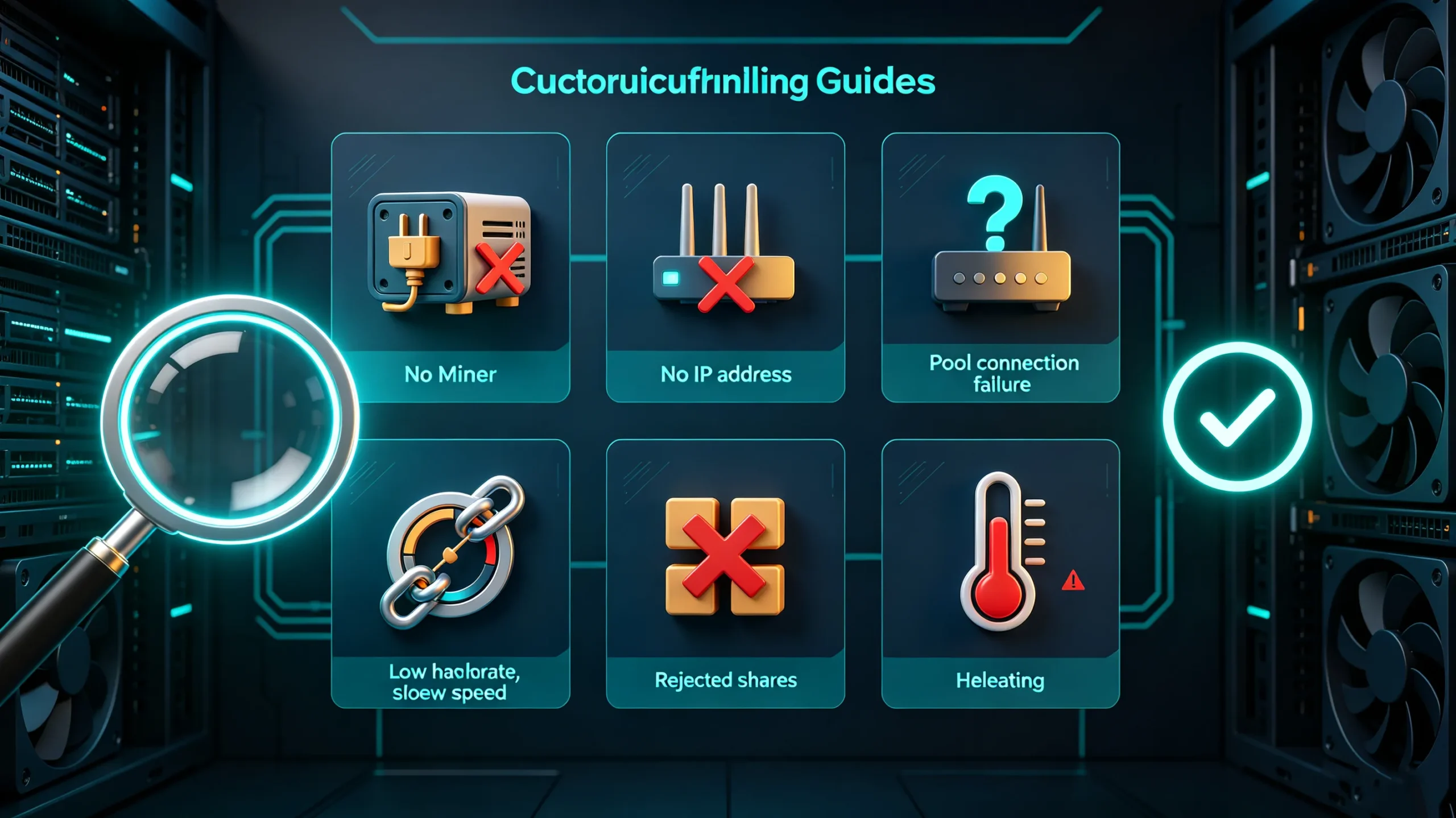
Common Troubleshooting for Siacoin Miners
| Problem | Possible Cause | Solution |
|---|---|---|
| Miner won’t start | No power, faulty power supply | Check power connections, verify voltage, test outlet |
| No IP address found | Ethernet cable issue, DHCP failure | Check cable, restart router, use static IP |
| Cannot connect to pool | Wrong pool URL, firewall blocking | Verify URL, check firewall settings, try alternate pool |
| Low hashrate | Overheating, wrong configuration | Check temperature, verify settings, clean fans |
| High rejected shares | Network latency, pool issues | Try a closer server, switch pools |
| Overheating | Poor ventilation, high ambient temperature | Improve airflow, reduce ambient temperature, clean dust |
| Firmware update failed | Corrupted file, power interruption | Redownload firmware, ensure stable power, retry |
Proactive maintenance: Regular cleaning of fans and heat sinks extends miner lifespan. Operating temperature above 35°C significantly reduces hardware longevity.
Should You Mine Siacoin? A Decision Framework
You Should Consider Mining Siacoin If:
-
✅ You have access to electricity at under $0.05–0.06/kWh
-
✅ You already have suitable space with adequate ventilation and cooling
-
✅ You are long-term bullish on Siacoin and decentralized storage
-
✅ You understand that mining may operate at a short-term loss
-
✅ You are willing to commit time to setup, monitoring, and maintenance
-
✅ You have the capital to purchase an ASIC miner (e.g., SC Lite, SC5 Pro, or SC5 Pro II)
You Should NOT Mine Siacoin If:
-
❌ You expect immediate profits or quick ROI
-
❌ Your electricity cost is over $0.10/kWh
-
❌ You lack adequate space, cooling, or power infrastructure
-
❌ You want a passive, set-and-forget investment
-
❌ You are not comfortable with technical setup and troubleshooting
-
❌ You are looking for short-term speculation
Mining vs. Buying Siacoin
For most people, buying Siacoin directly on an exchange is cheaper and simpler than mining.
| Factor | Mining | Buying |
|---|---|---|
| Upfront cost | High (ASIC hardware $500–$2,000+) | Low (any amount) |
| Ongoing cost | Electricity, maintenance | None |
| Time investment | High (setup, monitoring) | Minimal |
| Risk | Hardware depreciation, difficulty increases | Price volatility only |
| Control | Self-custody | Exchange or self-custody |
Our perspective: We sell ASIC miners, but we are honest about the economics. Mining is not for everyone. If you have cheap electricity and a long-term view, mining can be a strategic way to accumulate SC. If not, buying on an exchange is likely the better choice.
Risks to Consider Before Mining Siacoin
1. Hardware Depreciation Risk
ASIC miners have limited resale value. They are purpose-built for specific algorithms and cannot be repurposed for other tasks.
-
Newer, more efficient models are released regularly
-
Used miners lose value quickly
-
If Siacoin mining becomes unprofitable, your hardware may become worthless
2. Mining Pool Centralization Risk
A small number of pools control most of the network hashrate. If a single pool exceeds 51% of the network, it could theoretically double-spend or censor transactions.
-
F2Pool and SiaMining together control over 80% of network hashrate
-
Consider using smaller pools like Luxor or Nanopool to support decentralization
3. Price Volatility Risk
Siacoin’s price is volatile. Even if you mine efficiently, a price drop can turn a profitable operation into a losing one overnight.
-
SC price range in 2026: $0.0005 – $0.0017
-
Mining economics change with every price movement
4. Difficulty Increase Risk
As more miners join the network, difficulty increases, reducing your share of block rewards. This is a natural part of PoW mining but can erode profitability over time.
5. Regulatory Risk
Cryptocurrency mining regulations vary by jurisdiction. Some regions have banned or restricted mining due to energy concerns. Check your local regulations before investing.
Conclusion
Siacoin mining in 2026 is a narrow, technical, and unforgiving pursuit. It is not for casual miners or those seeking quick profits.
The key takeaways:
-
Siacoin mining is ASIC-only — GPUs and CPUs are obsolete
-
Electricity cost is the single most important factor in profitability
-
Choose the right miner for your environment: SC Lite (home), SC5 Pro (professional), or SC5 Pro II (flagship)
-
Mining is a long-term strategy for those bullish on decentralized storage
-
For most people, buying Siacoin directly is simpler and cheaper
If you have cheap electricity, adequate space, and a long-term outlook, Siacoin mining can be a strategic way to accumulate SC while supporting the Sia network.
Ready to start mining? Browse our full selection of Siacoin miners or contact our sales team for the latest pricing and availability.
Frequently Asked Questions (FAQ)
Can I mine Siacoin with a GPU or CPU?
No. GPU mining is no longer economically viable, and CPU mining has been irrelevant for years. The network hashrate is dominated by Blake2B-Sia ASICs. Any guide suggesting GPU mining is outdated.
What is the best Siacoin miner in 2026?
The best miner depends on your environment. The Goldshell SC Lite (4.4 TH/s, 950W) is ideal for home mining. The Goldshell SC5 Pro (11 TH/s, 2820W) offers professional performance with dual modes. The Goldshell SC5 Pro II (14 TH/s, 3300W) delivers the highest hashrate for professional farms.
Is Siacoin mining profitable?
At current SC prices ($0.0005–0.0009) and network difficulty, Siacoin mining is **not profitable** for most miners at average electricity rates (over $0.10/kWh). It may be profitable with electricity under $0.05/kWh or if you are long-term bullish on SC price.
How long does it take to mine 1 Siacoin?
With a 4.4 TH/s miner like the SC Lite, you would mine approximately 30,000–40,000 SC per month (gross) at current difficulty. This equates to roughly 1,000–1,300 SC per day. Actual figures vary with network difficulty and pool efficiency.
What mining pool should I use?
Top options include F2Pool (~47% market share, 3% fee), SiaMining (~36%, 3% fee), and Antpool (~8%, 0% fee). Consider pool fees, server location, and reward system when choosing.
Where can I buy a Siacoin ASIC miner?
Xonmining offers a full range of Siacoin ASIC miners, including the Goldshell SC Lite, Goldshell SC5 Pro, and Goldshell SC5 Pro II. Visit our Siacoin Miner page for current availability and pricing.
What is the Blake2B-Sia algorithm?
Blake2B-Sia is a modified version of the Blake2b cryptographic hashing algorithm, specifically optimized for the Sia network. It is an ASIC-resistant (in theory) but ASIC-dominated algorithm in practice. Miners use Blake2B-Sia to compete for block rewards.
How does Siacoin mining compare to Bitcoin mining?
| Siacoin | Bitcoin | |
|---|---|---|
| Algorithm | Blake2B-Sia | SHA-256 |
| Block time | ~10 minutes | ~10 minutes |
| Supply cap | None (decreasing rewards) | 21 million |
| ASIC availability | Limited (Goldshell, iBeLink) | Widespread |
| Profitability | Lower, niche market | Higher, competitive |
Do I need a special power outlet?
SC Lite: Standard household outlet (110-240V) is sufficient.
SC5 Pro / SC5 Pro II: Requires a dedicated circuit. At 2820W–3300W, a standard 15A/120V outlet is insufficient. You need 220-240V or multiple dedicated circuits.
What happens if the miner overheats?
Overheating can cause:
-
Reduced hashrate (thermal throttling)
-
Permanent hardware damage
-
Shortened lifespan
Maintain operating temperature between 0–35°C and humidity between 10–65%. Regular cleaning of fans and heat sinks is essential.