
Why Zcash Mining Matters in 2026?
Most people still picture cryptocurrency mining as rows of GPUs running nonstop in a basement. That image is not entirely wrong, but it is no longer the full story. For Zcash in 2026, the network has matured, mining difficulty has increased, and profitability is now shaped by a more complex mix of hardware choices rather than a single dominant setup.
Zcash mining had a genuine revival in 2026. The ZEC price rallied significantly, and purpose-built Equihash ASICs delivered some of the fastest payback of any mining hardware on the market during that run, Such as Antminer Z15 Pro, Antminer Z15, etc. Equihash ASIC mining is currently the strongest payback hardware story in crypto, and most retail mining content has not caught up to it yet.
For miners, the practical question is not whether Zcash is interesting; it is whether ZEC mining still offers a rational operating window in 2026. The answer depends on four inputs: electricity rate, hardware efficiency, infrastructure readiness, and ZEC market conditions.
This comprehensive guide covers everything you need to know: what Zcash is, how its Equihash algorithm shapes your hardware choices, which ASIC miners lead in 2026, how to join a pool, what the block reward halving schedule means for your bottom line, and whether ZEC is still worth investing in.
What Is Zcash? Understanding the Privacy Coin?
Zcash (ticker: ZEC) is a privacy-focused cryptocurrency launched on October 28, 2016, created by cryptographer Zooko Wilcox-O’Hearn and his team at the Electric Coin Company. It began as a fork of Bitcoin’s codebase with one core difference: privacy.
The Privacy Difference
Most cryptocurrencies are the opposite of private. Every payment you make on Bitcoin sits on a public ledger forever, readable by anyone with a block explorer. Zcash was built to fix that.
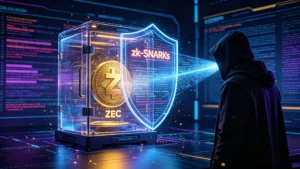
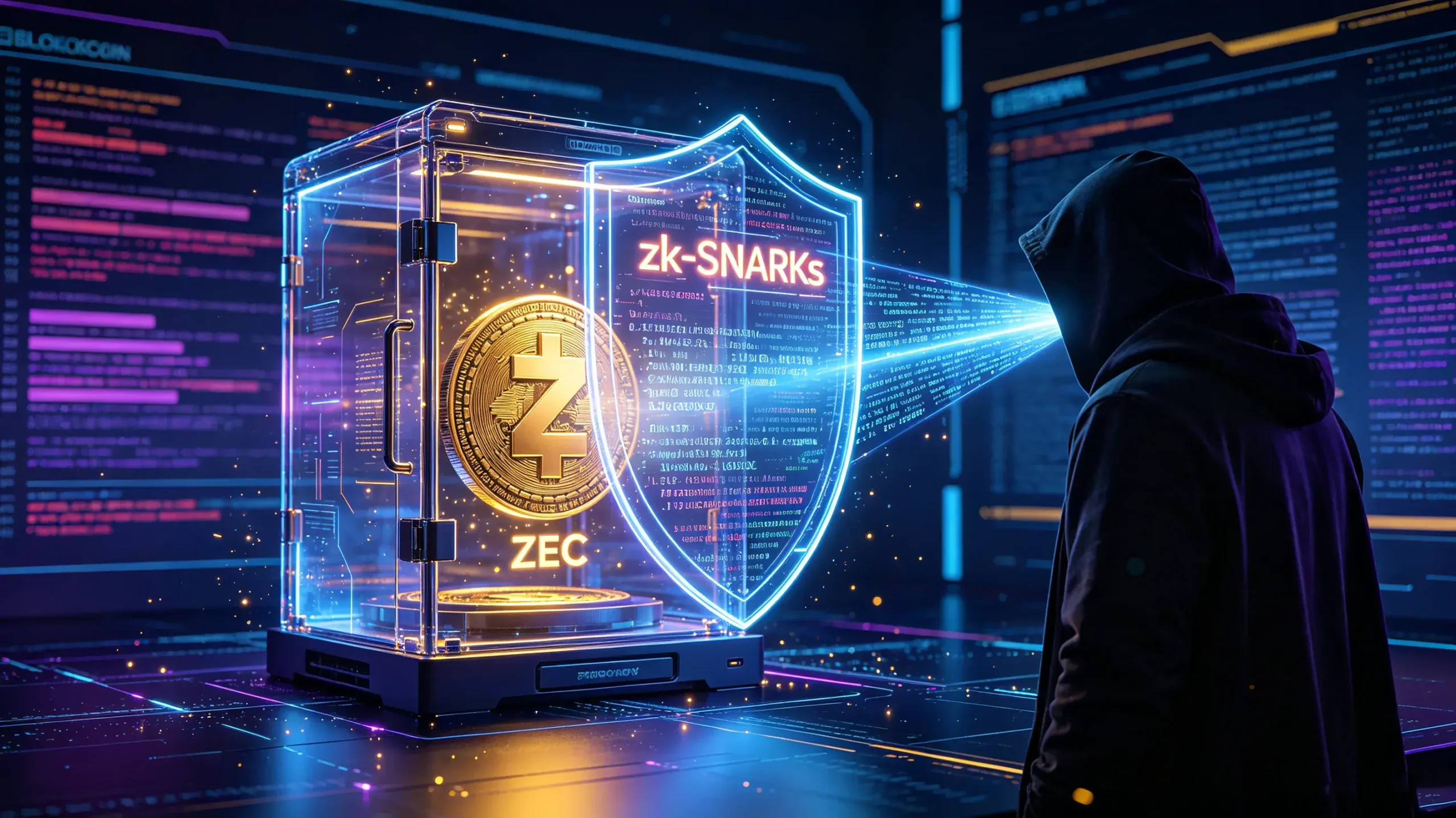
Zcash introduced shielded transactions powered by zero-knowledge proofs, a cryptographic method first developed in the 1980s that allows one party to prove knowledge of information without revealing the information itself. In practical terms, this means users can send and receive ZEC on a public blockchain while keeping the sender, receiver, and transaction amount completely private.
The magic behind Zcash is a technology called zk-SNARKs (Zero-Knowledge Succinct Non-Interactive Arguments of Knowledge). In plain language, a zero-knowledge proof lets you prove something is true without revealing the underlying details. Applied to money, it means the network can confirm a transaction is valid—that the coins exist and the sender owns them—without seeing who sent what to whom, or how much.
Zcash was the first cryptocurrency to ship this in production, and it remains the reference example of mathematically rigorous privacy.
Supply Model
Underneath, Zcash coin economics mirrors Bitcoin closely. There will only ever be 21 million ZEC, new coins are issued through mining, and the reward halves roughly every four years. As of mid-2026, about 16.7 million ZEC—roughly 79.5% of the maximum supply—are already in circulation.
Why Zcash Still Matters?
Businesses and individuals who want financial confidentiality without abandoning a decentralized network have a compelling reason to use Zcash that no general-purpose chain offers. As of 2026, ZEC trades on every major exchange, carries deep liquidity, and remains one of the most recognized privacy-focused assets in the market.
The privacy technology has also matured over time. Zcash’s shielded system evolved through successive upgrades, from the early Sprout design to Sapling and then Orchard, each one making private transactions faster, cheaper, and easier to use in everyday wallets.
The Equihash Algorithm: Why It Shapes Every Mining Decision
Zcash does not use the SHA-256 algorithm that secures Bitcoin. It uses Equihash, a proof-of-work algorithm developed by Professor Alex Biryukov and Dr. Dmitry Khovratovich and formally presented at the Network and Distributed System Security Symposium in February 2016.
What Makes Equihash Different?
Equihash was designed to be memory-hard. Rather than requiring raw computational speed, it demands a large amount of RAM to generate a valid proof. The original intention was to keep mining accessible to GPU and CPU miners by making it prohibitively expensive to build application-specific hardware. The logic was straightforward: memory is expensive and standardized, so dedicated chips would offer less advantage over commodity hardware.
The ASIC Reality
Despite these intentions, purpose-built Equihash ASICs now dominate Zcash mining. Zcash uses Equihash (200,9), produces blocks roughly every 75 seconds, and currently operates after the November 2024 halving, when the block reward fell from 3.125 ZEC to 1.5625 ZEC.
The competitive landscape shifted when ASICs entered the ecosystem, and by 2026, ASIC mining is not just recommended for serious Zcash miners—it is essentially the only viable path for anyone who wants to earn consistent rewards against the current network difficulty.
Algorithm Stability
The Zcash community previously considered ASIC resistance and did not move the network away from ASICs. That reduces one major hardware risk: buying an Equihash ASIC is less likely to be invalidated by a sudden algorithm fork than in ecosystems that frequently change mining algorithms.
Can You Still Mine Zcash with a GPU in 2026?
The short answer is no—not in any meaningful way.
Zcash launched GPU-friendly and stayed that way for years, but Equihash ASICs ended that era. A modern graphics card mining ZEC is a learning exercise rather than an earning one, because purpose-built Equihash hardware delivers vastly more solutions per watt.
If you want to mine Zcash for returns rather than curiosity, you need an ASIC. GPUs are no longer the competitive path for ZEC mining at scale.
The Best ZEC Miners: ASIC Hardware Comparison
Two machines carry the Zcash network in 2026, both from Bitmain’s Z-series.
| Specification | Antminer Z15 | Antminer Z15 Pro |
|---|---|---|
| Algorithm | Equihash (200,9) | Equihash (200,9) |
| Hashrate | 420 kSol/s | 840 kSol/s |
| Power | 1,510 W | 2,780 W |
| Efficiency | ~3.6 J/kSol | ~3.31 J/kSol |
| Price (approx.) | ~$3,600 | ~$4,100 |
| Net Profit/Day* | ~$13.69 | ~$27.78 |
| ROI | ~8.8 months | ~4.9 months |
Based on $0.07/kWh electricity and ZEC price of ~$431
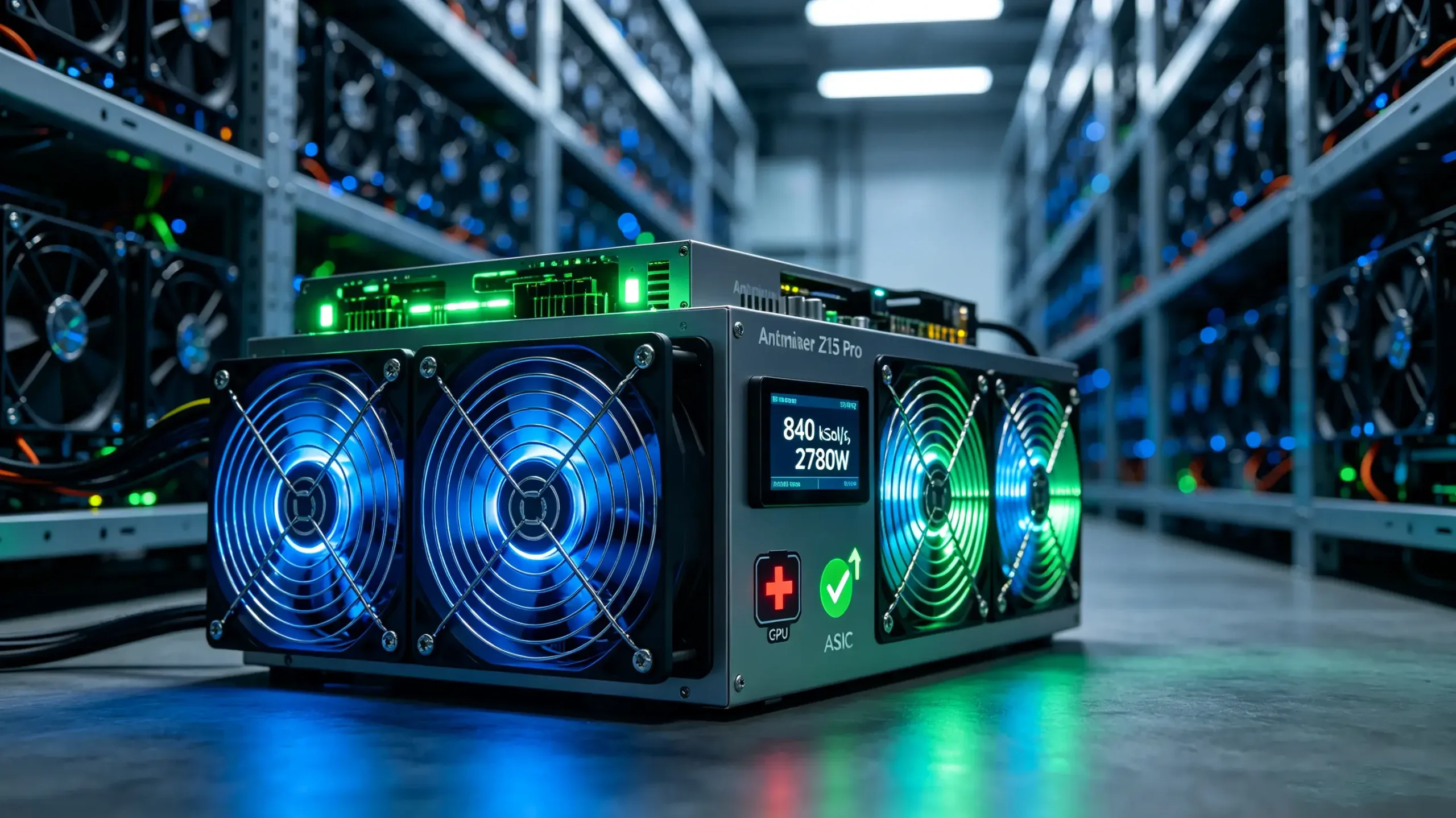
The Antminer Z15 Pro runs 840 kSol/s at 2,780 W and is the standard choice, delivering the best returns of the pair. The Antminer Z15 runs 420 kSol/s at 1,510 W, roughly half the output for a lower purchase price and an easier power requirement, which makes it the more practical entry point for a first machine at home.
Which to buy comes down to the price you are quoted and the power you can actually supply.
Antminer Z15: The Budget-Friendly Alternative
The Antminer Z15 is a 420 kSol/s Equihash ASIC miner produced by Bitmain, suitable for Zcash (ZEC) and other Equihash cryptocurrencies.
Specifications
-
Hashrate: 420 kSol/s
-
Power consumption: 1,510 W
-
Efficiency: 3.6 J/kSol
-
Algorithm: Equihash
Performance
The standard Z15’s hashrate is exactly half that of the flagship Z15 Pro (840 kSol/s). While it produces lower daily revenue, the lower purchase price and reduced power requirements make it accessible to more miners.
ROI
The Antminer Z15 offers a net profit of approximately $13.69 per day at $0.07/kWh, with an ROI of approximately 8.8 months.
Antminer Z15 Pro: The Flagship Zcash Miner
The Antminer Z15 Pro is the dominant institutional unit for Zcash mining in 2026.
Specifications
-
Hashrate: 840 kSol/s
-
Power consumption: 2,780 W
-
Efficiency: 3.31 J/kSol
-
Algorithm: Equihash
Performance
The Z15 Pro delivers hashrates that no GPU setup could match. It is the best miner to mine Zcash in 2026.
At current network conditions, a single Antminer Z15 Pro produces approximately $40.85 in daily gross revenue, or $36.18 net at $0.07 per kilowatt-hour hosted electricity rates. That works out to $1,085 monthly or $13,205 annually on hardware that retails between $3,999 and $6,500 depending on supplier.
ROI
Payback timing falls in the four to seven month range at retail hosted rates. The Bitmain Antminer Z15 Pro for Zcash delivers the fastest ROI at 4.9 months, thanks to high ZEC prices and efficient Equihash performance.
Availability
Bitmain’s official Z15 Pro inventory is currently sold out until September 2026.
Other Equihash ASIC Options
Beyond the Bitmain Z-series, other Equihash ASIC options exist:
iPollo V1 Mini
A smaller form-factor Equihash ASIC, though significantly less powerful than the Z-series.
Innosilicon A9+ ZMaster
Maximum hashrate of 120 KH/s at 1,550W. This is substantially less powerful than the Z15 series and is largely obsolete for serious mining operations.
The Bottom Line
For serious Zcash mining in 2026, the Antminer Z15 Pro and Z15 are the only realistic options. Other Equihash ASICs are either outdated or insufficiently powerful to compete with the current network difficulty.
Step-by-Step: How to Mine ZEC in 2026
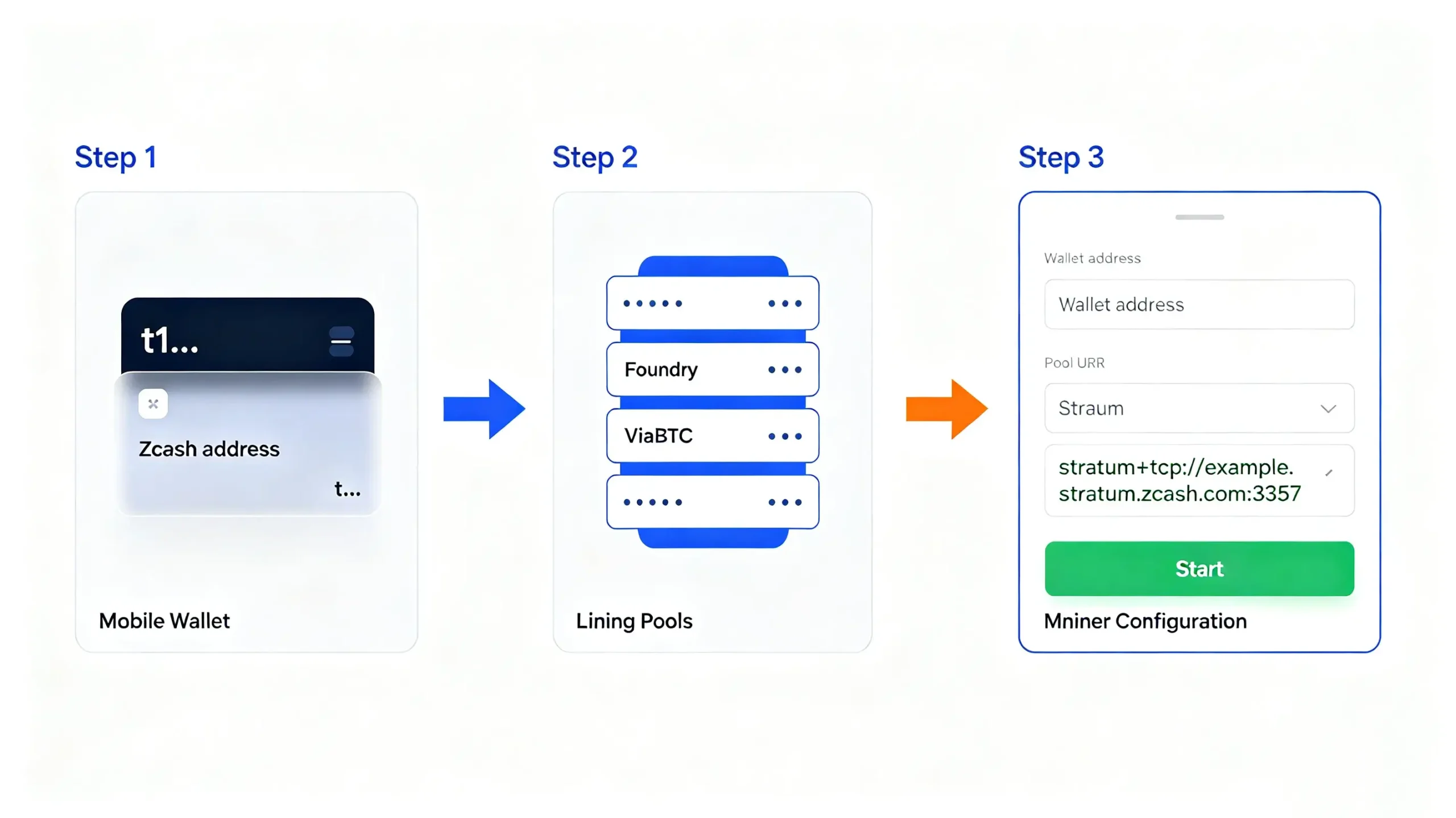
Mining Zcash in 2026 is a mechanical process: wallet, pool, power, boot, configure, verify.
What You Need Before You Start?
Before the machine arrives, get these five things lined up:
-
An Equihash ASIC (Antminer Z15 Pro or Z15)
-
A Zcash wallet with a transparent address
-
A mining pool account
-
A 220V circuit and wired ethernet
-
Time to first payout (typically hours to a few days)
The sequence matters, particularly the wallet, because you cannot configure a pool without a payout address to point it at.
Setting Up Your Zcash Wallet
This is where most beginners make their most expensive mistake.
The Address Trap
Zcash has two types of addresses, they look completely different, and most pools will only pay to one of them. Get it wrong and your first payout goes nowhere.
Transparent addresses start with t1 or t3. Pools pay here, not to shielded addresses.
Shielded addresses start with z and are used for private transactions, but most mining pools do not support payouts to them.
Choosing a Wallet
For mining purposes, you need a wallet that can generate a transparent (t-address) Zcash address. Options include:
-
Zcash Official Wallet: The full-node wallet from the Zcash Foundation
-
Exchange Wallet: Many miners use exchange deposit addresses (e.g., from KuCoin, Binance) for simplicity
-
Light Wallets: Mobile and desktop wallets that support Zcash
Security Considerations
-
Never share your private keys or recovery phrases
-
Use a wallet where you control the private keys for long-term storage
-
Consider using an exchange wallet only for receiving mining payouts, then transferring to a secure wallet
Choosing a Mining Pool
Solo mining Zcash is not realistic at current difficulty. You need to join a mining pool to earn consistent rewards.
Top Zcash Mining Pools in 2026
Foundry Zcash Pool: Foundry Digital, the largest Bitcoin mining pool by hash rate, launched a dedicated Zcash mining pool in April 2026 that has already reached approximately 30% of the Zcash network’s total hash rate. The pool is designed for regulated entities and requires KYC verification in line with Foundry’s institutional compliance standards.
ViaBTC: Supports Zcash mining with stratum URL stratum+tcp://zec.f2pool.com:3357 (F2Pool).
F2Pool: One of the largest mining pools globally with Zcash support.
Pool Payment Methods
Most pools offer different payment methods:
-
PPS+ (Pay-Per-Share Plus): Fixed payment per share, plus transaction fees
-
PPLNS (Pay-Per-Last-N-Shares): Payment based on your contributed shares over a rolling window
Pool Configuration
When configuring your pool, you will need:
-
Stratum URL: The pool’s mining server address
-
Worker name: Your username.worker (e.g.,
yourusername.worker1) -
Password: Usually left as
xor left blank
Configuring Your Miner
Once you have your wallet, pool, and hardware, configuration is straightforward.
Step 1: Physical Setup
-
Connect the miner to a 220V circuit (these machines draw 1,510 W to 2,780 W continuously)
-
Connect wired ethernet (WiFi is not reliable enough for mining)
-
Ensure adequate cooling and ventilation
Step 2: Access the Miner Interface
-
Find the miner’s IP address from your router’s DHCP list
-
Enter the IP address in your web browser
-
Default credentials are usually
root/root(check your specific model)
Step 3: Configure Pool Settings
-
Enter the pool’s stratum URL
-
Enter your worker name (username.worker)
-
Enter your password (usually
x)
Step 4: Configure Your Wallet Address
-
Enter your Zcash transparent (t-address) where payouts should be sent
Step 5: Save and Start Mining
-
Save the configuration
-
The miner will restart and begin hashing
-
Check the dashboard to verify hashrate matches expected performance
Step 6: Monitor Performance
-
Check the pool’s website to verify your worker is submitting shares
-
Monitor temperature and fan speeds
-
Watch for rejected shares (should be less than 1-2%)
ZEC Mining Profitability: The Real Numbers
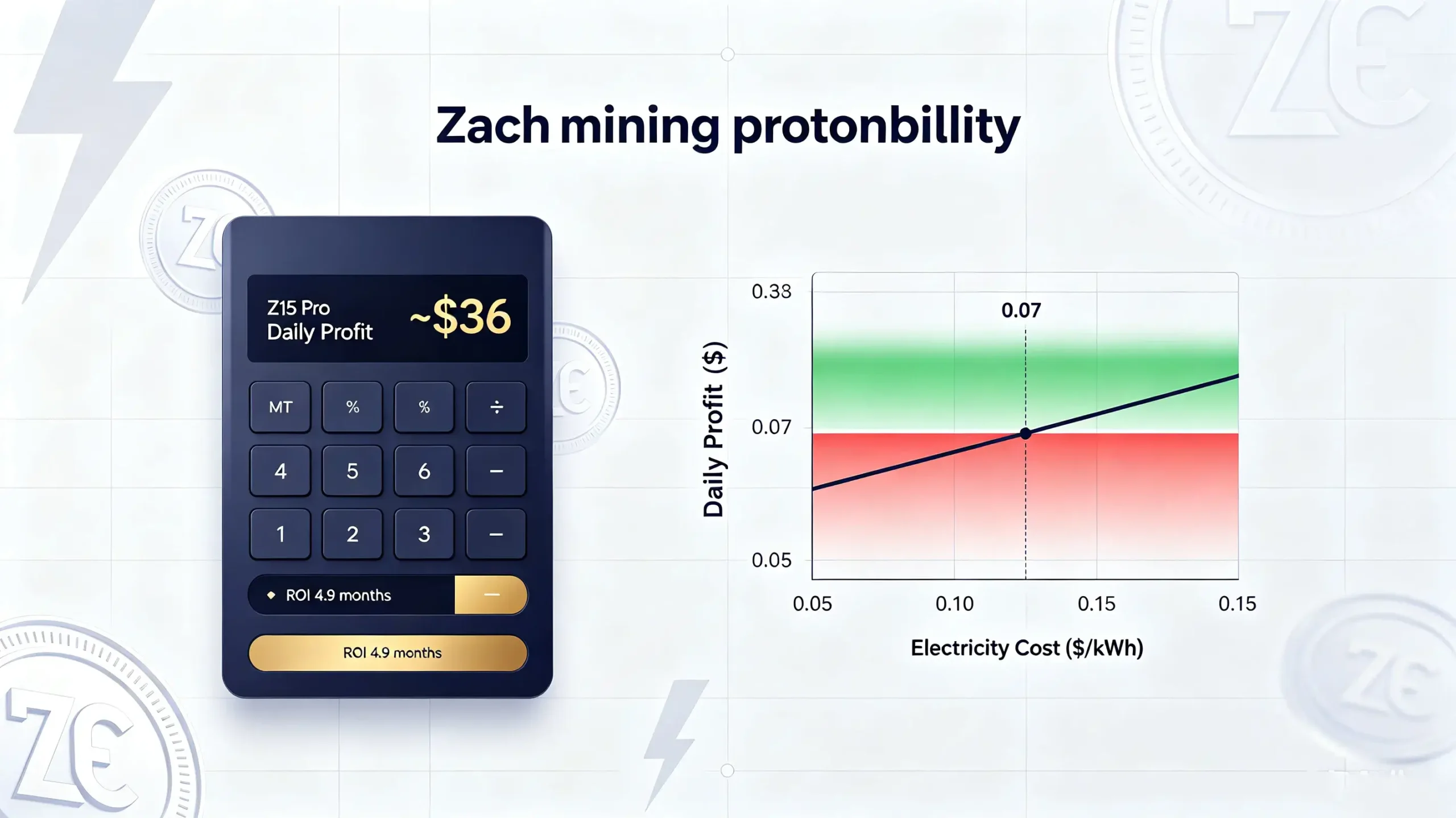
Profitability is the most important question for any miner. Here is the honest math. Click to calculate the real-time earnings.
Current Network Conditions
As of mid-2026:
-
Block reward: 1.5625 ZEC per block (post-November 2024 halving)
-
Block time: ~75 seconds
-
Miner share: 80% of block reward (20% goes to community grants and governance)
-
Effective reward: ~1.25 ZEC per block for miners
Daily Revenue Estimates
| Miner | Hashrate | Daily Gross Revenue | Daily Net Profit* |
|---|---|---|---|
| Antminer Z15 Pro | 840 kSol/s | ~$40.85 | ~$27.78 |
| Antminer Z15 | 420 kSol/s | ~$20.43 | ~$13.69 |
*Based on $0.07/kWh electricity and ZEC price of ~$431
Electricity Cost Sensitivity
At $0.05/kWh, almost any modern ASIC is profitable; at $0.10 only the most efficient models survive; above $0.15 you need free power or top-tier hardware.
ROI Comparison
The Antminer Z15 Pro delivers the fastest ROI at 4.9 months. By comparison, Bitcoin SHA-256 hardware at current conditions produces multi-year payback horizons. An Antminer S23 Hydro at 580 TH/s produces approximately $5.34 in daily net profit at $0.07/kWh, an 18-24 month payback.
The numbers are not even close. Equihash ASIC mining is currently the strongest payback hardware story in crypto.
Using a Mining Calculator
For accurate profitability estimates, use a Zcash mining calculator with your specific electricity rate. Tools like CoinWarz and MiningNow provide real-time calculations.
The Halving Factor: Understanding Zcash’s Supply Schedule
Zcash’s halving schedule is critical to understanding mining profitability and ZEC’s long-term value.
The 2024 Halving
On November 23, 2024, Zcash underwent its second halving, reducing block rewards from 3.125 ZEC to 1.5625 ZEC, effectively cutting miner earnings by half.
Miners now receive only 80% of the block reward, with the remainder allocated to community grants and governance. This halving slows new ZEC supply growth.
The 2028 Halving
The next halving, expected at block 4,406,400 around late 2028, will drop rewards from 1.5625 ZEC to 0.78125 ZEC. Serious mining operations are already factoring that event into hardware investment cycles.
Supply Milestones
As of mid-2026, about 16.7 million of the 21 million ZEC cap have already been mined—approximately 79.5% of the maximum supply. The remaining supply will be mined over decades, with diminishing rewards.
Implications for Miners
As of mid-2026, ZEC mining remains viable for low-cost, ASIC-equipped operators, though the economics grow more price-sensitive with each successive halving. The regulatory picture for privacy coins has also clarified somewhat.
Is ZEC Coin Still Worth Investing In?
This is the question every potential miner and investor asks. The honest answer is nuanced.
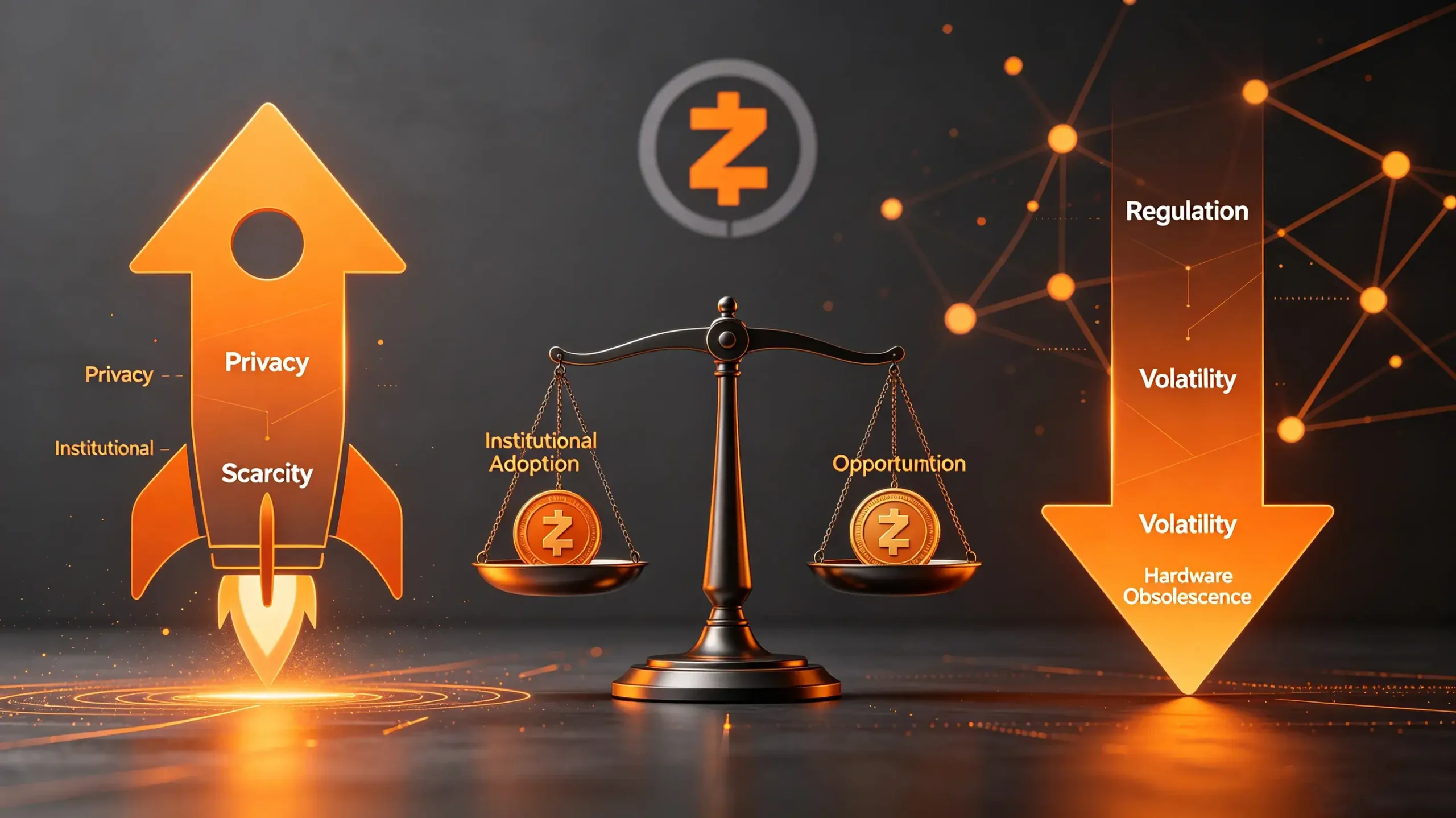
The Bull Case
Privacy Is Valuable: Zcash offers something no general-purpose blockchain can match: optional, mathematically verifiable privacy. Businesses and individuals who want financial confidentiality have a compelling reason to use Zcash.
Supply Scarcity: With only 21 million ZEC ever to exist and ~79.5% already mined, Zcash is scarcer than Bitcoin on a per-capita basis (Bitcoin also has 21 million, but Zcash’s privacy features give it a unique value proposition).
Institutional Adoption: Foundry Digital launched an institutional Zcash mining pool in April 2026, capturing 30% of network hashrate. Grayscale’s Zcash Trust holds approximately 391,103 ZEC ($99.4 million as of March 2026 quarter-end).
Price Performance: Zcash climbed roughly 1,190% over the past year, earning a spot on Forbes’ 2026 top 10 list of best cryptocurrencies to buy.
Upcoming Upgrades: The Ironwood upgrade, scheduled for July 28, 2026, replaces the vulnerable Orchard shielded pool with enhanced security features.
The Bear Case
Regulatory Uncertainty: Privacy coins face unique regulatory challenges. While the picture has clarified somewhat, privacy-focused assets remain under scrutiny from global regulators.
Volatility: ZEC fell 96% within two weeks after the November 2024 post-halving rally. The price can move dramatically in either direction.
Competition: Other privacy-focused projects (Monero, etc.) compete for the same market.
Orchard Security Bug: In June 2026, a serious flaw was discovered in Zcash’s Orchard shielded pool that could have allowed counterfeit ZEC creation. While the team is addressing it with the Ironwood upgrade, the incident damaged confidence.
Price Predictions
Price predictions vary widely. Based on long-term price prediction models, Zcash in 2026 may reach approximately $439, with 2027 projections around $461 and 2028 around $484.
More optimistic forecasts place ZEC at $486.75 in 2027 and $511.09 in 2028.
The Verdict on ZEC as an Investment
Zcash offers a unique value proposition in the cryptocurrency market. Its privacy features, fixed supply, and institutional adoption make it a serious contender in the privacy coin space. However, it faces significant risks including regulatory uncertainty, price volatility, and competition.
For miners specifically, the economics are compelling at current prices. The Antminer Z15 Pro offers a 4.9-month ROI—among the best in crypto mining. But as with all mining investments, profitability depends heavily on electricity costs and ZEC’s future price.
Key Risks of Zcash Mining and Investment
Before mining or investing in ZEC, understand these significant risks.
1. Price Volatility
ZEC fell 96% within two weeks after the November 2024 post-halving rally. A drop in ZEC price can turn a profitable mining operation into a loss-making one overnight.
2. Halving Risk
The next halving in late 2028 will reduce block rewards from 1.5625 ZEC to 0.78125 ZEC. This will cut miner revenue in half, assuming ZEC price and difficulty remain constant.
3. Difficulty Increases
As more miners join the network, difficulty increases, reducing each miner’s share of the rewards. Foundry’s Zcash pool launching and capturing 30% of network hashrate has already increased competition.
4. Regulatory Risk
Privacy coins face unique regulatory scrutiny. While the picture has clarified somewhat, adverse regulatory action could significantly impact ZEC’s price and usability.
5. Hardware Obsolescence
ASIC miners have a limited lifespan. Newer, more efficient models can make older hardware unprofitable. The next generation of Equihash ASICs could render the Z15 and Z15 Pro obsolete.
6. Technical Risk
The June 2026 Orchard security bug demonstrated that even mature projects can have critical vulnerabilities. While the Ironwood upgrade addresses this issue, future vulnerabilities could emerge.
7. Electricity Costs
Mining profitability is extremely sensitive to electricity costs. At $0.05/kWh almost any modern ASIC is profitable; at $0.10 only the most efficient models survive; above $0.15 you need free power or top-tier hardware.
8. Infrastructure Requirements
These machines draw 1,510 W to 2,780 W continuously and require a 220V circuit and wired ethernet. Not every home or facility can accommodate these requirements.
Frequently Asked Questions
What is Zcash?
Zcash (ZEC) is a privacy-focused cryptocurrency launched in 2016 that uses zero-knowledge proofs to enable private transactions while maintaining a public blockchain.
What algorithm does Zcash use?
Zcash uses Equihash, a memory-hard proof-of-work algorithm designed to be ASIC-resistant but now dominated by purpose-built ASICs.
Can I mine Zcash with a GPU in 2026?
No. GPUs are no longer viable for Zcash mining. Purpose-built Equihash ASICs are now required to earn consistent rewards.
What is the best Zcash miner in 2026?
The Antminer Z15 Pro at 840 kSol/s is the best Zcash miner, offering the fastest ROI at approximately 4.9 months.
How much does an Antminer Z15 Pro cost?
The Z15 Pro retails between $3,999 and $6,500 depending on supplier.
How much can I earn mining Zcash?
A single Antminer Z15 Pro produces approximately $40.85 in daily gross revenue, or $36.18 net at $0.07/kWh hosted electricity rates. The standard Z15 produces roughly half that.
How do I set up a Zcash wallet for mining?
You need a wallet that generates a transparent (t-address) starting with t1 or t3. Pools pay to these addresses, not to shielded (z-addresses).
What mining pools support Zcash?
Foundry, ViaBTC, F2Pool, and other major pools support Zcash mining. Foundry’s Zcash pool launched in April 2026 and has captured 30% of network hashrate.
When is the next Zcash halving?
The next Zcash halving is expected in late 2028, reducing block rewards from 1.5625 ZEC to 0.78125 ZEC.
Is ZEC a good investment?
Zcash offers unique privacy features and has seen significant price appreciation, but it faces regulatory risks, competition, and volatility. As with all crypto investments, only invest what you can afford to lose.
What is the Ironwood upgrade?
Ironwood is a Zcash network upgrade scheduled for July 28, 2026, that replaces the vulnerable Orchard shielded pool with enhanced security features after a critical bug was discovered.
How many ZEC exist?
There will only ever be 21 million ZEC. As of mid-2026, approximately 16.7 million ZEC (79.5%) are already in circulation.
Final Verdict: Should You Mine ZEC in 2026?
Zcash mining in 2026 presents a compelling opportunity—but one that requires careful consideration.
The Case for Mining ZEC
Fastest ROI in Crypto: Equihash ASIC mining is currently the strongest payback hardware story in crypto. The Antminer Z15 Pro offers a 4.9-month ROI, significantly faster than Bitcoin ASICs which can take 18-24 months or more.
Strong Price Performance: Zcash climbed roughly 1,190% over the past year, earning a spot on Forbes’ 2026 top 10 list. High ZEC prices directly benefit miners.
Institutional Validation: Foundry’s Zcash pool launch and Grayscale’s trust holdings signal growing institutional interest.
Fixed Supply: With only 21 million ZEC and ~79.5% already mined, supply scarcity supports long-term value.
The Case Against Mining ZEC
Hardware Costs: The Z15 Pro retails for $3,999-$6,500, a significant upfront investment.
Infrastructure Requirements: These machines require 220V circuits and professional-grade cooling. Not suitable for casual home mining.
Halving Risk: The 2028 halving will cut block rewards in half, reducing revenue.
Regulatory Risk: Privacy coins face ongoing regulatory uncertainty.
Technical Risk: The Orchard security bug demonstrated that even mature projects have vulnerabilities.
The Bottom Line
ZEC mining in 2026 can be attractive, but it should be approached as a hardware and power-cost decision, not only a coin-price bet.
For miners with access to low-cost electricity (under $0.07/kWh) and the ability to source current-generation ASIC hardware, Zcash mining offers one of the best ROI opportunities in crypto. For miners with higher electricity costs or limited infrastructure, the economics may not work.
As with all mining investments, do your own research. Use a mining calculator with your specific electricity rate. Factor in hardware costs, shipping, cooling, and maintenance. And never invest more than you can afford to lose.
Zcash remains one of the most recognizable privacy coins in crypto. Its Equihash ASIC ecosystem in 2026 offers a legitimate separate lane for ASIC buyers—not a replacement for Bitcoin mining, but a compelling alternative with its own risk-reward profile.