Solo Mining: Guide to Bitcoin Mining Success
Solo bitcoin mining is the practice of running mining hardware independently, without joining a mining pool, to attempt to solve a Bitcoin block on your own. When successful, you receive the full block reward and transaction fees without sharing profits with anyone. However, because your hash rate competes against the entire Bitcoin network, rewards may be infrequent, and success requires understanding probability, hardware selection, and operational setup.
This guide explains what solo bitcoin mining is, how it differs from pool mining, what hardware options exist for different budgets, and how to calculate whether it makes sense for your situation. Whether you are exploring solo mining as a hobby, a learning opportunity, or a calculated lottery-style gamble, the information below will help you make an informed decision.
What Is Solo Bitcoin Mining?
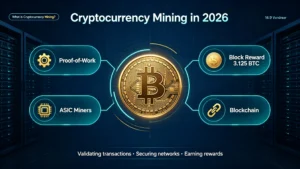
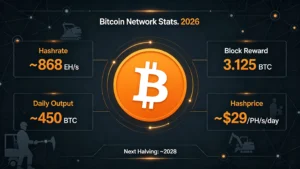
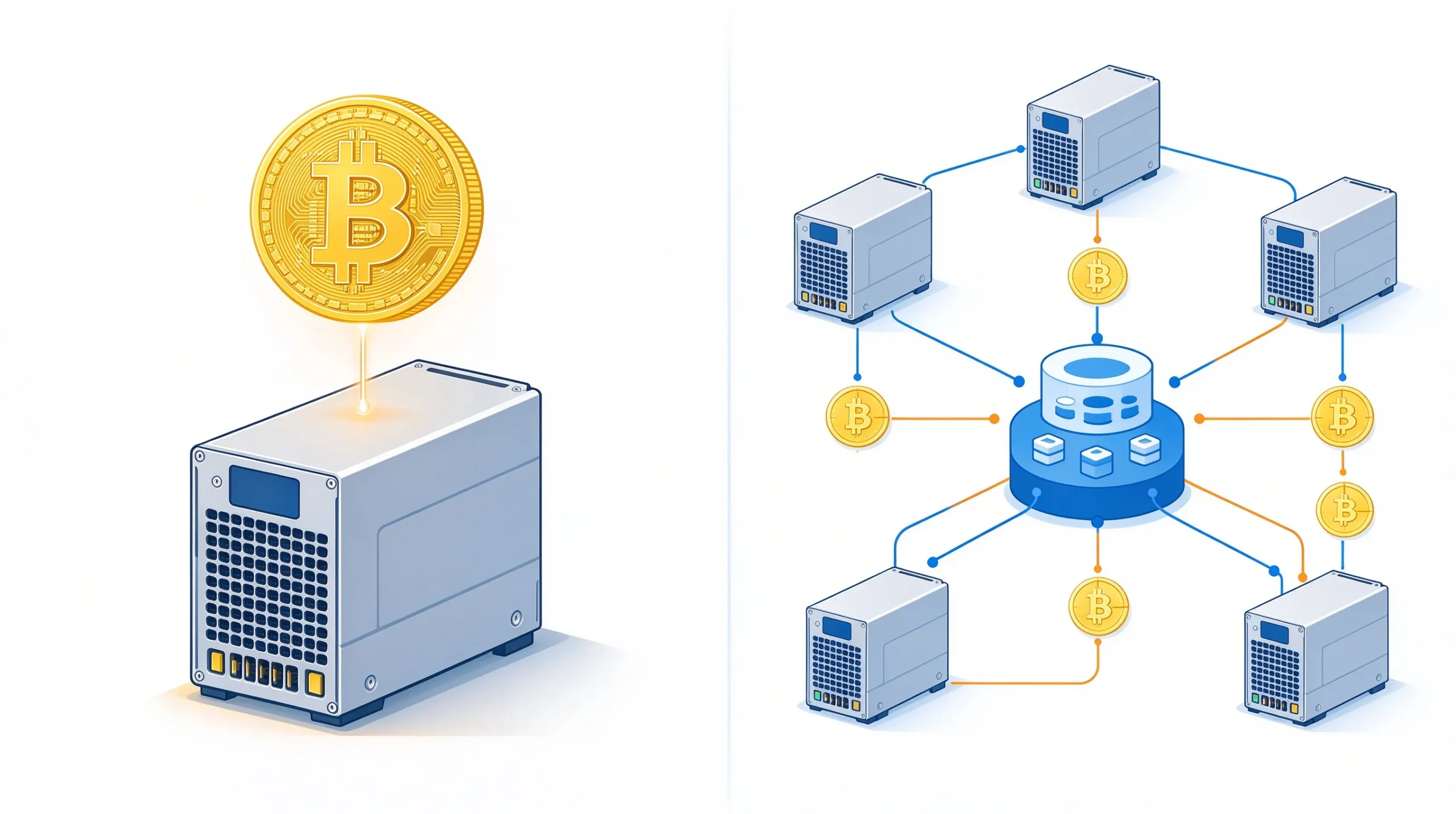
Solo bitcoin mining means your mining device works independently to solve Bitcoin blocks. Unlike pool mining, where multiple miners combine hash rate and share rewards proportionally, solo mining gives you the entire block reward when your hardware finds a valid block . You keep 100% of the 3.125 BTC subsidy plus transaction fees, minus no pool fees because there is no pool involved.
The trade-off is variance. In a pool, you receive small, steady payouts proportional to your hash rate. In solo mining, you receive nothing until your hardware solves a block, then you receive everything at once. This all-or-nothing structure is why solo mining is often called “lottery mining” .
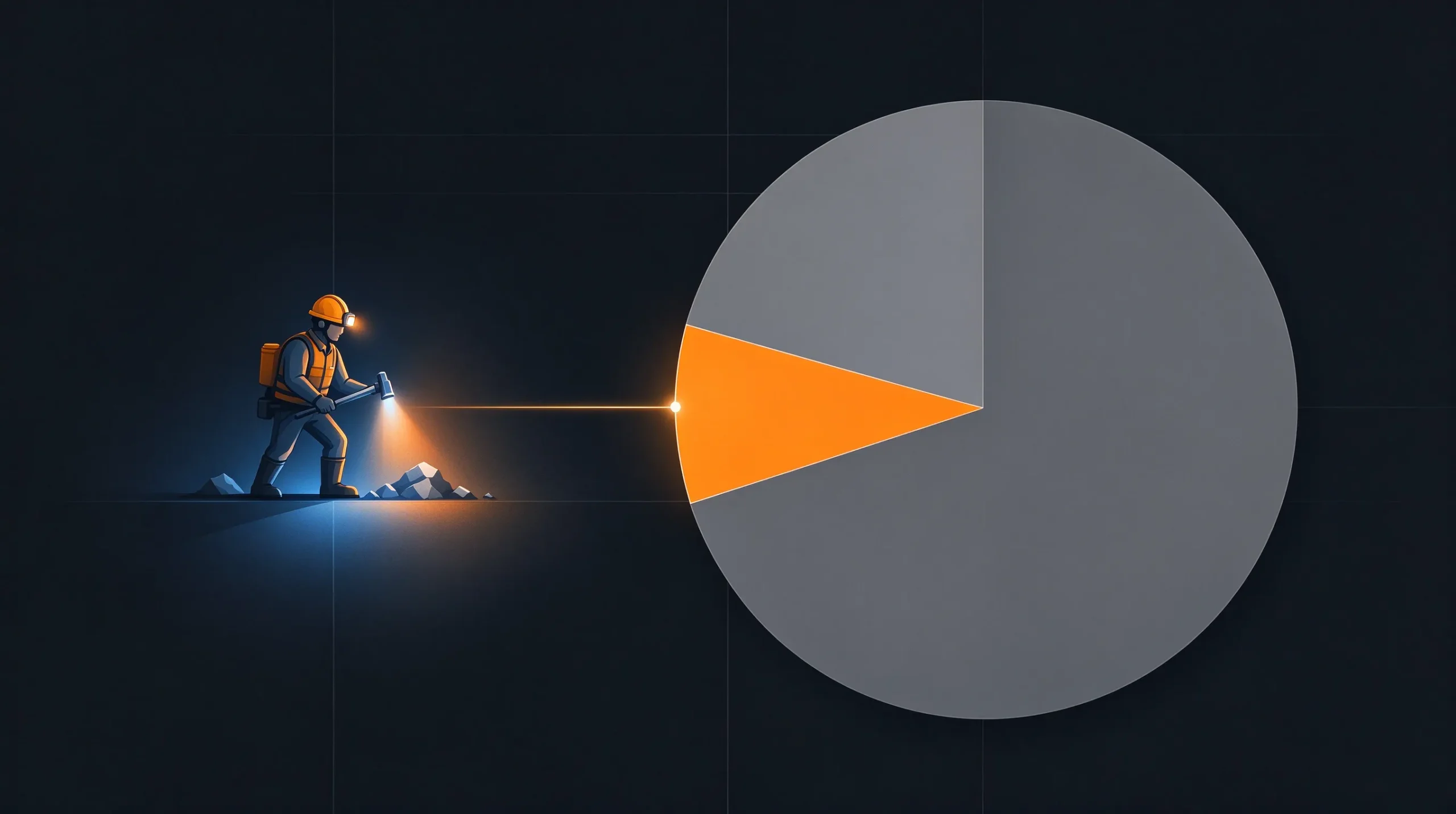
Your probability of solving a block is directly proportional to your share of the network’s total hash rate. A miner contributing 10 TH/s to a network running at approximately 632 EH/s represents roughly 0.0000000016% of total capacity . This means long expected timeframes between block discoveries, even with capable hardware.
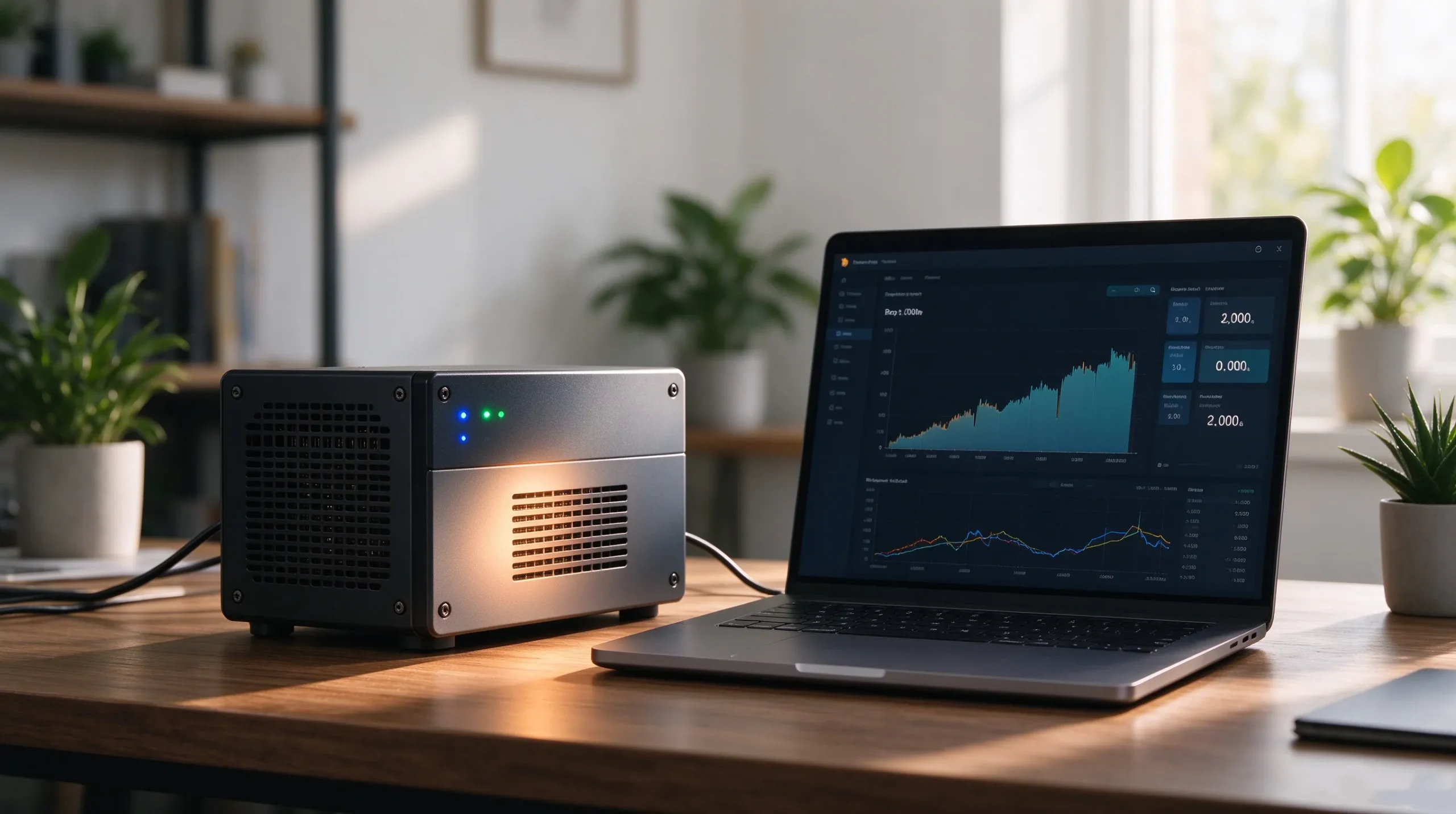
Solo Mining vs Pool Mining: Key Differences
The table below compares the two approaches across the factors that matter most for decision-making.
| Factor | Solo Mining | Pool Mining |
|---|---|---|
| Reward structure | Full block reward (3.125 BTC + fees) to you alone | Proportional share based on contributed hash rate |
| Payout frequency | Rare, all-or-nothing | Regular, small payouts |
| Variance | Extremely high | Low |
| Pool fees | None | Typically 1–3% |
| Technical setup | Requires node or solo pool configuration | Simpler, connect to pool |
| Privacy | Higher, no third-party data sharing | Pool operator sees your worker information |
| Decentralization impact | Directly supports network decentralization | Pool operator controls block template |
For users who need predictable income, pool mining offers steadier returns. For those who value the possibility of a full block reward, accept long dry spells, and want to contribute to decentralization, solo mining provides that opportunity .
Does Solo Bitcoin Mining Really Work in 2026?
Solo bitcoin mining “works” in the sense that the Bitcoin protocol does not prevent independent miners from submitting blocks. The question is whether it is realistic for your hardware and expectations.
Direct answer: Solo mining works technically, but it is a lottery. Recent wins demonstrate that small miners can and do find blocks, but the expected time between blocks is measured in years or decades for typical home hardware .
The odds of finding a block are proportional to your share of network hash rate. Using 2026 network conditions, the probability estimates per year for different hardware classes are approximately :
-
1.2 TH/s (Bitaxe class): ~1 in 17,500 per year
-
4.8 TH/s (NerdQaxe++ class): ~1 in 4,400 per year
-
10 TH/s (Nexus S1 class): ~1 in 2,100 per year (calculated proportionally)
-
90 TH/s (industrial class): ~1 in 230 per year
These figures change as network difficulty adjusts, typically every two weeks. Higher difficulty reduces your probability. Lower difficulty increases it. The direction of difficulty depends on how much total hash rate joins or leaves the network.
Expected value calculation: EV = (Your hash rate / Network hash rate) × Block reward − Electricity cost − Hardware amortization. For most home miners, the EV of solo mining is small or negative relative to the capital and electricity invested. The return comes from the possibility of a full block reward and the experience of running mining infrastructure .
Realistic expectation: Treat solo mining as a hobby or educational activity, not an income strategy. The hardware has value as a learning tool and as a decentralized network participant. Any block reward is a bonus, not a plan .
Why Choose Solo Mining? Motivations and Trade-offs
People pursue solo bitcoin mining for reasons beyond expected financial return.
Full block reward: When your hardware solves a block, you receive the entire subsidy and transaction fees. Recent solo payouts have ranged from approximately $200,000 to $350,000 depending on Bitcoin price and transaction fees in the block .
Network participation: Solo mining contributes directly to Bitcoin’s decentralization. Every block found by a small miner is one that a large pool did not control .
Learning value: Running a solo mining setup teaches you how Bitcoin nodes, mining software, and the proof-of-work mechanism function at a technical level. This knowledge transfers to other aspects of Bitcoin operation .
Privacy: No pool operator sees your mining activity or receives your hashrate metadata. Your Bitcoin address receives rewards directly .
Trade-offs to accept: Long periods without rewards, technical setup requirements (node or solo pool configuration), higher variance than pool mining, and electricity costs that accumulate regardless of whether you find a block.
Solo Mining Hardware: How to Choose the Right Equipment
Solo mining hardware spans from low-power novelty devices to industrial ASICs. The right choice depends on your budget, electricity cost, noise tolerance, and technical comfort level.
Hardware categories for solo mining:
Entry-level / educational devices (under 1 TH/s): Devices like the Lucky Miner V2 operate at extremely low power (1W) and serve as educational tools. Their probability of finding a block is functionally zero for practical timeframes, but they provide hands-on experience with mining mechanics .
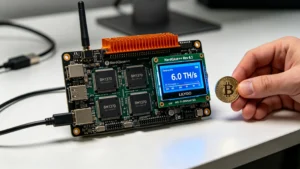
Home solo miners (1–10 TH/s): This is where meaningful solo mining probability begins. Devices like the Nexus S1 deliver 10 TH/s at 100W with 40dB noise, making them suitable for desktop or home environments . Other options in this class include the Braiins BMM101 (1 TH/s, 40W) and MO01 Miner (770 KH/s, 17W) .
Mid-tier home miners (10–100 TH/s): Used industrial ASICs (e.g., Antminer S19-class) fall into this range. They offer higher hash rate but also higher noise, heat, and power consumption. This class is suitable for dedicated spaces with adequate ventilation and power circuits .
Industrial ASICs (100+ TH/s): Current-generation machines like the Antminer S23 Hydro series deliver hundreds of terahashes per second. These are designed for commercial operations and require industrial power and cooling infrastructure .
Selection criteria for solo mining hardware:
| Consideration | What to evaluate |
|---|---|
| Hash rate | Higher hash rate increases block-finding probability proportionally |
| Power efficiency (J/TH) | Lower is better; determines electricity cost per terahash |
| Noise level | Under 50dB is generally home-friendly |
| Power draw | Must match available electrical circuits (standard home circuits: ~1,500–1,800W) |
| Cooling | Air-cooled for home; hydro for industrial |
| Physical size | Desktop units fit home; industrial units require racks |
| Firmware openness | Open-source firmware (e.g., AxeOS) offers more control |
Procurement checklist before purchasing:
-
Confirm your electricity cost per kWh and calculate expected daily power cost
-
Verify your electrical circuit can handle the miner’s power draw continuously
-
Assess noise impact on your living environment
-
Check whether the device supports solo pool connections (stratum protocol)
-
Confirm warranty terms and support availability
-
For home miners: verify that the device can run 24/7 without manual intervention
X-ON MINING offers a range of solo mining hardware options, including the Nexus S1 home BTC miner and other home mining devices designed for independent operation.
Internal links:
-
For dedicated solo mining hardware, explore solo mining hardware options → Solo Mining
-
The Nexus S1 BTC Miner – delivers 10 TH/s at 100W with 40dB noise for home solo mining.
-
For alternative home mining configurations, view the NerdQaxe Rev 7
-
Browse the full catalog of ASIC miners → to compare Antminer, Whatsminer, Goldshell Miner, and IceRiver Miner options.
Setting Up Your Solo Mining Operation: Step-by-Step
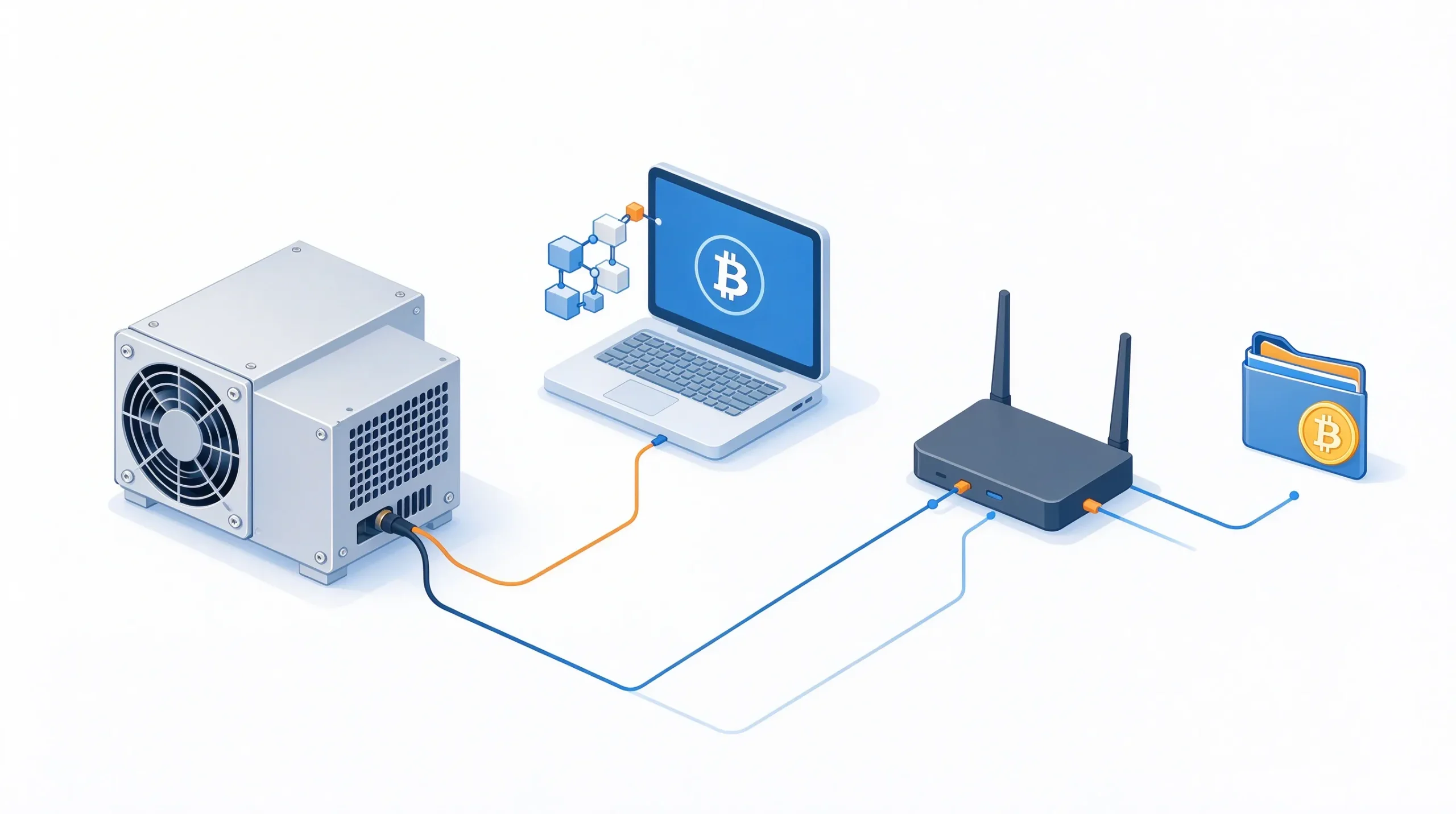
Solo mining setup involves three core components: a Bitcoin node (or solo pool connection), your mining hardware, and the software that connects them.
Step 1: Choose your solo mining architecture
You have two options:
-
Run your own Bitcoin full node with a solo stratum server (e.g., CKPool Solo). This gives you maximum privacy and control. Your miner connects directly to your node, and you submit blocks without any third party .
-
Use a public solo pool (e.g., CKPool, Public Pool, Braiins Solo). These services handle the node infrastructure for you, typically for 0–2% fees. Your miner connects to the pool’s stratum endpoint, and any block found pays directly to your address .
Step 2: Prepare your environment
-
Choose a location with adequate ventilation. Mining hardware produces continuous heat.
-
Verify your power source can handle the miner’s load. Dedicated circuits are recommended for miners drawing more than 1,000W.
-
Plan for noise: devices under 50dB are suitable for living spaces; higher-noise devices need dedicated rooms.
Step 3: Set up your node (if running your own)
-
Install Bitcoin Core on a computer with sufficient storage (500GB+ for the blockchain, more if using SSD for indexing) .
-
Configure
bitcoin.confwith RPC settings to allow your mining software to communicate with the node:-
server=1 -
rpcuser=yourusername -
rpcpassword=yourpassword -
rpcallowip=0.0.0.0/0(restrict to your local network for security)
-
-
Allow the blockchain to fully sync before connecting miners. Shares submitted before sync completion will be rejected .
Step 4: Set up solo stratum server (if running your own)
-
Install CKPool Solo or a similar solo stratum server. Configuration files typically require your Bitcoin address, RPC credentials, and port settings .
-
Point your miner to the stratum server address (e.g.,
stratum+tcp://your-server-ip:3333).
Step 5: Configure and connect your miner
-
Access your miner’s web interface (typically via its IP address on your local network).
-
Enter the pool URL (your solo stratum server or public solo pool), your Bitcoin address as the username, and any password string.
-
Save and restart the miner. Confirm that shares are being submitted and accepted.
Step 6: Monitor and maintain
-
Check the miner’s hash rate, temperature, and share submission status regularly.
-
Clean dust from cooling fans and heatsinks periodically.
-
Keep firmware updated for security and performance improvements.
-
Monitor your node’s sync status if running your own infrastructure.
Setup checklist:
- Bitcoin node fully synced (if running own)
- RPC configuration verified and tested
- Solo stratum server running (if running own)
- Miner connected and shares submitting
- Bitcoin address confirmed as valid and controlled by you
- Power and cooling verified as stable for 24/7 operation
Solo Mining Profitability: Calculating Your Expected Value
Understanding solo mining profitability requires separating expected value from outcome variance.
Cost components:
-
Hardware purchase price (amortize over expected useful life)
-
Electricity cost (watts × hours × your kWh rate)
-
Maintenance and potential repairs
-
Opportunity cost of capital
Revenue components:
-
Block reward: 3.125 BTC plus transaction fees (typically 0.01–0.07 BTC) when a block is found
-
Probability of finding a block: proportional to your hash rate share
Expected value formula:
EV per period = (Your hash rate / Network hash rate) × Block reward value
              − Electricity cost per period
              − Hardware amortization per period
Example with illustrative numbers:
-
Miner: Nexus S1, 10 TH/s, 100W
-
Network: 632 EH/s
-
Block reward: 3.125 BTC + ~0.05 BTC fees = 3.175 BTC
-
Your share: 10 TH/s / 632,000,000 TH/s ≈ 1.58 × 10⁻⁸
-
Expected BTC per block period (10 min): 3.175 × 1.58 × 10⁻⁸ ≈ 5.02 × 10⁻⁸ BTC
-
At $86,000/BTC: expected value per 10-min period ≈ $0.0043
-
Electricity: 0.1 kW × (10/60) hr × $0.10/kWh ≈ $0.0017
-
Net expected value per 10-min period: ~$0.0026
This translates to approximately $0.37 per day in expected value, before hardware amortization. Actual outcomes will vary enormously due to variance.
The key insight: For most home miners, solo mining expected value is roughly break-even with electricity at moderate rates, before accounting for hardware cost. The value proposition is the possibility of a full block reward, learning experience, and network participation, not steady profit .
Solo mining vs direct BTC purchase: Buying Bitcoin directly gives you immediate exposure to price movements without hardware or electricity costs. Solo mining offers a chance at a full block reward and the experience of running infrastructure, but with negative expected value in most scenarios when hardware costs are included. Neither approach is inherently “better”; they serve different goals .
Is Solo Mining Right for You? A Decision Framework
Solo mining suits some users and not others. The conditions below help clarify fit.
You may be suited to solo mining if:
-
You have electricity at or below approximately $0.08/kWh, or access to low-cost power
-
You are comfortable with technical setup (node configuration, stratum connections)
-
You value the possibility of a full block reward over steady small income
-
You want to learn about Bitcoin mining at a technical level
-
You are interested in supporting network decentralization
-
You treat the activity as a hobby or educational project, not an income source
You may prefer alternatives if:
-
You need predictable income from mining
-
Your electricity cost exceeds approximately $0.10/kWh
-
You are not comfortable running command-line tools or editing configuration files
-
Noise and heat are unacceptable in your living environment
-
You expect hardware to pay for itself through mining rewards
Alternatives to consider:
-
Pool mining: Lower variance, smaller but steadier rewards
-
Direct Bitcoin purchase: No hardware or electricity costs, immediate exposure
-
Solo mining with low-power hardware: Accept the educational value and treat any block reward as a bonus
Common Solo Mining Mistakes and Troubleshooting
| Issue | Likely cause | Resolution |
|---|---|---|
| Miner shows 0 share submissions | Node not synced / RPC misconfigured | Verify node is fully synced; test RPC connection with bitcoin-cli getblockchaininfo |
| Shares rejected | Difficulty too low for solo mining | Increase mindiff setting in solo stratum configuration |
| Miner cannot connect to stratum | Wrong pool URL or port | Verify stratum address and port; check network connectivity |
| Node sync takes too long | Large blockchain, slow storage | Use SSD for chainstate; allow adequate time for initial sync |
| Miner overheats | Insufficient cooling | Improve ventilation; check fan operation; reduce ambient temperature |
| High electricity cost | Inefficient hardware / high rate | Calculate actual cost per expected reward; consider more efficient hardware or lower rate environment |
Your Next Step in Solo Bitcoin Mining
If you are ready to explore solo bitcoin mining, the most important decisions are hardware selection and understanding your electricity economics. X-ON MINING supplies ASIC miners including the Nexus S1 10 TH/s home solo miner, along with Antminer, Whatsminer, Goldshell Miner, and IceRiver Miner options for different mining scenarios.
When contacting us, please provide:
Your target hash rate and budget range
Your electricity cost per kWh
Available space and noise constraints
Whether you plan to run your own node or use a solo pool
Our team can help you match hardware to your solo mining goals and provide current specifications, pricing, and shipping information.
Frequently Asked Questions About Solo Bitcoin Mining
What is solo bitcoin mining?
Solo bitcoin mining means running mining hardware independently to solve Bitcoin blocks. When your hardware finds a valid block, you receive the full block reward and transaction fees without sharing with other miners .
How does solo mining differ from pool mining?
Pool mining combines hash rate from many miners and distributes rewards proportionally. Solo mining keeps rewards concentrated: you receive everything if you find a block, nothing if you don’t. Expected value is similar for the same hash rate; variance is much higher in solo mining .
What hardware do I need for solo mining?
You need an ASIC miner that supports SHA-256 and can connect to a solo stratum server. Home-appropriate options range from low-power educational devices (under 1 TH/s) to 10 TH/s desktop miners like the Nexus S1, to used or new industrial ASICs for higher hash rates .
How long does it take to solo mine a Bitcoin block?
Expected time depends on your hash rate relative to the network. For a 10 TH/s miner on a 632 EH/s network, expected time is measured in years. For lower-hashrate devices, expected time extends to decades or longer. Some miners find blocks quickly by chance; most wait far longer than the expected time .
Is solo mining profitable?
For most home miners, solo mining expected value is small relative to hardware and electricity costs. At moderate electricity rates, it may roughly break even on electricity before hardware amortization. Treat solo mining as a hobby or educational activity, not a reliable income source .
Can I solo mine with a low-power miner?
Yes, low-power miners can connect to solo pools and attempt to find blocks. However, their probability of success is extremely low. A 1 TH/s device has roughly 1 in 17,500 annual probability of finding a block at 2026 network conditions .
Do I need to run a full Bitcoin node for solo mining?
Running your own node gives you maximum privacy and control. Alternatively, public solo pools handle node infrastructure for you. If you run your own node, it must be fully synced before your miner can submit valid shares .
What is CKPool and should I use it?
CKPool is a lightweight solo stratum server that connects your miner to your own Bitcoin node. It is designed for solo miners who want to self-host their infrastructure. You can also use public solo pools that run CKPool or similar software. The choice depends on whether you want to manage your own node .
How does network difficulty affect my solo mining chances?
Network difficulty adjusts approximately every two weeks based on total network hash rate. Higher difficulty means your probability of finding a block decreases. Lower difficulty increases it. Your odds are always proportional to your share of total network hash rate .
What happens if I never find a block?
If you never find a block, you receive no Bitcoin rewards from solo mining. Your hardware still provides learning value and network participation. The electricity cost is the price of the attempt. This is the most likely outcome for home miners .