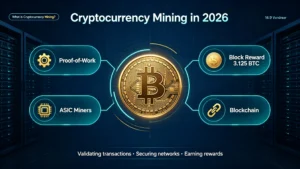
Bitcoin mining machines are one of the most mainstream cryptocurrency mining devices on the market at present. Many novice miners first come into contact with Bitcoin miners. In 2026, which are the best Bitcoin miner? In the continuously declining market, which of these Bitcoin mining machines are still profitable?
The State of Budget Bitcoin Mining in 2026
Bitcoin mining has undergone a remarkable transformation since the early days when anyone with a laptop CPU could participate. The industrialisation of mining—dominated by massive data centres filled with proprietary ASICs from Bitmain, MicroBT, and Canaan—created a perception that Bitcoin mining was no longer accessible to individuals. The narrative became: mining is for the big players, not for the little guy.
But something changed. In 2026, that narrative is being rewritten.
The rise of open-source mining hardware has democratised Bitcoin mining in ways that would have seemed impossible just a few years ago. Today, you can purchase a genuine Bitcoin ASIC miner for under $100—one that uses the same silicon architecture found inside industrial Antminers—and run it from your desk, powered by a standard USB port. No dedicated server room. No 240V electrical work. No noise complaints from the neighbours. Just plug it in, connect to Wi-Fi, and start hashing.
This guide is for the curious, the sceptical, and the committed alike. Whether you are a complete beginner taking your first steps into the world of Bitcoin mining or an experienced operator looking for the most cost-effective way to add hashrate to your solo mining operation, we have done the research. We have tested the hardware, crunched the numbers, and compiled the most comprehensive comparison of Bitcoin miners under $500 available for 2026.
Let’s be honest about what this guide is not. It is not a get-rich-quick scheme. It is not promising you will find a block tomorrow. What it does offer is a clear-eyed, data-driven assessment of the best Bitcoin mining machines available today for under $500—and a realistic understanding of what each one can actually deliver.
What Actually Matters When Comparing Budget Miners?
Before we dive into specific models, we need to establish how to evaluate them. Most “best miners under $500” guides throw a list of products at you with hashrate and price—and leave it at that. That is not enough to make a good decision.
Four numbers matter above all else:
Hashrate (TH/s or GH/s)
Hashrate tells you how many hashes per second your miner submits to the Bitcoin network. More hashes mean more chances to solve a block. In the world of budget mining, hashrates are measured in gigahashes per second (GH/s) for smaller devices and terahashes per second (TH/s) for larger ones. One TH/s equals 1,000 GH/s.
Efficiency (J/TH or J/GH)
Efficiency tells you how many watts it takes to produce each unit of hashing power. Lower is better. A miner rated at 15 J/TH squeezes more work out of every watt than one rated at 23 J/TH. This matters enormously over time because electricity is your only recurring expense.
Cost per Terahash ($/TH)
This is the number that most guides fail to publish. Divide the price by the hashrate and you see the real value. A $300 miner at 6 TH/s costs $50/TH. A $205 miner at 2.15 TH/s costs $96/TH. The miner with the lower sticker price is not always the one with the lower cost per unit of hashing power.
Monthly Electricity Cost
At the US average residential rate of approximately $0.16/kWh, an 18-watt Bitaxe Gamma costs about $2.07 per month to run. A 140-watt Avalon Nano 3S costs about $16.13 per month. Over a year, that gap is nearly $170. If you are in a region with higher electricity costs—or if you are mining in a hosted facility—these numbers shift significantly.
The Open-Source Revolution: Mining Without Permission
To understand the best Bitcoin miners under $500 in 2026, you must first understand the open-source mining movement. It is the single most important development in consumer Bitcoin mining since the invention of the ASIC.
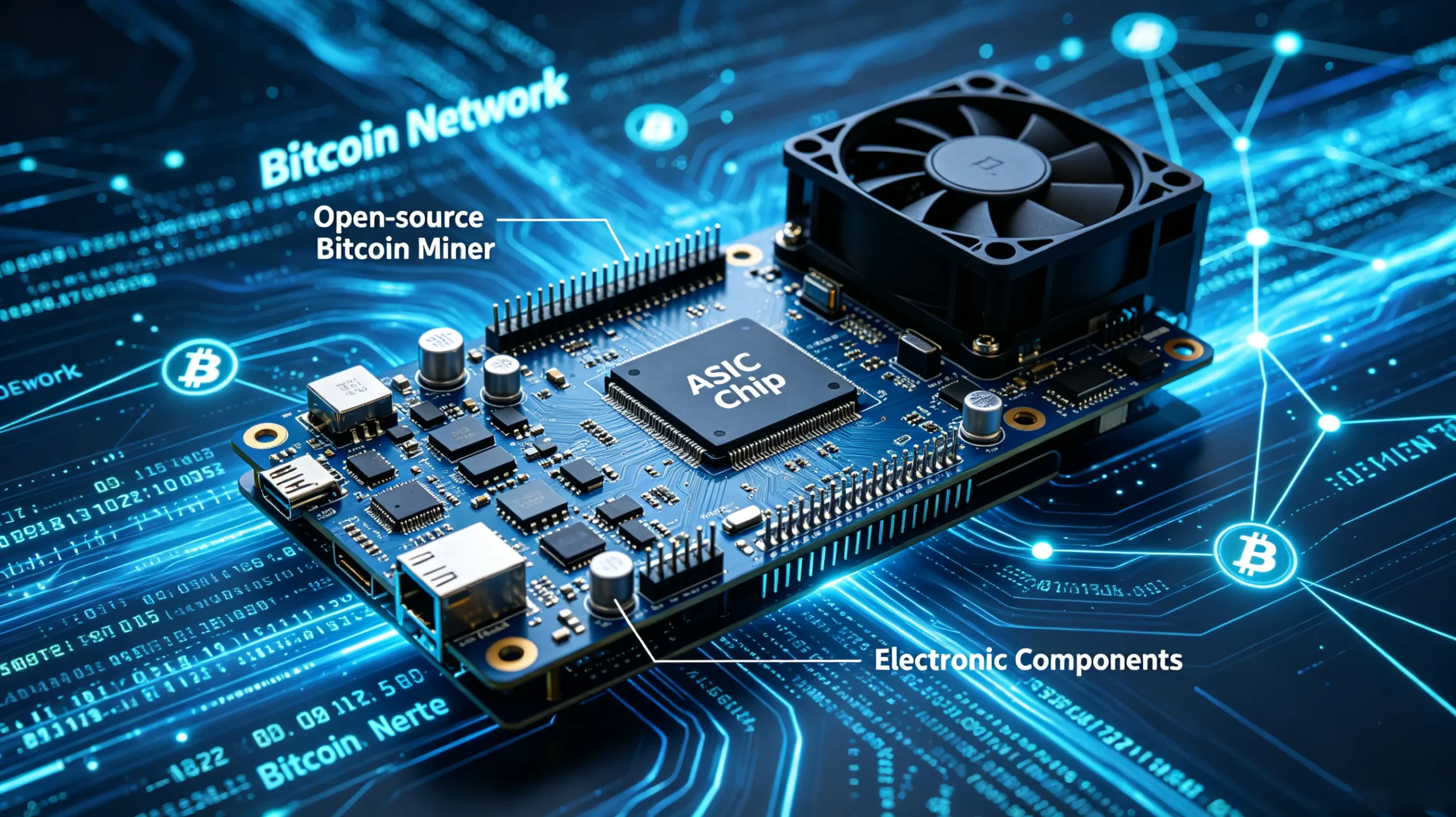
Open-source mining units (often called OSMUs) are fully open-source Bitcoin ASIC miners. Every schematic, every PCB layout, every line of firmware is public. Anyone can audit it, build it, modify it, or improve it. They take the same SHA-256 chips found inside industrial Antminers—the BM1366, BM1370, BM1397—and put them on compact boards that anyone can run from home.
Why is open-source Bitcoin mining important?
Verifiable hardware. When every schematic, PCB layout, and firmware file is published under an open license, you do not need to trust the manufacturer. You can audit the design yourself, or rely on the thousands of engineers in the community who already have. Closed-source miners are black boxes. Open-source miners are glass boxes.
Decentralisation of hashrate. Every open-source miner running solo at someone’s home is hashrate that does not belong to a pool operator, a hosting facility, or a publicly traded mining company. It belongs to an individual. When thousands of individuals each run a small miner, the network becomes more resilient, more distributed, and harder to censor.
Innovation without permission. Open hardware enables derivative designs. The Bitaxe spawned the Bitaxe Hex, the Bitaxe Gamma, the Bitaxe GT, and an entire ecosystem of devices.
Two families dominate the open-source mining ecosystem in 2026:
-
Bitaxe (created by skot9000) emphasises clean single-board designs running AxeOS firmware—from the single-chip Gamma to the 6-chip Hex.
-
NerdAxe (created by BitMaker) focuses on multi-chip scaling and accessibility—from the tiny NerdMiner lottery miner to the 8-chip NerdOctaxe Gamma pushing 9.6+ TH/s.
Both families run SHA-256 ASIC chips from Bitmain’s industrial mining lineup. Both connect over Wi-Fi. Both support solo mining against the Bitcoin network, giving you a shot at a full 3.125 BTC block reward with no pool, no middleman, and no KYC.
Category 1: The Ultra-Budget Lottery Miners (Under $100)
These are the entry-level devices—the “lottery tickets” of Bitcoin mining. They consume minimal power, produce negligible noise, and cost less than a dinner out. Their hashrates are modest, but their value proposition is unique: they give you a permanent, always-on chance at finding a Bitcoin block.
Bitaxe Gamma 602 (~$77–$100)
The Bitaxe Gamma has become the default recommendation for anyone entering the world of open-source mining. Running a single BM1370 ASIC chip—the same chip used in Bitmain’s industrial Antminer S21 Pro—it delivers approximately 1.2 TH/s of hashing power while consuming just 15W.
That efficiency ratio is remarkable for a device the size of a paperback book. At 15W, it consumes less power than a household LED light fixture and costs about $2 per month to run at average US electricity rates.
The Gamma runs AxeOS, a clean browser-based interface where you configure your pool or solo mining node, monitor hashrate, and adjust frequency settings. It is near-silent, connects via Wi-Fi, and comes with an OLED display showing live statistics.
Key Specifications:
-
Hashrate: ~1.2 TH/s
-
Power: ~15W
-
Efficiency: ~12.5 J/TH
-
Noise: Silent (fanless or near-silent)
-
Connectivity: Wi-Fi
-
Price: ~$77–$150 (depending on vendor and configuration)
Best for: Beginners, open-source enthusiasts, desk miners, anyone who wants to support the Bitcoin network with minimal investment.
BlockChance Bitcoin Ticket Miner (~$50)
This is the most affordable entry point to Bitcoin mining in 2026. At $50 (down from $149.99), the BlockChance Ticket Miner takes a fundamentally different approach. Rather than earning tiny fractions of Bitcoin through pooled mining, it submits solo “tickets” for a chance to win an entire Bitcoin block reward.
Running at approximately 1,000 KH/s, it processes roughly 18 times faster than standard ticket miners. The built-in 2.8-inch touchscreen shows live hashrate, ticket activity, and probability data directly on the device—no PC or coding skills needed.
The way to think about BlockChance isn’t as mining infrastructure; it’s more like a permanent lottery ticket with no expiration date. The odds are genuinely long—BlockChance is upfront that the annual probability of landing a block reward is near 0.0056%. But for $50 and less electricity than a household light bulb, it offers a low-cost, hands-on way to stay plugged into the Bitcoin network.
Key Specifications:
-
Hashrate: ~1,000 KH/s
-
Power: <5W (estimated)
-
Noise: Silent
-
Connectivity: Wi-Fi
-
Price: ~$50
Best for: Curious beginners, gift-givers, anyone who wants to participate in Bitcoin mining without any technical setup.
Category 2: The Entry-Level Solo Miners ($100–$200)
Moving up the budget ladder gets you significantly more hashing power while still keeping electricity consumption and noise levels suitable for residential use.
Bitaxe Ultra BM1366 (~$100–$140)
The Bitaxe Ultra represents the sweet spot for most people entering open-source mining. It uses a single BM1366 ASIC chip—the same silicon architecture found in the Antminer S19 XP—and delivers approximately 500 GH/s at just 12W.
The Ultra is battle-tested and widely available. It is the “Goldilocks” of the Bitaxe family—not too simple, not too complex, just right. The 204 revision in particular has benefited from years of community refinement.
Key Specifications:
-
Hashrate: ~500 GH/s
-
Power: ~12W
-
Efficiency: ~24 J/TH
-
Noise: Silent (fanless)
-
Connectivity: Wi-Fi
-
Price: ~$120–$140
Best for: Home miners, first builds, anyone wanting a reliable entry point with community support.
NerdAxe Ultra (~$115)
The NerdAxe Ultra is the NerdAxe family’s equivalent to the Bitaxe Ultra. It delivers 500 GH/s at 15W and comes with an orange shell that has become a signature of the NerdAxe brand.
The NerdAxe family leans into the maker ethos—on-device displays, hackable firmware, modular kits, and a deep connection to the NerdMiner community. If you enjoy tinkering with settings and following development on GitHub, you will feel at home with the NerdAxe.
Key Specifications:
-
Hashrate: ~500 GH/s
-
Power: ~15W
-
Efficiency: ~30 J/TH
-
Noise: Silent
-
Connectivity: Wi-Fi
-
Price: ~$115
Best for: Tinkerers, open-source community members, those who value on-device displays.
Bitaxe Supra 401 (~$100–$120)
The Supra represents the next level of single-chip performance. Using a BM1368 chip (from the Antminer S21), it delivers 625–775 GH/s at approximately 12W, achieving industry-leading efficiency of 15–20 J/TH.
The Supra brought redesigned power circuitry and better cooling support. It is the main model in the 400 series and offers proper performance for a single-chip miner.
Key Specifications:
-
Hashrate: ~625–775 GH/s
-
Power: ~12W
-
Efficiency: ~15–20 J/TH
-
Noise: Silent
-
Connectivity: Wi-Fi
-
Price: ~$130–$170
Best for: Efficiency-focused home miners, experienced builders.
Category 3: The Performance Budget Miners ($200–$350)
This is where things get interesting. For $200–$350, you can acquire miners that deliver multiple terahashes per second—real hashing power that, while still modest by industrial standards, gives you meaningful participation in the Bitcoin network.
Bitaxe GT (Gamma Turbo) (~$200–$250)
The Bitaxe GT is the dual-chip beast of the Bitaxe family. Running two BM1370 chips from the Antminer S21 Pro, it delivers approximately 2.4 TH/s at around 30W.
This is the highest-performing single-board Bitaxe you can buy, offering double the hashrate of the Gamma while maintaining excellent efficiency. The dual-chip design does generate more heat, so proper cooling is essential.
Key Specifications:
-
Hashrate: ~2.4 TH/s
-
Power: ~30W
-
Noise: Low (small fan)
-
Connectivity: Wi-Fi
-
Price: ~$200–$250
Best for: Serious home miners who want maximum hashrate from a single open-source board.
Bitaxe Hex (~$280–$350)
The Bitaxe Hex represents the pinnacle of the Bitaxe family—a six-chip board that pushes over 3 TH/s. It uses six BM1366 or BM1370 chips arranged on a single PCB.
The Hex is for miners who want substantial hashrate from a compact, open-source device. It runs AxeOS like the rest of the family, connects via Wi-Fi, and fits on a desk—though you will want to ensure adequate ventilation for the additional heat.
Key Specifications:
-
Hashrate: ~3+ TH/s
-
Power: ~70–90W (estimated)
-
Noise: Low to moderate
-
Connectivity: Wi-Fi
-
Price: ~$280–$350
Best for: Home miners who want serious hashrate without moving to industrial hardware.
Hammer Miner BC04 (~$250–$350)
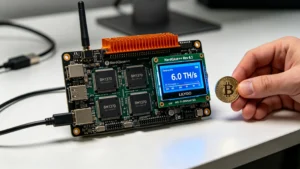
The Hammer Miner BC04 is a quiet, desk-friendly home Bitcoin miner delivering approximately 6 TH/s of SHA-256 mining power with ultra-low energy consumption. It is built specifically for home mining enthusiasts who want real Bitcoin hashrate without industrial noise, excessive heat, or complicated setup.
Key Specifications:
-
Hashrate: ~6 TH/s
-
Power: ~100–140W (estimated)
-
Noise: Low
-
Connectivity: Ethernet
-
Price: ~$250–$350
Best for: Home miners who prefer a pre-assembled, plug-and-play device over open-source kits.
Category 4: The High-End Budget Miners ($350–$500)
At the top of the under-$500 range, you can acquire miners that deliver 6+ TH/s—performance that would have cost thousands of dollars just a few years ago. These devices represent the best value for money in the entire budget mining category.
Avalon Nano 3S (~$280)
The Avalon Nano 3S is one of the most exciting developments in consumer Bitcoin mining for 2026. It delivers 6 TH/s at 140W, putting it in a performance class previously reserved for much larger and more expensive devices.
At approximately $50/TH, the Avalon Nano 3S offers exceptional value for money. The monthly electricity cost at average US rates is about $16.13—more than the ultra-low-power open-source devices, but still manageable for most home setups.
Key Specifications:
-
Hashrate: 6 TH/s
-
Power: 140W
-
Efficiency: ~23 J/TH
-
Noise: Moderate
-
Connectivity: Ethernet
-
Price: ~$300
Best for: Home miners who want maximum hashrate under $500 and don’t mind slightly higher electricity costs.
NerdQaxe++ Rev 6.1 (~$360)
The NerdQaxe++ Rev 6.1 is a quad-chip open-source miner that pushes over 6 TH/s at approximately 100W, achieving an impressive efficiency of about 15.65 J/TH.
Built with four BM1370 chips from the Antminer S21 Pro, this compact ASIC Bitcoin miner is designed for enthusiasts and small-scale mining environments. It includes a rear cooling fan to improve airflow and help maintain stable performance during extended operation.
With a cost per terahash of approximately $64/TH, the NerdQaxe++ offers excellent value—especially when you consider its low power consumption and open-source credentials.
Key Specifications:
-
Hashrate: 6+ TH/s
-
Power: ~100W
-
Efficiency: ~15.65 J/TH
-
Noise: Low to moderate
-
Connectivity: Wi-Fi
-
Price: ~$382
Best for: Open-source enthusiasts who want top-tier performance without the proprietary lock-in.
NerdQX 8T (~$320–$400)
The NerdQX 8T is a high-performance desktop-class SHA-256 ASIC miner designed for enthusiasts, home miners, and small-scale mining environments. Delivering approximately 7.8 TH/s at 165W, it offers one of the best price-to-performance ratios in the under-$500 category.
Key Specifications:
-
Hashrate: ~7.8 TH/s
-
Power: ~165W
-
Efficiency: ~21 J/TH (estimated)
-
Noise: Moderate
-
Connectivity: Wi-Fi
-
Price: ~$350–$450
Best for: Home miners seeking maximum hashrate per dollar.
Side-by-Side Comparison Table
| Miner | Hashrate | Power | Efficiency | $/TH | Monthly Electric* | Best For |
|---|---|---|---|---|---|---|
| BlockChance Ticket Miner | ~1,000 KH/s | <5W | N/A | N/A | <$1 | Absolute beginners, gift-givers |
| Bitaxe Gamma 602 | ~1.2 TH/s | ~15W | ~12.5 J/TH | ~$64–$125 | ~$2.07 | Beginners, open-source enthusiasts |
| Bitaxe Ultra 205 | ~500 GH/s | ~12W | ~24 J/TH | ~$240–$280 | ~$1.66 | First builds, home miners |
| NerdAxe Ultra | ~500 GH/s | ~15W | ~30 J/TH | ~$230 | ~$2.07 | Tinkerers, community members |
| Bitaxe Supra 401 | ~625–775 GH/s | ~12W | ~15–20 J/TH | ~$170–$270 | ~$1.66 | Efficiency-focused miners |
| Bitaxe GT | ~2.4 TH/s | ~30W | ~12.5 J/TH | ~$83–$104 | ~$4.14 | Serious home miners |
| Bitaxe Hex | ~3+ TH/s | ~70–90W | ~23–30 J/TH | ~$93–$117 | ~$9.66–$12.42 | High-performance home mining |
| Hammer Miner BC04 | ~6 TH/s | ~100–140W | ~17–23 J/TH | ~$42–$58 | ~$13.80–$19.32 | Plug-and-play home miners |
| Avalon Nano 3S | 6 TH/s | 140W | ~23 J/TH | ~$50 | ~$16.13 | Maximum hashrate under $500 |
| NerdQaxe++ Rev 6.1 | 6+ TH/s | ~100W | ~15.65 J/TH | ~$64 | ~$11.52 | Open-source performance |
| NerdQX 8T | ~7.8 TH/s | ~165W | ~21 J/TH | ~$45–$58 | ~$19.01 | Maximum hashrate per dollar |
*Based on US average residential rate of ~$0.16/kWh
Used Industrial Miners: A Word of Caution
Before we proceed, we need to address the elephant in the room: used industrial miners. At first glance, the second-hand market for Antminer S19 units appears to offer incredible value. In 2026, used Antminer S19 units are available for as little as $160. That is a 95 TH/s miner—vastly more hashrate than anything discussed above—for well under $500.
So why isn’t every budget miner buying used S19s?
The power problem. An Antminer S19 draws approximately 3,000W (3 kW). Running that at home on standard 110V residential circuits is not feasible—most household circuits are rated for 15–20 amps, and a 3,000W load at 110V draws about 27 amps. You need dedicated 220–240V wiring, industrial power distribution, and professional-grade cooling to run an S19.
The noise problem. Standard Antminer S19 units produce around 75 dB of noise—roughly equivalent to a vacuum cleaner or a garbage disposal. Your housemates, neighbours, and family will not appreciate this. Even the “quiet” S19 XP variant at 50 dB is still significantly louder than the near-silent open-source miners.
The heat problem. A 3,000W miner produces about 10,000 BTU of heat per hour—enough to heat a small room in winter but unbearable in summer without industrial-grade ventilation.
The efficiency problem. At 34 J/TH, older S19 units are substantially less efficient than modern miners. At average US electricity rates, a used S19 may not be profitable at all.
Used industrial miners can make sense for hosted mining—where you colocate the hardware in a professional facility with cheap electricity and proper cooling—but they are not suitable for home use. For residential miners, the open-source and consumer-focused devices in this guide are the only practical options.
How to Choose the Right Miner for Your Situation?
With so many options, how do you decide? Here is a decision framework based on your priorities.
If you are a complete beginner with no technical experience:
Start with the BlockChance Ticket Miner (~$50) or the **Bitaxe Gamma** (~$77–$150). These devices require zero technical setup—plug in, connect to Wi-Fi, and start hashing. The Gamma offers real ASIC hashing power with genuine block-finding potential, while the Ticket Miner is the lowest-cost entry point available.
If you want to learn about Bitcoin mining and open-source hardware:
Choose the Bitaxe Ultra (~$120–$140) or NerdAxe Ultra (~$115). These single-chip devices are the most documented, most supported, and most accessible platforms for learning. The community around these devices is large and active, so you will never be stuck without help.
If you want maximum hashrate for the lowest cost:
The Avalon Nano 3S (~$300) and **NerdQX 8T** (~$350–$450) offer the best price-to-performance ratios in the under-$500 category. At approximately $50/TH, the Avalon Nano 3S is exceptionally good value. The NerdQX 8T delivers even more hashrate at a slightly higher cost per terahash.
If you want the best efficiency (lowest electricity cost):
The Bitaxe Gamma (~12.5 J/TH) and Bitaxe Supra (~15–20 J/TH) are the efficiency leaders. At 15W, these devices cost about $2 per month to run. If electricity is expensive in your region, efficiency should be your top priority.
If you are an open-source purist:
Any Bitaxe or NerdAxe device will serve you well. For maximum hashrate with open-source credentials, the NerdQaxe++ Rev 6.1 (~$382) is the current top performer. It delivers 6+ TH/s at excellent efficiency with fully auditable hardware and firmware.
If you want plug-and-play simplicity without tinkering:
The Hammer Miner BC04 (~$250–$350) and Avalon Nano 3S (~$300) are pre-assembled, ready-to-run devices that require minimal setup. No soldering, no firmware flashing, no community forums required.
How to set up your first Bitcoin mining machine?
Setting up a modern budget Bitcoin miner is remarkably straightforward. Here is a general guide that applies to most devices in this guide.
Step 1: Unbox and Connect
Most miners in the under-$500 category connect via USB-C (for ultra-low-power devices like Bitaxe) or standard power cables (for higher-power devices like the Avalon Nano 3S). Connect the power supply, then connect to your network—either via Ethernet (for devices that support it) or Wi-Fi (for most open-source devices).
Step 2: Access the Interface
Open-source miners like the Bitaxe and NerdAxe families run AxeOS, a browser-based interface. Find your miner’s IP address via your router’s admin page or a network scanner, then enter it into your web browser.
Step 3: Configure Your Mining Settings
You have two choices: solo mining or pool mining.
For solo mining, you point your miner directly at the Bitcoin network. If you find a block, the full 3.125 BTC reward goes to you. Most open-source miners support solo mining via a self-hosted node or a public solo mining pool.
For pool mining, you join a mining pool (like ViaBTC, F2Pool, or AntPool) and contribute your hashrate alongside other miners. Rewards are distributed proportionally based on your contribution. Pool mining offers smaller, more frequent payouts.
Step 4: Enter Your Wallet Address
In the miner’s interface, enter your Bitcoin wallet address. This is where your rewards will be sent. Make sure you control the private keys to this wallet—do not use an exchange wallet for mining rewards.
Step 5: Start Mining
Click save, and your miner will begin hashing. The interface will show live hashrate, temperature, and other statistics. That is it—you are now mining Bitcoin.
Important Setup Considerations
Cooling. Even low-power miners generate some heat. Ensure adequate airflow around your device. The Bitaxe GT and Hex, in particular, benefit from active cooling.
Network stability. Miners require a stable internet connection. Wi-Fi is convenient, but Ethernet is more reliable for uninterrupted operation.
Power quality. Use the power supply that comes with your miner or a reputable third-party supply. Unstable power can damage ASIC chips.
Solo Mining vs. Pool Mining: Which Strategy Makes Sense?
This is one of the most important decisions you will make as a new miner. The choice between solo and pool mining fundamentally changes your expected outcomes.
Solo Mining: The Lottery Approach
Solo mining means you are competing against the entire Bitcoin network to find a block on your own. When (and if) you find one, the entire 3.125 BTC block reward goes to you.
Advantages:
-
No pool fees—you keep 100% of the reward
-
Full sovereignty—no third party controls your hashrate
-
The thrill of potentially finding a block with a small device
-
Supporting true decentralisation
Disadvantages:
-
Statistically, the odds are very long
-
You may mine for years without finding a block
-
No regular income—it is all-or-nothing
Who should solo mine? People who view mining as a hobby, a statement, or a long-term commitment. People who want to support the Bitcoin network directly. People who are comfortable with the possibility of never finding a block.
Pool Mining: The Steady Income Approach
Pool mining means you combine your hashrate with thousands of other miners. When the pool finds a block, rewards are distributed proportionally based on each miner’s contribution.
Advantages:
-
Regular, predictable payouts
-
Lower variance—you earn something every day
-
Easier to track your progress
Disadvantages:
-
Pool fees (typically 1–4%)
-
You are contributing to pool hashrate concentration
-
Less exciting—you will never win the “jackpot”
Who should pool mine? People who want regular income from mining. People who want to see daily progress. People who prefer predictability over lottery odds.
The Reality Check
For miners under $500, the decision between solo and pool mining is less about economics and more about philosophy. At 1–6 TH/s, your contribution to a pool will earn a small but steady stream of satoshis. In solo mode, you are effectively buying a lottery ticket that refreshes every ten minutes.
Neither approach is “wrong.” Choose the one that aligns with your goals.
The Economics of Budget Mining in 2026
Let us be realistic about what you can expect from a sub-$500 Bitcoin miner in 2026.
The Halving Context
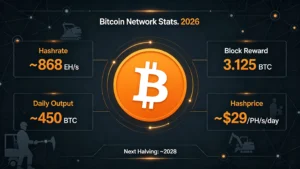
The Bitcoin halving in April 2024 reduced the block subsidy from 6.25 BTC to 3.125 BTC per block. This event tightened margins across the entire mining industry. Industrial miners with access to ultra-cheap electricity and the most efficient hardware survived; less efficient operations shut down.
For budget miners, the halving made profitability more challenging—but it did not eliminate the possibility of meaningful participation.
Current Network Conditions
As of mid-2026, the Bitcoin network hashrate is approximately 860 EH/s. The network mines roughly 144 blocks per day, each paying 3.125 BTC plus transaction fees.
Profitability Calculations
At average US residential electricity rates of ~$0.16/kWh, most sub-$500 miners are not profitable in the traditional sense—they cost more to run than they earn in BTC. However, profitability calculations depend heavily on your electricity cost.
-
At $0.05/kWh, many budget miners approach breakeven or slight profitability
-
At $0.08/kWh, profitability is marginal for most devices
-
At $0.12/kWh or higher, most budget miners operate at a loss
Why Mine If You Are Not Profitable?
This is the question every budget miner must answer. Here are the reasons people mine even when the immediate economics are unfavourable:
Supporting the network. Bitcoin relies on miners to secure the network. Every hash counts.
Learning and education. Mining is one of the best ways to understand how Bitcoin works at a technical level.
Speculation on future value. If you believe Bitcoin’s price will increase significantly in the future, the BTC you mine today—even at a loss—may be worth substantially more later.
Non-economic value. For many, mining is a hobby, a statement, or a way to participate in the cypherpunk vision of a decentralised future.
Heat generation. In colder climates, the waste heat from mining can offset heating costs.
The Realistic Take
If your primary goal is immediate profit, budget mining in 2026 is a challenging proposition. You are better off buying BTC directly on an exchange and holding it. The miners in this guide are best understood as educational tools, hobbyist devices, and lottery tickets—not as profit-generating machines.
That said, the open-source mining ecosystem offers something that pure financial speculation cannot: direct participation in the Bitcoin network, verifiable hardware, and the satisfaction of running real ASIC silicon from your own desk.
Frequently Asked Questions
Can I really mine Bitcoin with a device under $500?
Yes. The devices in this guide are real ASIC miners running the same SHA-256 algorithm used by industrial mining operations. They produce real hashes that contribute to the Bitcoin network. Your chances of solo mining a block are statistically low, but your hashrate is genuine.
Is CPU or GPU mining Bitcoin still possible in 2026?
No. CPU and GPU mining Bitcoin is no longer profitable as of 2026. The network difficulty is far too high. ASIC hardware is the only practical option for Bitcoin mining.
How much electricity will my miner use?
It depends on the device. The most efficient miners in this guide use 12–15W—less than a household light bulb. Higher-performance devices use 100–165W—comparable to a gaming laptop. None of the devices in this guide require special electrical wiring.
How loud are these miners?
Most open-source miners are near-silent or completely silent. The Bitaxe Gamma, Ultra, and Supra are fanless. The NerdQaxe++ and Avalon Nano 3S have fans but produce low to moderate noise levels—significantly quieter than industrial miners which can reach 75 dB.
Do I need a mining pool?
No. You can solo mine directly against the Bitcoin network. Most open-source miners support solo mining via a self-hosted node or public solo mining pools. Pool mining is optional but offers more regular payouts.
What is the best Bitcoin miner for beginners in 2026?
The Bitaxe Gamma is widely considered the best entry point. It offers genuine ASIC hashing power, excellent efficiency, and a large community for support—all for under $100 in many configurations. For absolute beginners with zero technical interest, the **BlockChance Ticket Miner** at $50 is the lowest-cost entry.
Is open-source mining better than buying from Bitmain?
It depends on your priorities. Open-source miners offer verifiable hardware, firmware transparency, and community-driven innovation. They are also more suitable for home use due to their low power consumption and noise levels. Bitmain’s industrial miners offer much higher hashrate but require professional infrastructure and come with proprietary, unverifiable firmware.
What is the most profitable Bitcoin miner under $500?
“Profitable” depends on your electricity cost. At $0.05/kWh, the Avalon Nano 3S and NerdQX 8T offer the best chance of positive returns. At higher electricity costs, the more efficient Bitaxe Gamma and Supra may be better choices. Use a mining profitability calculator with your specific electricity rate to get accurate numbers.
Can these miners mine other cryptocurrencies?
All miners in this guide use the SHA-256 algorithm, which is used by Bitcoin, Bitcoin Cash (BCH), and a few other cryptocurrencies. They cannot mine Litecoin or Dogecoin, which use the Scrypt algorithm.
Final Verdict: The Best Bitcoin Miners Under $500
After reviewing every major Bitcoin miner available for under $500 in 2026, we can offer definitive recommendations for different use cases.
The Best Overall Budget Bitcoin Miner: Bitaxe Gamma 602
The Bitaxe Gamma delivers the best combination of price, performance, efficiency, and community support. At approximately 1.2 TH/s, 15W, and under $100 in many configurations, it offers genuine ASIC hashing power with near-silent operation and minimal electricity costs. It runs AxeOS, connects via Wi-Fi, and is fully open-source. Over 189 customers have reviewed this miner at 4.98 out of 5 stars. For the vast majority of beginners and home miners, this is the right choice.
The Best Price-to-Performance: Avalon Nano 3S
If your priority is maximum hashrate for the lowest cost, the Avalon Nano 3S at 6 TH/s and ~$300 offers outstanding value at approximately $50/TH. It delivers more than five times the hashrate of the Bitaxe Gamma for about three times the price. The trade-off is higher electricity consumption (140W vs. 15W) and more noise.
The Best Open-Source Performance: NerdQaxe++ Rev 6.1
For open-source purists who want top-tier performance, the NerdQaxe++ Rev 6.1 delivers 6+ TH/s at approximately 100W with excellent efficiency of 15.65 J/TH. At ~$382, it offers the best combination of hashrate, efficiency, and open-source credentials.
The Best Entry Point: BlockChance Ticket Miner
For under $50, the BlockChance Ticket Miner offers the lowest-cost entry to Bitcoin mining. It is not a serious hashrate producer, but it is a fun, educational, and low-risk way to participate in the Bitcoin network.
The Verdict
The best Bitcoin miner under $500 in 2026 is the **Bitaxe Gamma 602**. It represents the culmination of years of open-source hardware development—putting real ASIC hashing power into the hands of individuals for under $100. It is efficient, quiet, affordable, and backed by a passionate community. Whether you are mining for profit, for education, or for the principle of decentralisation, the Bitaxe Gamma is the right place to start.
The open-source mining revolution is real. In 2026, you can buy a genuine Bitcoin ASIC miner for under $100, run it from your desk, and point your hashrate directly at the Bitcoin network. No permission required. No trust required. Just math, silicon, and sovereignty.
That is what Bitcoin was always meant to be.