Choosing the right ASIC miner involves a critical analysis of three core factors: hashrate (the machine’s raw computational power), power efficiency (how much electricity it consumes to generate that power, measured in Watts per terahash or W/TH), and the overall price. A successful investment hinges on finding the optimal balance between these metrics to maximize your potential Return on Investment (ROI), while also considering practical factors like the target cryptocurrency, operational costs, and long-term hardware viability. This guide will walk you through every step of the decision-making process, empowering you to select a mining rig that aligns with your goals and budget.
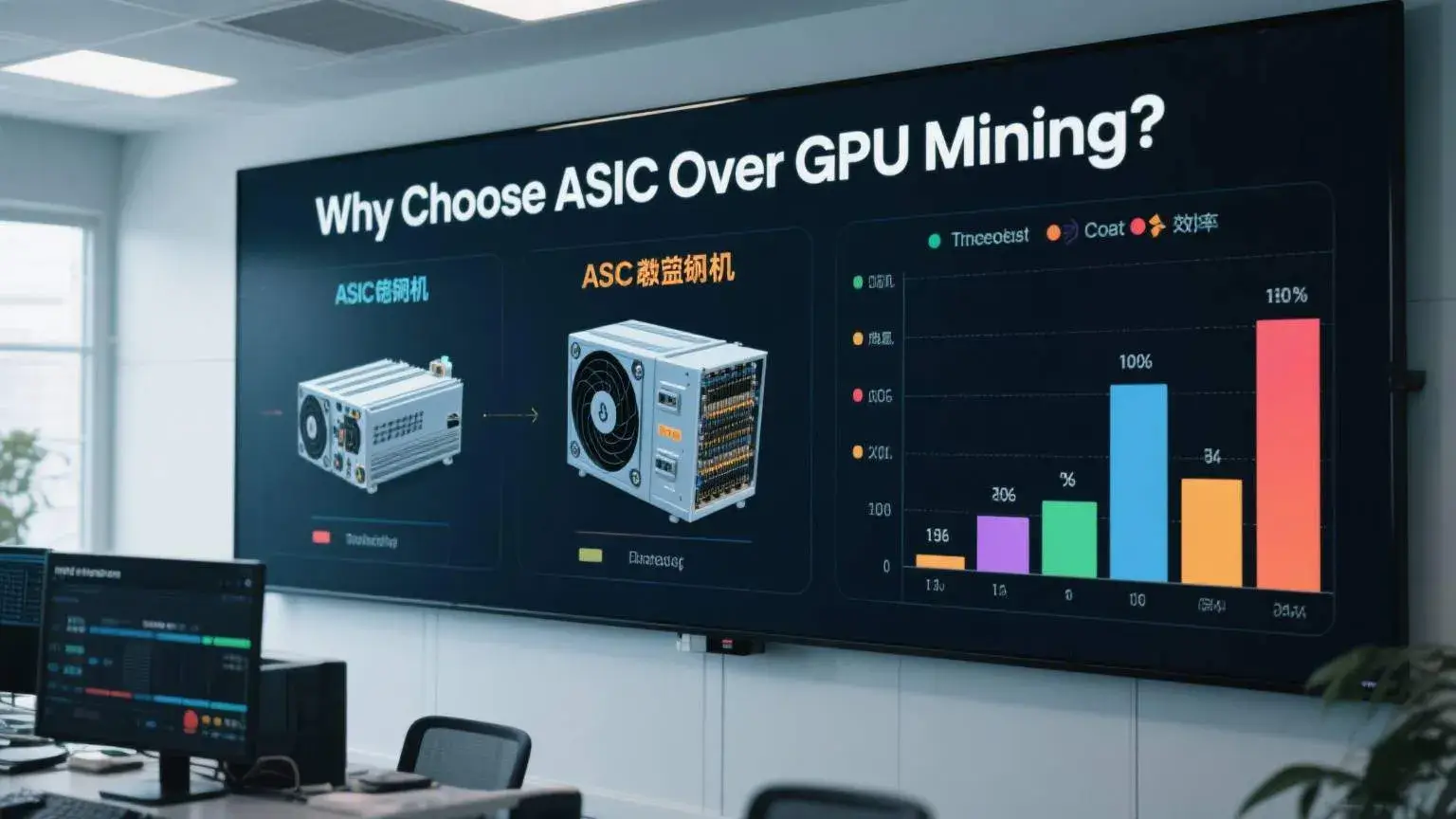
Table of Contents
- What is an ASIC Miner and Why Do You Need a Specialized One?
- The Core Trio: Understanding the Most Critical ASIC Miner Specs
- How to Calculate Your Potential ROI: A Step-by-Step Guide
- Beyond the Specs: Practical Considerations for Your Mining Setup
- Where to Buy Your ASIC Miner: Navigating the Market
- Future-Proofing Your Investment: What to Consider Before You Buy
- Final Checklist: Are You Ready to Buy Your First ASIC Miner?
- Conclusion: Making an Informed Investment
What is an ASIC Miner and Why Do You Need a Specialized One?
Before diving into specifications and calculations, it’s essential to understand what an Application-Specific Integrated Circuit (ASIC) miner is and why it has become the undisputed standard for serious cryptocurrency mining. This foundational knowledge will clarify why selecting the right machine is so crucial for success.
Demystifying ASICs: The Purpose-Built Powerhouses
An ASIC is not a general-purpose computer; it’s a hyper-specialized piece of hardware designed to perform a single task with unparalleled efficiency. In the world of cryptocurrency, that task is solving complex cryptographic puzzles, a process known as hashing. An ASIC miner is a self-contained unit built around these powerful chips, optimized exclusively for a specific hashing algorithm, such as SHA-256 for Bitcoin or Scrypt for Litecoin. Think of it as the difference between a Swiss Army knife (a CPU) and a surgical scalpel (an ASIC)—while one can do many things adequately, the other performs its one function with a level of precision and speed that is simply unmatched.
Why a GPU or CPU Just Won’t Cut It Anymore
In the early days of Bitcoin, it was possible to mine effectively using a standard computer’s Central Processing Unit (CPU) and later its Graphics Processing Unit (GPU). However, as the network’s difficulty increased, these general-purpose processors became obsolete. ASICs offer an exponential leap in performance and efficiency. A modern ASIC miner can produce a hashrate that is thousands of times greater than the most powerful GPU while consuming proportionally less electricity for the work done. Attempting to compete on a major network like Bitcoin with anything other than an ASIC today is not just impractical; it’s a guaranteed way to lose money.
The Core Trio: Understanding the Most Critical ASIC Miner Specs
When you browse for an ASIC miner, you’ll be met with a list of technical specifications. While they are all important, three metrics stand above the rest in determining a machine’s potential profitability: hashrate, power consumption, and price. Mastering these three pillars is the first step toward making a smart purchase.
Hashrate: The Engine of Your Mining Operation
Hashrate is the measure of a miner’s raw computational speed. It represents the number of guesses (hashes) the machine can make per second as it tries to solve the cryptographic puzzle to validate a block. Hashrate is typically measured in terahashes per second (TH/s) or, for older models, gigahashes per second (GH/s). A higher hashrate means a greater chance of successfully mining a block and earning rewards. All other factors being equal, a miner with a 200 TH/s hashrate is twice as powerful as one with 100 TH/s and will earn twice the rewards over the same period.
Power Consumption & Efficiency: The Key to Profitability
While hashrate is the engine, efficiency is the fuel economy. A powerful miner is useless if its electricity costs exceed the value of the crypto it mines. Power consumption is measured in Watts (W). However, the most crucial metric is efficiency, which is expressed as Joules per terahash (J/TH) or Watts per terahash (W/TH). This tells you how much energy the miner uses to produce one terahash of computing power. A lower J/TH value is always better, as it signifies that the miner can produce more hashes for every watt of electricity consumed. For example, a miner rated at 25 J/TH is significantly more efficient and will be more profitable long-term than one rated at 35 J/TH, especially in regions with high electricity costs.
The Price Tag: Initial Investment vs. Long-Term Value
The upfront cost of the ASIC miner is the third critical component of the ROI equation. It’s tempting to opt for the cheapest machine available, but this is often a mistake. Older, less expensive models typically have much lower hashrates and poorer energy efficiency, meaning they can become unprofitable very quickly as network difficulty rises. The best approach is to view the purchase as a long-term investment. It’s often wiser to invest more in a newer, more efficient model that will remain profitable for a longer duration than to save money on an older unit that might only be viable for a few months. Your goal is to find the sweet spot between price, power, and efficiency.
How to Calculate Your Potential ROI: A Step-by-Step Guide
An ASIC miner is a piece of business equipment, and its purchase should be evaluated like any other investment. Calculating the potential Return on Investment (ROI) is not just recommended; it’s a mandatory step before you commit. This calculation will give you an estimate of how long it will take for the miner to pay for itself and start generating pure profit.
Gathering Your Data: What You’ll Need for an Accurate Calculation
To get an accurate profitability estimate, you need a few key pieces of information. Don’t guess on these—the more precise your data, the more reliable your forecast will be.
- Miner’s Hashrate (TH/s): The processing power of the machine.
- Miner’s Power Consumption (Watts): Found on the spec sheet.
- Your Electricity Cost ($/kWh): Check your utility bill for the exact rate you pay per kilowatt-hour. This is one of the most critical variables.
- Mining Pool Fee (%): Most miners join a pool and pay a small fee, typically 1-3%.
- Current Cryptocurrency Price & Network Difficulty: These fluctuate, so calculations are always a snapshot in time.
Using an Online Profitability Calculator
Manually calculating profitability is complex due to ever-changing network difficulty and coin prices. Fortunately, excellent online tools can do the heavy lifting for you. Reputable websites like ASIC Miner Value or WhatToMine allow you to input your miner’s specs and electricity cost. The calculator then uses real-time market data to provide a detailed breakdown of your potential daily, monthly, and yearly earnings, factoring in power costs.
A Sample Calculation: Bringing It All Together
Let’s imagine you are considering a miner with the following specifications and operating conditions. The table below illustrates how these factors come together to determine profitability.
| Metric | Value | Notes |
|---|---|---|
| Miner Model | Example Miner X | A hypothetical modern Bitcoin (SHA-256) miner. |
| Hashrate | 150 TH/s | The miner’s raw processing power. |
| Power Consumption | 3000 W | Equal to 3.0 kW. |
| Electricity Cost | $0.10 / kWh | A crucial variable for profitability. |
| Mining Pool Fee | 1% | A standard fee for a reliable pool. |
| Daily Calculation | ||
| Daily Power Usage | 72 kWh (3.0 kW * 24h) | Total electricity used in one day. |
| Daily Electricity Cost | $7.20 (72 kWh * $0.10) | Your primary operational expense. |
| Gross Daily Revenue (Example) | $15.00 | This value fluctuates with BTC price and network difficulty. |
| Net Daily Profit | $7.80 ($15.00 – $7.20) | Your earnings after power costs are deducted. |
Note: Gross revenue is hypothetical and subject to constant change. Always use a real-time calculator for an up-to-the-minute estimate.
Beyond the Specs: Practical Considerations for Your Mining Setup
A great miner on paper can become a nightmare if you haven’t planned for its real-world operational needs. Noise, heat, and power infrastructure are not afterthoughts—they are critical components of a successful and sustainable mining operation.
Which Cryptocurrency Algorithm Should You Target?
Your choice of miner is intrinsically linked to the cryptocurrency you intend to mine. ASICs are built for a single algorithm. For example:
- SHA-256: The algorithm for Bitcoin (BTC), Bitcoin Cash (BCH), and others. This is the most competitive but also the most popular algorithm.
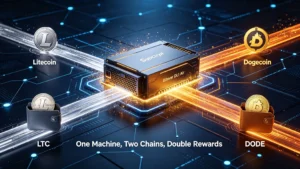
- Scrypt: Used for Litecoin (LTC) and Dogecoin (DOGE).
- Etchash: The algorithm for Ethereum Classic (ETC).
- Kadena: A unique algorithm for the Kadena (KDA) coin.
Research which coin and algorithm align with your investment strategy. Consider factors like market capitalization, development activity, and long-term potential before committing to a specific algorithm-locked machine.
Taming the Beast: Managing Noise and Heat
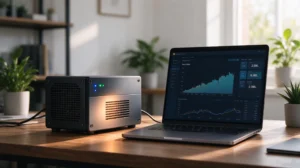
ASIC miners are industrial machines. They are incredibly loud and generate a substantial amount of heat. The high-speed cooling fans produce a constant, high-pitched hum comparable to a vacuum cleaner, making them unsuitable for living spaces. You will need a dedicated, well-ventilated area like a garage, basement, or specialized enclosure. Proper heat management is also non-negotiable. The hot air exhausted by the miner must be directed away from its intake to prevent overheating, which can damage the hardware and reduce its lifespan. Inadequate cooling will lead to thermal throttling and a significant loss of hashrate.
The Hidden Costs: Power Infrastructure, Cooling, and Space
Your standard home electrical outlet may not be sufficient for a modern ASIC miner. Most high-performance miners require a 220V-240V circuit, similar to an electric clothes dryer or oven. You may need to hire an electrician to install the proper outlets and ensure your electrical panel can handle the continuous load. Furthermore, you might need to invest in additional ventilation, such as industrial exhaust fans or ducting, to manage heat effectively. These infrastructure costs must be factored into your initial budget to get a true picture of the total investment required.
Where to Buy Your ASIC Miner: Navigating the Market
Once you’ve decided on a model, the next question is where to source it. The market has several options, each with its own set of advantages and disadvantages. Choosing a reliable vendor is just as important as choosing the right miner.
Buying Direct from Manufacturers
Purchasing directly from manufacturers like Bitmain (Antminer) or MicroBT (Whatsminer) can sometimes offer the best prices, especially for the latest models. However, this route often involves long pre-order waits, large minimum order quantities (MOQs), and complex international shipping and customs procedures. For individual buyers or small-scale operations, this can be a challenging and intimidating process.
The Role of Trusted Resellers and Distributors
For most buyers, a reputable reseller like Cleverobot is the ideal choice. Trusted distributors provide several key advantages:
- Availability: They stock a variety of models, both new and popular older units, ready for immediate shipment.
- Tested Hardware: Reputable resellers test their units to ensure they are in full working order before shipping.
- Customer Support: They can offer guidance, technical support, and assistance with warranty claims.
- Simplified Logistics: They handle the complexities of importation and provide clear, straightforward shipping to your location.
While the price may be slightly higher than buying direct, the value added in terms of convenience, security, and support is often well worth the premium.
The Risks and Rewards of the Second-Hand Market
The used market can offer significant discounts, but it comes with considerable risk. A used miner may have been run in suboptimal conditions, potentially shortening its lifespan. Warranties are often void, and there is a higher chance of receiving faulty or underperforming equipment. Unless you are an experienced operator who knows how to diagnose and repair hardware, or you are buying from a highly trusted source, it is generally safer for beginners to invest in new or professionally refurbished units from a reliable vendor.
Future-Proofing Your Investment: What to Consider Before You Buy
Mining is a dynamic field. The miner that is profitable today might not be in six months. Thinking ahead can help you maximize the productive lifespan of your hardware and protect your investment from becoming obsolete too quickly.
The Impact of Network Difficulty and Halving Events
As more miners join a network, its “difficulty” automatically increases to ensure that blocks are found at a stable rate. This means your miner will earn progressively less of the cryptocurrency over time for the same amount of work. Additionally, many cryptocurrencies like Bitcoin undergo “halving” events, where the block reward is cut in half (the next Bitcoin halving is expected in 2024). When choosing a miner, opt for the most efficient model you can afford. A highly efficient miner (low J/TH) will remain profitable for much longer as network difficulty rises and rewards decrease.
Firmware, Support, and Manufacturer Reputation
A manufacturer’s reputation matters. Established brands are more likely to provide stable firmware, honor warranties, and offer support. Good firmware can improve a miner’s stability and even its efficiency. Research the manufacturer and read reviews about their track record before purchasing. Some manufacturers are also more friendly to custom firmware (e.g., Braiins OS+), which can offer advanced features like autotuning to further boost efficiency and hashrate.
Scalability: Planning for Future Growth
If you plan to expand your operation in the future, consider this from the start. Think about your available space, power capacity, and cooling potential. It might be more cost-effective to invest in slightly more robust infrastructure upfront than to have to completely overhaul your setup later. Choosing a consistent type of miner can also simplify management and maintenance as you scale your farm.
Final Checklist: Are You Ready to Buy Your First ASIC Miner?
Before you click “buy,” run through this final checklist to ensure you’ve covered all your bases:
- [ ] Chosen Cryptocurrency & Algorithm: Do you know exactly which coin you are targeting?
- [ ] Calculated Profitability: Have you used an online calculator with your exact electricity rate to estimate your ROI?
- [ ] Secured a Location: Do you have a dedicated, safe, and well-ventilated space?
- [ ] Verified Power Infrastructure: Do you have the correct voltage (220V+) and circuit capacity?
- [ ] Planned for Noise & Heat: Do you have a solid plan for managing the sound and exhausting hot air?
- [ ] Selected a Reputable Vendor: Have you chosen a trusted source for your hardware?
- [ ] Budgeted for All Costs: Have you accounted for the miner, shipping, taxes, and any necessary electrical or ventilation upgrades?
Conclusion: Making an Informed Investment
Choosing the right ASIC miner is a strategic decision that goes far beyond simply picking the one with the highest hashrate. It’s a calculated investment that requires a thorough understanding of the relationship between hashrate, power efficiency, and price. By carefully calculating your potential ROI, planning for the practical realities of noise and heat, and sourcing your hardware from a reputable vendor, you transform a speculative purchase into a sound business venture. The landscape of cryptocurrency mining is competitive, but for those who do their homework, it remains a rewarding frontier. Take your time, do the research, and invest wisely.